
Brunost Cheese vs Pasta Filata Cheese
Brunost Cheese
Pasta Filata Cheese
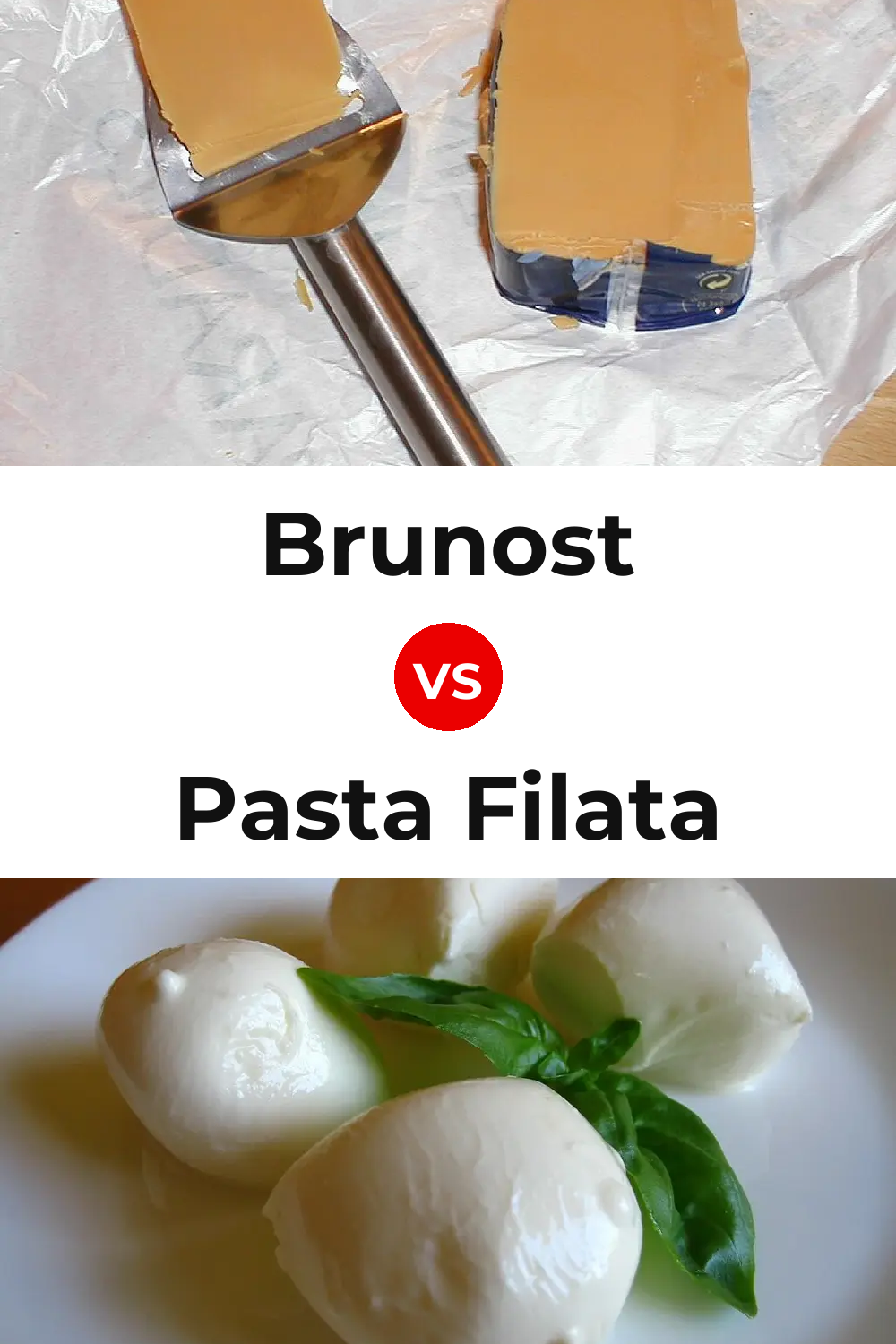
Brunost Cheese is a semi-soft cow and goat-milk cheese from Denmark, Finland, Germany, Iceland, Norway and Sweden, while Pasta Filata Cheese is soft, elastic and made from cow or buffalo milk.
Buy Brunost Cheese
Buy Pasta Filata Cheese
What Is Brunost Cheese?
Brunost is a Norwegian whey product made by boiling whey with milk and cream until the milk sugars caramelize. It is brown, sweet and firm enough to slice, and it is eaten like cheese on sandwiches, crispbread and waffles.
What Is Pasta Filata Cheese?
Pasta filata is the Italian spun-curd technique behind mozzarella, provolone, caciocavallo and scamorza. Fresh curd is kneaded in hot water until it turns soft, elastic and stringy, which gives the finished cheese its fibrous structure.
What's the Difference Between Brunost Cheese and Pasta Filata Cheese?
- Milk type: Brunost Cheese (Cow's and goat's milk), Pasta Filata Cheese (Cow's or water buffalo's milk)
- Texture: Brunost Cheese (Semi-soft), Pasta Filata Cheese (Soft, elastic)
- Aging: Brunost Cheese (unaged, ready once packed and refrigerated), Pasta Filata Cheese (fresh for mozzarella, aged for provolone, caciocavallo and scamorza)
Side-by-Side Comparison
| Brunost Cheese | Pasta Filata Cheese | |
|---|---|---|
| Country of Origin | Denmark, Finland, Germany, Iceland, Norway And Sweden | — |
| Specific Origin | Gudbrandsdalen, Norway | Italy |
| Milk Type | Cow's and goat's milk | Cow's or water buffalo's milk |
| Milk Treatment | Pasteurized or unpasteurized | — |
| Texture | Semi-soft | Soft, elastic |
| Rind | Natural | — |
| Aging | Unaged, ready once packed and refrigerated | Fresh for mozzarella, aged for provolone, caciocavallo and scamorza |
| Taste | Caramel, sweet | — |
Taste Comparison: Does Brunost Cheese Taste Like Pasta Filata Cheese?
Their flavor profiles are distinct. Aging plays into this as well. Brunost Cheese at unaged, ready once packed and refrigerated develops a different profile than Pasta Filata Cheese at fresh for mozzarella, aged for provolone, caciocavallo and scamorza.
Can You Substitute Brunost Cheese for Pasta Filata Cheese?
Brunost Cheese can stand in for Pasta Filata Cheese in many dishes, but the switch will shift the overall character of the recipe. Expect semi-soft bite and body where the recipe calls for soft, elastic.
Which Is Better, Brunost Cheese or Pasta Filata Cheese?
There's no single winner. It depends on your recipe and the profile you want. If you want a semi-soft cheese, go with Brunost Cheese. For a soft, elastic profile, Pasta Filata Cheese is the better fit.
Which is your favorite?
One click, anonymous. See what others chose.
Frequently Asked Questions
Is Brunost Cheese the same as Pasta Filata Cheese?
No, they're distinct cheeses. Brunost Cheese is made from cow and goat milk; Pasta Filata Cheese uses cow or buffalo. Aging also differs: Brunost Cheese is typically aged unaged, ready once packed and refrigerated, Pasta Filata Cheese fresh for mozzarella, aged for provolone, caciocavallo and scamorza.
Is Brunost Cheese similar to Pasta Filata Cheese?
Not closely. They use different milk bases and have distinct profiles.
Can I substitute Brunost Cheese for Pasta Filata Cheese?
You can, but expect a shift in richness and milk character.
Does Brunost Cheese taste like Pasta Filata Cheese?
They have distinct flavor profiles. The taste row in the table above is the best direct comparison.
What is Brunost Cheese made of?
Brunost Cheese is made from cow and goat milk (pasteurized or unpasteurized). It's typically aged unaged, ready once packed and refrigerated. It originates in Denmark, Finland, Germany, Iceland, Norway and Sweden.
What is Pasta Filata Cheese made of?
Pasta Filata Cheese is made from cow or buffalo milk. It's typically aged fresh for mozzarella, aged for provolone, caciocavallo and scamorza.
Which should I choose, Brunost Cheese or Pasta Filata Cheese?
It depends on the dish. The texture difference is the biggest practical tell. Brunost Cheese is semi-soft, while Pasta Filata Cheese is soft, elastic.