Bergkäse
Bergkäse, German for mountain cheese, is a group of Alpine cheeses made on mountain pastures and in local dairies. Most are hard or semi-hard with a natural rind, a strong and slightly nutty flavour, and few or no eyes.
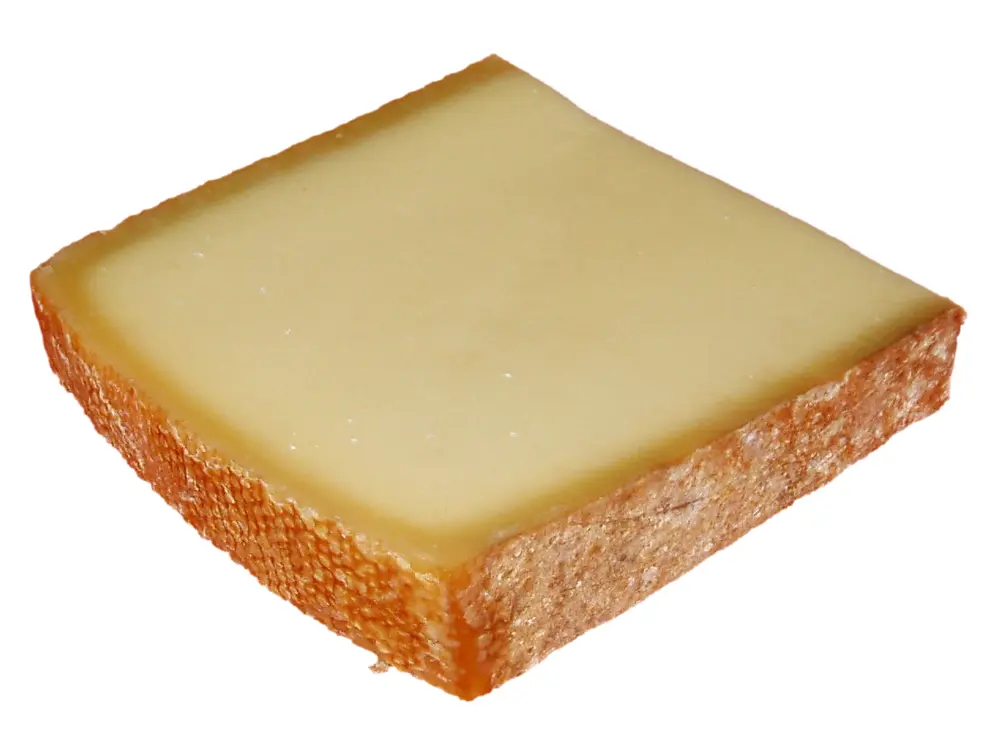
Key Facts
| Specific Origin | The Alps |
| Milk Type | Cow |
| Milk Treatment | Raw |
| Rind | Natural |
| Texture | Hard to semi-hard, sometimes with small holes or cracks |
| Flavor | Strong, often a bit nutty |
| Forms | Wheels |
| Also Known As | mountain cheese |
What is Bergkäse Cheese?
Bergkäse is German for mountain cheese, and the name covers a number of cheese varieties made in the Alps. Some come from mountain farming and the cultivation of alpine pastures, others from local producers who process the milk in dairies. In Austria the word is also used generically for Swiss-type or Alpine cheeses that taste and feel similar but come from outside the traditional cheese making regions.
In earlier times nearly every cheese made in the mountains during summer was a mountain cheese in the literal sense, made up on the shieling. The season ran between roughly 70 and 120 days depending on region and altitude, while the cattle grazed the high meadows. The animals stayed outdoors almost continuously and fed on juicy, herb-rich fodder, which gave the milk its quality and spicy taste. Transport was limited, so cheesing the milk concentrated and preserved it. Once the herds came down, fodder quality and milk yield dropped and cheese making largely stopped until the following summer.
The practice continues. In the Swiss canton of Grisons, 225 alpine pastures held dairy cows in 2020, and about half were still alpine dairy farms making cheese directly on the alp. Milk from the rest travels down to the valley by vehicle or cable car. Finished wheels once went down on sledges; today helicopters sometimes do the job.
The term itself says little about type or production method. Most examples are hard or semi-hard with no or few eyes and a natural rind, though semi-hard and soft cheeses also carry the name. The texture runs rather hard, sometimes with small holes or cracks, and the flavour is strong and often a bit nutty.
Rules vary by country. Vorarlberger Bergkäse, Vorarlberger Alpkäse and Tiroler Alpkäse hold EU protected designation of origin status, and Vorarlberger Bergkäse must be made by hand using traditional methods from hay milk delivered daily and processed at once. Germany treats Bergkäse as a standard variety under its Cheese Ordinance, requiring full-fat stage and at least 62 percent dry matter. Switzerland protects both Alpkäse and Bergkäse, with Bündner Bergkäse made only in village dairies above 1000 m.
How Does Bergkäse Cheese Compare?
The most relevant cheeses to compare Bergkäse against.


