All Types of Cheese
Every type of cheese falls into one of seven groups: fresh, soft-ripened, semi-soft, semi-hard, hard, blue and processed. The groups are set by moisture and age. The longer a cheese ripens, the more water it loses and the firmer and sharper it gets. This page lists the cheeses in each group with pictures, flavors and uses, then sorts them by milk and by country.
- Chart
- Fresh Cheese
- Soft-Ripened Cheese
- Semi-Soft Cheese
- Semi-Hard Cheese
- Hard Cheese
- Blue Cheese
- Processed Cheese
- By milk
- By country
- Most popular
- Compare
- A to Z
How Many Types of Cheese Are There?
There are more than 1,800 named types of cheese in the world, and estimates pass 2,000 once regional variations are counted. Nobody keeps an official register. AnyCheese documents 996 of them from 90 countries, each on its own page with origin, milk, texture, flavor and the products you can actually buy.
Cheesemakers and food scientists sort that long list by texture and moisture content, because those two things predict how a cheese tastes, melts and keeps better than anything else. That is the system used below.
The 7 Main Types of Cheese at a Glance
Use this chart to place any cheese. Moisture and aging move together: fresh cheese sits at one end with the most water and no aging, hard cheese at the other with the least water and the longest time in the cave.
| Type | Texture | Moisture | Aging | Flavor | Best uses | Examples |
|---|---|---|---|---|---|---|
| Fresh Cheese | Soft, moist, spreadable or crumbly | Highest (55 to 80%) | None, days at most | Milky, mild, lightly tangy | Salads, spreads, baking, pizza, desserts | Mozzarella, Quark, Halloumi |
| Soft-Ripened Cheese | Creamy, oozing when ripe | High (50 to 60%) | 2 to 8 weeks | Buttery, mushroomy, earthy | Cheese boards, baked whole, with fruit and bread | Brie, Camembert, Taleggio |
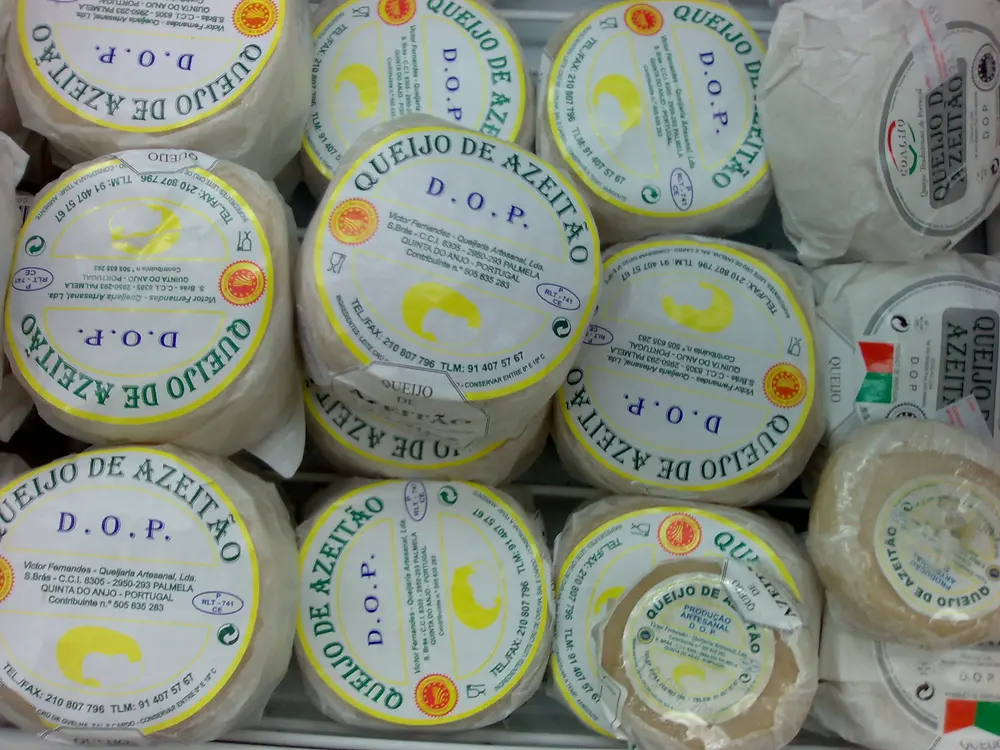
| Semi-Soft Cheese | Supple, sliceable, springy | Medium-high (45 to 55%) | 1 to 6 months | Mild and buttery to bold and meaty | Melting, sandwiches, snacking | Havarti, Muenster, Queijo de Azeitão |
| Semi-Hard Cheese | Firm, smooth, easy to slice or grate | Medium (35 to 45%) | 3 to 18 months | Nutty, sweet, sharp with age | Cooking, grating, sandwiches, cheese boards | Cheddar, Provolone, Gouda |
| Hard Cheese | Dense, granular, crystalline | Low (under 35%) | 12 months to several years | Sharp, salty, deeply savory | Grating, shaving, finishing pasta and risotto | Appenzeller, Canadian Cheddar, Asiago |
| Blue Cheese | Crumbly to creamy, veined | Medium (40 to 50%) | 2 to 6 months | Piquant, salty, peppery, tangy | Salads, dressings, steak, pears and honey | Blue, Roquefort, Stilton |
| Processed Cheese | Smooth, uniform, very meltable | Varies (40 to 55%) | None | Mild, salty, creamy | Burgers, grilled cheese, sauces, snacks | Babybel, American |
Fresh Cheese (18)
All fresh cheeses →Fresh cheese is unaged cheese eaten within days of being made, with high moisture and a mild, milky, slightly tangy flavor.
Fresh cheeses are the simplest to make and the closest to milk. Curd is set with acid or a little rennet, drained, sometimes lightly salted, and sold within days. Because nothing has had time to break down, the flavor is clean and lactic rather than complex, and the texture runs from spoonable ricotta to squeaky curds to crumbly feta.
They spoil fastest of any cheese and rarely melt into a smooth sauce, but they are the backbone of pizza, lasagna, salads and cheesecake. Cream cheese, cottage cheese, paneer, queso fresco and burrata all belong here. Looking for the salty, crumbly kind specifically? Browse all crumbly cheeses.


Soft-Ripened Cheese (18)
All soft-ripened cheeses →Soft-ripened cheese is aged briefly under a bloomy white rind that ripens the paste from the outside in until it turns creamy and rich.
Soft-ripened cheeses start out much like fresh cheese but are then inoculated with a white mold, usually Penicillium camemberti, and left for a few weeks. The mold forms the velvety rind and releases enzymes that ripen the paste from the outside in, so a young wheel has a chalky core and a fully ripe one is soft all the way through.
Serve them at room temperature, when the paste is at its creamiest. They bake beautifully whole, and their mushroomy, buttery flavor suits fruit, honey and crusty bread more than cooking. Brie and Camembert are the famous ones, and triple-creams like Brillat-Savarin push the richness even further.


Semi-Soft Cheese (5)
All semi-soft cheeses →Semi-soft cheese is pliable and smooth, aged a few weeks to a few months, and includes both mild table cheeses and pungent washed-rind styles.
Semi-soft cheeses are pressed lightly and aged for weeks to a few months, which leaves them supple and smooth without ever getting crumbly. This group is broad. At the mild end sit Havarti, young Monterey Jack and Muenster, the great melting cheeses for sandwiches and quesadillas.
At the other end are the washed-rind cheeses. Their surfaces are rubbed with brine, beer or wine during aging, which encourages orange bacteria that give Taleggio, Limburger and Epoisses their sticky rinds and pungent, meaty aroma. The paste underneath is usually far gentler than the smell suggests.




Semi-Hard Cheese (10)
All semi-hard cheeses →Semi-hard cheese is firm but still yielding, pressed to remove whey and aged for months, which gives it the widest range of everyday flavors.
Semi-hard cheeses are the everyday workhorses: Cheddar, Gouda, Edam, Emmental, Gruyere, Manchego, Provolone and Colby. The curd is cut small, heated, pressed firmly to drive off whey, then aged anywhere from a few months to a year and a half. They slice cleanly, grate well and melt smoothly, so they do most of the work in the kitchen.
Flavor tracks age closely. A three-month Gouda is sweet and buttery, while an eighteen-month Gouda is nutty and studded with crunchy tyrosine crystals. Mild Cheddar is pliable, and extra sharp Cheddar turns crumbly and tangy. Many cheeses in this group cross into the hard category once they are aged long enough.


Hard Cheese (5)
All hard cheeses →Hard cheese is pressed hard and aged for a year or more, driving out moisture until the paste turns dense, granular and intensely savory.
Hard cheeses, often just called aged cheeses, are pressed hard, salted heavily and matured for a year or longer, often two or three. So much moisture leaves that the paste turns dense and granular, and proteins break down into savory amino acids, including the glutamate that makes Parmigiano-Reggiano taste so deeply of umami. Many develop crunchy white crystals, a sign of long aging rather than a flaw.
Because the flavor is concentrated, a little goes a long way. Grate them over pasta and risotto, shave them onto salads or serve them in shards with honey and nuts. Parmigiano-Reggiano, Grana Padano, Pecorino Romano, aged Gouda, Comte, Mimolette and Sbrinz are the classic examples on any aged cheese list. They also keep for months in the fridge.


Blue Cheese (12)
Blue cheese is any cheese ripened with Penicillium cultures that grow blue-green veins through the paste and give it a sharp, salty, peppery bite.
Blue cheeses are inoculated with Penicillium roqueforti or Penicillium glaucum and then pierced with needles so oxygen reaches the interior and the mold grows into blue-green veins. The mold breaks down fat and protein aggressively, which is why blues are so much sharper and saltier than other cheeses of the same age.
Texture varies with the base cheese. Roquefort, made from sheep's milk, is moist and crumbly. Stilton is firm and buttery. Gorgonzola Dolce is nearly spreadable. Blue cheese pairs with sweet things that stand up to it: pears, figs, honey, port and dessert wine. It also makes the best salad dressing and the classic topping for a steak.


Processed Cheese (2)
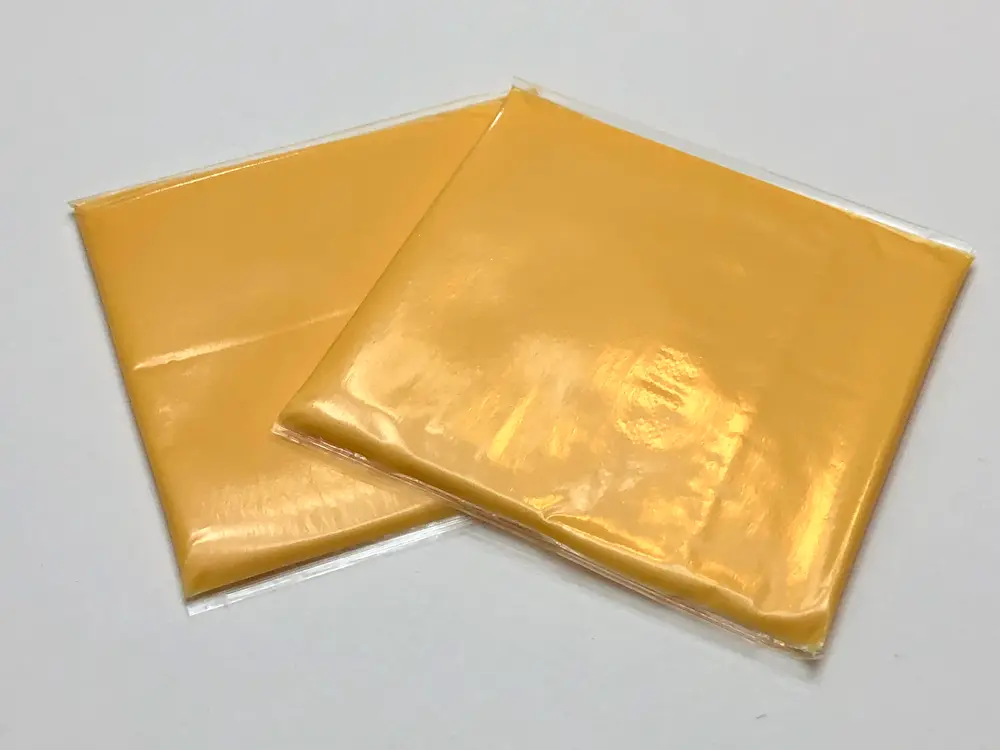
Processed cheese is natural cheese melted with emulsifying salts and reshaped so that it stays smooth, mild and meltable for a long shelf life.
Processed cheese is made by grinding natural cheese, usually young Cheddar or Colby, then heating it with emulsifying salts such as sodium citrate until it forms a smooth mass that can be poured into slices, blocks or jars. The emulsifiers stop the fat from separating. That is the reason American cheese melts into a smooth sauce where a natural cheese would turn greasy or stringy.
It is mild, salty and long-lasting, and it exists for melting: burgers, grilled cheese, nachos and queso dip. Products labeled "pasteurized process cheese" are made from cheese plus a small amount of emulsifier. "Cheese food" only has to be 51 percent cheese, and "cheese product" can be less, so read the label if that matters to you.
Types of Cheese by Milk
The animal matters as much as the method. Fat, protein and flavor compounds differ from one milk to the next, so the same recipe yields a different cheese depending on what went into the vat.
Cow's Milk Cheese (591)
The vast majority of the world's cheese. Cow's milk is high in volume and mellow in flavor, so it makes everything from mozzarella to aged Gouda.
Goat's Milk Cheese (248)
Bright, tangy and often chalky-white. Goat cheese ranges from fresh chevre logs to aged, wrinkled French crottins.
Sheep's Milk Cheese (228)
Rich and nutty with twice the fat of cow's milk. Manchego, Pecorino Romano and Roquefort are all sheep's milk cheeses.
Buffalo Milk Cheese (26)
Very high in fat and protein. Real mozzarella di bufala is so much creamier than the cow's milk version for exactly that reason.
Types of Cheese by Country
All regions →Cheese is local. Climate, grazing, breed and centuries of habit gave every region its own styles, and many of the famous names are protected so they can only be made in one place. These are the countries with the most cheese types on the site.
Most Popular Types of Cheese
Full ranking →The cheese types visitors look up most on AnyCheese, updated hourly.


Compare Cheese Types
Compare any two →Not sure which of two similar cheeses to buy? These side-by-side pages cover taste, texture, milk, aging and when one can stand in for the other.
Every Cheese Type, A to Z
All 996 cheese types on AnyCheese in alphabetical order.
A All cheeses that start with A →
- Abbaye de Belloc
- Abbaye de Belval
- Abbaye de Citeaux
- Abbaye de Tamié
- Abertam
- Abondance
- Ackawi
- Acorn
- Adelost
- Afuega'l Pitu
- Aged
- Aged Cheddar
- Aged Goat Cheese
- Aged Gouda
- Aged Hard
- Aged Manchego
- Aged Sheep's Milk
- Aisy Cendre
- Allgäuer Bergkäse
- Allgäuer Emmentaler
- Allgäuer Sennalpkäse
- Alpe di Frabosa
- Alpicrème
- Alpine-Style
- Altenburger Ziegenkäse
- Alverca
- Amalthée
- Amarelo de Beira Baixa
- American
- American Brie
- American Gruyere
- American Neufchâtel
- Ami du Chambertin
- Amou
- Anari
- Anejo Enchilado
- Anevato
- Anneau du Vic-Bilh
- Anthotyro
- Anthotyro Fresco
- Appenzeller
- Aragon
- Ardi Gasna
- Armenian String Cheese
- Aromes au Gene de Marc
- Artisanal Goat Cheese
- Arzúa-Ulloa
- Ash-Ripened
- Ash-Ripened Goat
- Asiago
- Asiago DOP
- Asiago Pressato DOP
- Asiago d’Allevo DOP
- Asiago-Style
- Aubisque Pyrenees
- Austrian Alps cheese
- Autun
- Avaxtskyr
B All cheeses that start with B →
- Baby Brie
- Babybel
- Baguette Laonnaise
- Baita Friuli
- Baladi
- Balaton
- Bandel
- Banon
- Barberey
- Barrel Aged Feta
- Barricato al Pepe
- Bartlett
- Basajo
- Basing
- Baskeriu
- Basket Cheese
- Basket Molded Ricotta
- Bassigny au porto
- Batzos
- Bavarian Bergkase
- Beacon Fell traditional Lancashire cheese
- Beaufort
- Beaumont
- Beauvoorde
- Bergkäse
- Bergues
- Berkswell
- Berner Hobelkäse / Berner Alpkäse
- Bethmale des Pyrenees
- Beyaz Peynir
- Bez Tulum Peyniri
- Bica de Queijo
- Bierkase
- Bitto
- Bix
- Bjelovarski kvargl
- Blend
- Bleu d'Auvergne
- Bleu de Gex
- Bleu de Gex Haut-Jura / Bleu de Septmoncel
- Bleu de Laqueuille
- Bleu des Causses
- Bleu du Vercors-Sassenage
- Bloderkäse / Liechtensteiner Sauerkäse / Werdenberger Sauerkäse
- Bloomy Rind
- Blu di Bufala
- Blue
- Blue Rathgore
- Blue Vein (Australian)
- Blumenkäse
- Bocconcini
- Boeren-Leidse met sleutels
- Boerenkaas
- Bohinjski sir
- Bonchester
- Bougon
- Boule Du Roves
- Boulette d'Avesnes
- Bouncing Berry
- Bourdin Goat Log
- Boursault
- Boursin
- Bouyguette
- Bouyssou
- Bovški sir (Bovec)
- Bra
- Bra Duro DOP
- Braudostur
- Bread Cheese
- Brebirousse d'Argental
- Brebis du Puyfaucon
- Brefu Bach
- Bresse Bleu
- Brick
- Brie
- Brie Royal Aux Truffles
- Brie au poivre (Brie with pepper)
- Brie de Meaux
- Brie de Melun
- Brie-Style
- Brillat-Savarin
- Brin d'Amour
- Brine-Rubbed
- Briquette de Brebis
- Briquette du Forez
- Brocciu
- Brocciu Corse / Brocciu
- Brousse du Rove
- Brunost
- Brusselae Kaas (Fromage de Bruxelles)
- Bryndza
- Bryndza Podhalańska
- Brânză de burduf
- Buche de Chevre
- Buchette de Manon
- Burrata
- Burrata di Andria
- Burrini
- Butte
- Butterkase
- Buxton Blue
- Byaslag
- Bûchette à la Sarriette
C All cheeses that start with C →
- Cabecou
- Cabecou Feuille D'Armagnac
- Cabrales
- Cachaille
- Caciocavallo
- Caciocavallo Palermitano
- Caciocavallo Podolico
- Caciocavallo Silano
- Caciocavallo di Bufala
- Caciocavallo-Style
- Cacioricotta
- Caciotta
- Caciotta Al Tartufo
- Caciottone di Norcia
- Caerphilly
- Caerphilly-Style
- Calenzana (Calinzanincu)
- Cambozola
- Camembert
- Camembert Calvados
- Camembert de Normandie
- Camembert-Style
- Cana de Cabra
- Canadian Cheddar
- Canarejal
- Canastra cheese
- Cancoillotte
- Canestrato Pugliese
- Canestrato di Moliterno
- Cantal
- Cantal / Fourme de Cantal
- Cape Vessey
- Carboncino
- Cardo
- Carre de l'Est
- Casatella Trevigiana
- Casatica
- Casciotta d'Urbino
- Casieddu
- Castelmagno
- Castelo Branco
- Castigliano
- Casu marzu
- Cathelain
- Catupiry
- Cave-Aged
- Caşcaval de Săveni
- Cebreiro
- Cendre d'Olivet
- Cerney Pyramid
- Chabichou du Poitou
- Chabis de Gatine
- Chaource
- Charolais
- Chaumes
- Chavroux
- Cheddar
- Cheddar with Irish Porter
- Cheese Curds
- Cherni Vit
- Cheshire
- Chevrotin
- Chevrotin des Aravis
- Chhurpi
- Chilli Caciotta
- Chimay
- Chiriboga Blue
- Chubut
- Chura Kampo
- Chèvre (Goat Cheese)
- Chèvre Log
- Cider-Washed
- Civray
- Clothbound Cheddar
- Coalho
- Coeur de Chevre
- Colby
- Colby-Jack
- Colonial
- Colony cheese
- Comté
- Condio
- Cotherstone
- Cotija
- Cotswold
- Cottage Cheese
- Cottage Cheese (Australian)
- Coulommiers
- Coverdale
- Cow Milk Gouda
- Cravero Parmigiano Reggiano
- Crayeux de Roncq
- Cream Cheese
- Cream Havarti
- Creamy Lancashire
- Crescenza
- Crescenza-Stracchino
- Criollo Cheese
- Crotonese
- Crottin de Champcol
- Crottin de Chavignol
- Crottin de Chavignol / Chavignol
- Crottin-Style
- Crumbly Lancashire
- Crème Fraîche
- Cuajada
- Cup Cheese
D All cheeses that start with D →
- Danablu
- Danablu (Danish Blue)
- Danbo
- Danish Blue
- Danish Feta
- Danish Fontina
- Daralagjazsky
- Delice des Fiouves
- Denhany Dorset Drum
- Derby
- Dessertnyj Belyj
- Devon Garland
- Divle Obruk Tulum
- Domiati
- Doolin
- Doppelrahmstufe
- Dorset Blue Cheese
- Dorset Blue Vinny
- Double Crème
- Double Gloucester
- Dovedale cheese
- Dreux a la Feuille
- Driftwood
- Dry Jack
- Dunbarra
- Dunlop
- Dutch Mimolette (Commissiekaas)
- Džiugas
F All cheeses that start with F →
- Farm Chanco
- Farmer's Cheese
- Farmstead
- Feta
- Feta-Style
- Figue
- Fin-de-Siecle
- Fior Di Latte Mozzarella
- Fiore Sardo
- Fiore Sicano
- Five Counties
- Flavored
- Fleur du Maquis
- Fondant de Brebis
- Fontainebleau
- Fontal
- Fontina
- Fontina Val d'Aosta
- Fontina-Style
- Formaella Arachovas Parnassou
- Formaggella del Luinese
- Formaggio d'alpe ticinese
- Formaggio di Fossa di Sogliano
- Formaggio di capra
- Formaggio di fossa
- Formai de Mut dell'Alta Valle Brembana
- Forsterkase
- Fourme d'Ambert
- Fourme de Haute Loire
- Fourme de Montbrison
- Fresh Chevre
- Fresh Fior Di Latte
- Fresh Mozzarella
- Friesla
- Frinault
- Fromage Blanc
- Fromage Blanc with Truffle
- Fromage Cathare
- Fromage Corse
- Fromage Frais
- Fromage a Raclette
- Fromage de Herve
- Fromage de Montagne de Savoie
- Frying Cheese
G All cheeses that start with G →
- Gailtaler Almkäse
- Galette Lyonnaise
- Galette du Paludier
- Galotyri
- Gamonedo
- Gamonéu
- Gaperon
- Gastanberra
- Geitost
- Giuncatella
- Glarner Alpkäse
- Gloucester
- Goat
- Goat Cheddar
- Goat Gouda
- Goat Milk Cheddars
- Goat Milk Feta
- Goat Nevat
- Goat Ricotta
- Goats' Milk Caciotta
- Golden Cenarth
- Gorgonzola
- Gorgonzola Cremificato
- Gorgonzola Dolce
- Gorgonzola Piccante DOP
- Gorgonzola-Style
- Gornoaltajski
- Gouda
- Gouda Holland
- Gouda-Style
- Gourmandise
- Graddost
- Grana Padano
- Grand Vatel
- Grassias
- Grataron d' Areches
- Graviera
- Graviera Agrafon
- Graviera Kritis
- Graviera Naxou
- Greuilh
- Grevé
- Gris de Lille
- Grobnik
- Gruyere-Style
- Gruyère
- Guerbigny
- Győr-Moson-Sopron megyei Csemege sajt
L All cheeses that start with L →
- L'Affine Au Chablis
- L'Aveyronnais
- L'Ecir de l'Aubrac
- L'Etivaz
- La Peral
- La Retorta
- Labneh
- Lacy Swiss
- Ladotyri Mytilinis
- Laguiole
- Lairobell
- Lajta
- Lajta sajt
- Lancashire
- Langres
- Lappi
- Laruns
- Latteria Navel
- Le Brebiou
- Le Conquerant Camembert
- Le Fium Orbo
- Le Gruyère AOP
- Le Lacandou
- Leafield
- Lebbene
- Leerdammer
- Leicester
- Leyden (Leidse kaas)
- Lietuviškas varškės sūris
- Lighvan Paniri
- Liliputas
- Limburger
- Limburger kass
- Lingot Saint Bousquet d'Orb
- Lingot des Causses
- Lisnati
- Livanjski sir
- Livarot
- Livno
- Lički škripavac
- Lor
- Lou Bergier Pichin
- Lou Palou
- Lou Pevre
M All cheeses that start with M →
- Maasdam
- Mahón
- Mahón-Menorca
- Maiorchino
- Malvern
- Manoura
- Manouri
- Manur
- Marble Cheddar
- Marble Cheese
- Maredsous
- Margot
- Maribo
- Marinated
- Marinated Goat Cheese
- Maroilles
- Maroilles / Marolles
- Mascares
- Mascarpone
- Matocq
- Meira
- Menallack Farmhouse
- Menonita
- Metsovone
- Mihalic Peynir
- Milawa Aged Blue
- Milbenkäse
- Mild Cheddar
- Mimolette
- Mimolette (Boule de Lille)
- Minas cheese
- Mistralou
- Mixed Milk
- Mixed Milk Aged
- Mohant
- Molbo
- Monastery Cheeses
- Mondseer
- Mont d'Or
- Mont d'Or / Vacherin du Haut-Doubs
- Montagnolo
- Montasio
- Montasio Mezzano
- Montasio Vecchio
- Montasio-Style
- Monte Enebro
- Monte Veronese
- Monterey Jack
- Morbier
- Morbier-Style
- Morlacco
- Motal Paniri
- Mothais a la Feuille
- Mozzarella
- Mozzarella (Australian)
- Mozzarella di Bufala Campana
- Mozzarella di Gioia del Colle
- Muenster
- Munster
- Munster / Munster-Géromé
- Murazzano
- Myzithra
- Mâconnais
P All cheeses that start with P →
- P'tit Basque
- P'tit Berrichon
- Palermitano
- Palet de Babligny
- Paneer
- Panela
- Pannerone
- Parmesan
- Parmigiano Reggiano
- Parmigiano Reggiano Stravecchio
- Parrano
- Pas de l'Escalette
- Passendale
- Pasta Filata
- Pate de Fromage
- Patefine Fort
- Pave de Chirac
- Paški Sir
- Pecorino
- Pecorino Camomilla
- Pecorino Crotonese
- Pecorino Ginepro
- Pecorino Romano
- Pecorino Sardo
- Pecorino Siciliano
- Pecorino Toscanello
- Pecorino Toscano
- Pecorino al Tartufo
- Pecorino alla Canapa
- Pecorino del Monte Poro
- Pecorino delle Balze Volterrane
- Pecorino di Filiano
- Pecorino di Picinisco
- Pecorino in Walnut Leaves
- Pecorino-Style
- Pelardon des Cevennes
- Pelardon des Corbieres
- Penamellera
- Penbryn
- Pencarreg
- Pepato
- Pepper Jack
- Perl Las Blue
- Perl Wen
- Petit Blaja
- Petit Pardou
- Piacentinu Ennese
- Piave
- Piave Fresco
- Piave Mezzano
- Piave Vecchio DOP
- Piave Vecchio Selezione Oro
- Pichtogalo Chanion
- Picodon
- Picodon de Chevre
- Picos de Europa
- Picón Bejes-Tresviso
- Pigouille
- Pimento
- Piora
- Pljevlja
- Podhalanski
- Poivre d'Ane
- Pont-l'Évêque
- Port Salut
- Posavec
- Postel
- Pouligny-Saint-Pierre
- Pourly
- Prastost
- Preveli
- Prince-Jean
- Processed Cheddar
- Provel
- Provola dei Nebrodi
- Provoleta
- Provolone
- Provolone Valpadana
- Provolone del Monaco
- Pule
- Puzzone di Moena
- Pyramide
- Pyrenees-Style
- Pyrénées Brebis
- Pélardon
- Pérail
- Pérail de Brebis
Q All cheeses that start with Q →
- Quark
- Quartirolo Lombardo
- Quatre-Vents
- Queijo Rabaçal
- Queijo Serpa
- Queijo Serra da Estrela
- Queijo São Jorge
- Queijo Terrincho
- Queijo da Beira Baixa
- Queijo de Azeitão
- Queijo de Cabra Transmontano
- Queijo de Nisa
- Queijo de Évora
- Queijo do Pico
- Queijo do serro
- Queijo mestiço de Tolosa
- Quercy Petit
- Queso Blanco
- Queso Blanco con Frutas - Pina y Mango
- Queso Camerano
- Queso Castellano
- Queso Casín
- Queso Fresco
- Queso Garrotxa
- Queso Ibores
- Queso Los Beyos
- Queso Majorero
- Queso Manchego
- Queso Nata de Cantabria
- Queso Paipa
- Queso Palmero
- Queso Para Frier
- Queso Tetilla
- Queso Zamorano
- Queso de Acehúche
- Queso de Afuega'l pitu
- Queso de Burgos
- Queso de Flor de Guía
- Queso de Guía
- Queso de La Serena
- Queso de Media Flor de Guía
- Queso de Murcia
- Queso de Murcia al vino
- Queso de Valdeón
- Queso de l'Alt Urgell y la Cerdanya
- Queso del Caquetá
- Queso del Montsec
- Queso del Tietar
- Quesucos de Liébana
R All cheeses that start with R →
- Rabacal
- Raclette
- Raclette de Savoie
- Raclette du Valais
- Raclette-Style
- Ragusano
- Raschera
- Raw Milk Feta
- Reblochon
- Reblochon-Style
- Red Leicester
- Redykołka
- Regal de la Dombes
- Reggianito
- Remedou
- Requeson
- Reypenaer VSOP
- Ricotta
- Ricotta (Australian)
- Ricotta Infornata
- Ricotta Romana
- Ricotta Salata
- Ricotta di Bufala
- Ricotta di Bufala Campana
- Ricotta di Pecora
- Ridder
- Rigotte
- Rigotte de Condrieu
- Robiola
- Robiola Bosina Alta Langa
- Robiola di Roccaverano
- Rocamadour
- Rochebaron
- Rollot
- Romano
- Romans Part Dieu
- Roncal
- Roquefort
- Roquefort-Style
- Rosso Pecorino
- Roule
- Rouleau De Beaulieu
- Roumy
- Royalp Tilsit
- Rubens
- Rustinu
S All cheeses that start with S →
- Saanenkaese
- Saga
- Sage Derby
- Saint Albray
- Saint André
- Saint Felicien
- Saint Marcellin
- Saint-Nectaire
- Saint-Nectaire-Style
- Sainte-Maure de Touraine
- Salers
- Salva Cremasco
- Samso
- San Michali
- San Simón DOP
- San Simón da Costa
- Sancerre
- Santa Gadea
- Sap Sago
- Sardo
- Sbrinz
- Scamorza
- Seascape
- Selles-sur-Cher
- Selva
- Semi-Aged Goat's Milk
- Semi-Aged Sheep's Milk
- Semi-Hard
- Semi-Hard Goat Cheese
- Semi-Hard Sheep's Milk
- Semi-Soft
- Semi-Soft Goat Cheese
- Ser koryciński swojski
- Serat
- Sfela
- Sharp Cheddar
- Sheep's Milk
- Shredded Bliss
- Shropshire Blue
- Silter
- Single Gloucester
- Sir iz mišine
- Sirene
- Sleightlett
- Slovenská bryndza
- Slovenská parenica
- Slovenský oštiepok
- Smoked Fior Di Latte
- Smoked Gouda
- Smoked Lincolnshire Poacher
- Smoked Pasta Filata
- Smoked Sulguni
- Soft
- Soft-Ripened
- Soft-Ripened Blue
- Soft-Ripened Sheep's Milk
- Sombor
- Somerset Organic Cheddar
- Sosha
- Soumaintrain
- Spanish-Style Hard
- Sparkenhoe Red Leicester
- Spenwood
- Spreadable
- Spressa delle Giudicarie
- Squacquerone di Romagna
- St Jude
- Staffordshire Cheese
- Stawley
- Stella Feta
- Stelvio
- Stichelton
- Stilton
- Stracchino
- Strachitunt
- Strathdon Blue
- String Cheese
- Sulguni
- Svecia
- Sveciaost
- Svježi sir
- Swaledale
- Swaledale Ewes' Cheese
- Sweet Style Swiss
- Swiss
- Sörmlands Ädel
T All cheeses that start with T →
- Tala
- Taleggio
- Tasmania Highland Chevre Log
- Tasty Lancashire
- Tchoukou
- Tekovský salámový syr
- Telemea de Ibăneşti
- Telemea de Sibiu
- Tellegio-Style
- Teviotdale Cheese
- Texelse Schapenkaas
- Tibetan Cheeses
- Ticklemore
- Tilsit
- Timboon Brie
- Tiroler Almkäse / Tiroler Alpkäse
- Tiroler Bergkäse
- Tiroler Graukäse
- Tokachi Raclette
- Tolminc
- Toma
- Toma Piemontese
- Toma-Style
- Tome des Bauges
- Tome fraîche de l’Aubrac
- Tomme
- Tomme Brulee
- Tomme de Chevre
- Tomme de Romans
- Tomme de Savoie
- Tomme des Chouans
- Tomme des Pyrénées
- Tomme du Jura
- Tomme-Style
- Torta del Casar
- Tounj
- Tourmalet
- Traditional Ayrshire Dunlop
- Traditional Welsh Caerphilly
- Trappe de la Coudre
- Trappist-Style
- Trappiste d'Igny
- Trappiste de Bricquebec
- Triple Crème
- Trnič
- Tronchon
- Truffle Cheese
- Tulum
- Tuma Persa
- Tupí
- Tymsboro
- Tyn Grug
- Tête de Moine
Find the Cheese for Tonight
Filter every cheese type on the site by country, texture and milk, then jump to the products you can actually buy.
Explore Cheeses