American Gruyere
American Gruyere is a Gruyere-style cheese made in the United States, with Wisconsin producing the most of it. A U.S. court ruled in 2021 that gruyere is a generic cheese name, which leaves American makers free to use it.
Key Facts
| Country of Origin | United States |
| Specific Origin | Wisconsin, the U.S. |
| Milk Type | Cow's milk |
| Milk Treatment | Pasteurized |
| Fat Content | ~30-34% |
| Moisture Content | ~36-40% |
| Rind | Natural or Brushed, Sometimes Waxed |
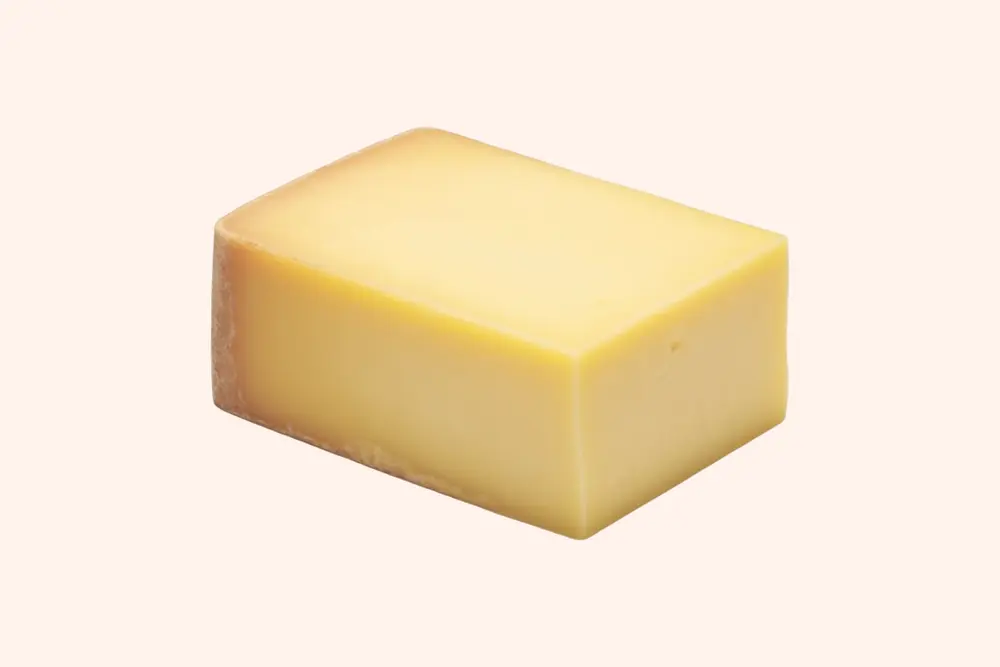
| Texture | Dense , Smooth |
| Flavor | Mild, Nutty, Slightly Buttery |
| Aroma | Mild, Slightly Nutty, Buttery |
| Colors | Pale Yellow to Golden |
| Forms | Block, Wheel, Sliced, Shredded |
| Age | Typically 3-6 months |
| Rennet Type | Microbial or Vegetarian (varies by producer) |
| Alternative Spellings | Gruyère |
What is American Gruyere Cheese?
Gruyere takes its name from the town of Gruyères in Fribourg, and the Swiss cheese comes from the Fribourg, Vaud, Neuchâtel, Jura and Bern cantons. Gruyère-style cheeses are also made in the United States, where Wisconsin has the largest output.
The name is open to American producers. A U.S. District Court ruled in 2021 that gruyere had become a generic term for a certain type of cheese, and the Fourth Circuit affirmed that decision in March 2023. Swiss producers still hold a US certification mark as Le Gruyère Switzerland AOC, secured in 2013. FDA standards of identity for Gruyere cheese call for small holes or eyes.
The Swiss method starts with raw cow's milk heated to 34 °C (93 °F) in a copper vat, then curdled with liquid rennet. The curd is cut into pea-sized pieces and stirred, cooked at 43 °C (109 °F) and raised quickly to 54 °C (129 °F), then pressed in moulds, salted in brine and smeared with bacteria. It ripens two months at room temperature on wooden boards and can be cured for 3 to 10 months, with long curing producing intense flavour.
Gruyere is sweet with a slightly salty edge, and the flavour shifts a lot with age. Young cheese tastes creamy and nutty. Fully aged, at five months to a year, it turns earthy and more assertive and develops small cracks that give a slightly grainy texture. Modern Gruyère has few if any eyes, which separates it from Emmental.
It melts well and is a standard choice for fondue, along with Vacherin Fribourgeois and Emmental. Bakers use it because the taste is distinctive without overpowering other ingredients, as in quiche. It also goes into French onion soup, croque-monsieur, and chicken and veal cordon bleu, and grated over salads and pasta. Riesling, sparkling cider and Bock beer pair well with it.
How Does American Gruyere Cheese Compare?
The most relevant cheeses to compare American Gruyere against.