Cottage Cheese
Loved by 4 people from the United States.
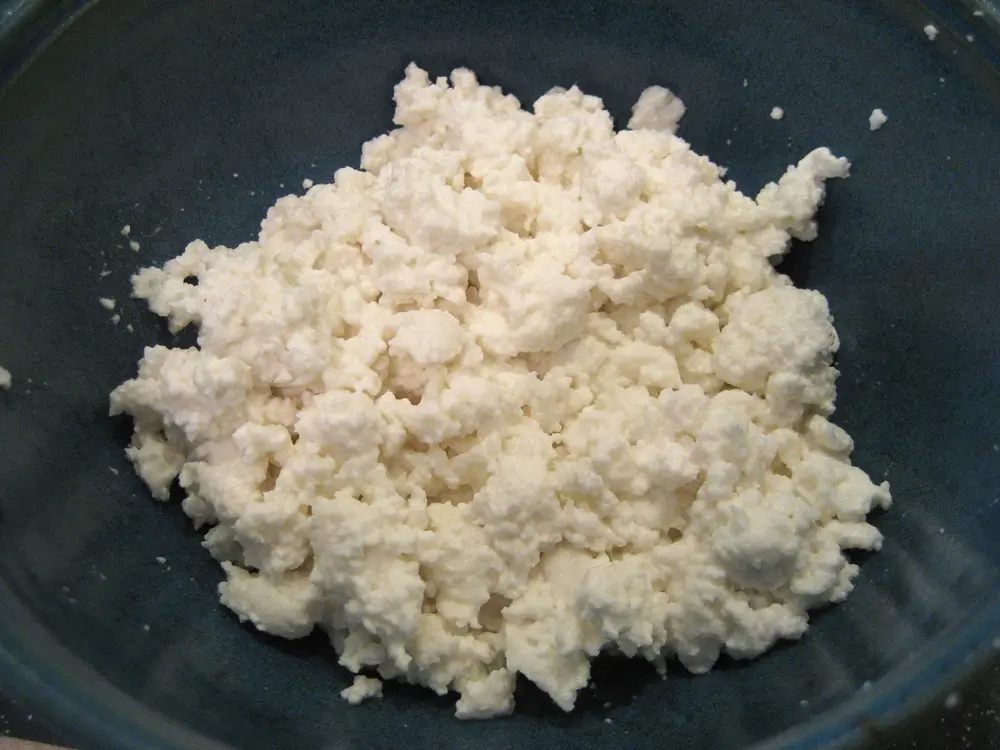
Cottage cheese is an unaged fresh cheese made from skimmed milk, with mild, slightly tangy curds mixed with cream and salt. It is known as a high-protein, low-fat food eaten with fruit, vegetables, bread, and desserts.
Key Facts
| Country of Origin | United Kingdom, United States |
| Specific Origin | Philadelphia, the U.S. |
| Milk Type | Cow's skimmed milk |
| Milk Treatment | Pasteurized |
| Fat Content | 4% in full fat, also low-fat and fat-free |
| Moisture Content | 78% in full fat |
| Rind | None |
| Texture | Creamy, heterogeneous, curdy |
| Flavor | Mild, slightly tangy |
| Aroma | Lactic, buttery from diacetyl |
| Colors | White |
| Age | Unaged |
| Rennet Type | Microbial or animal in the cultured method, none in the direct acid-set method |
What is Cottage Cheese?
Cottage cheese belongs to a long line of farmhouse cheeses. European farmers soured milk and separated the whey from the curds for centuries, and the first pictorial evidence of cheesemaking, a 5,000 year old frieze from Mesopotamia, shows priests working with cow dairy. Pennsylvania Dutch immigrants carried fresh cheesemaking to the United States, and by 1831 in Philadelphia the name cottage cheese had entered American speech, after the homesteads or cottages where the curds were made. Anne Pickett set up a cottage industry cheese factory in Wisconsin in 1841 using milk from homestead cows.
Production begins with pasteurized skimmed milk, concentrated non-fat milk, or reconstituted non-fat dry milk. The cultured method, standard in the United Kingdom and continental Europe, warms the milk to 30 to 32 C (86 to 90 F) and adds a mesophilic starter culture that ferments lactose into lactic acid over 4 to 8 hours. A measured dose of microbial or animal rennet helps the proteins cross-link. Wire grids cut the gel into cubes, small-curd under 4 mm or large-curd over 8 mm, and the vats heat to 49 to 54 C (120 to 130 F) so the curd contracts and releases whey.
The direct acid-set method skips fermentation. Vinegar, citric acid, or lactic acid goes straight into cold skimmed milk to coagulate it, which cuts production time roughly in half and avoids vat failures from bacteriophages. Since no fermentation aromatics form, makers often add a starter distillate for a buttery note. In the United States this version must be labeled "direct acid set".
Washing the drained curd with chilled purified water stops acidification and rinses off excess lactic acid, which is what keeps the flavor mild. The dry curds are then blended with a pasteurized cream dressing and salt. That dressing does most of the work on taste. The result is white, creamy, and heterogeneous, slightly tangy, and never aged. Lactic acid sits at 124 to 452 mg/kg, and formic, acetic, propionic and butyric acids fill in the rest of the flavor and aroma.
In the United States and Canada it turns up in salads, on toast, as a chip dip, as a stand-in for mayonnaise in tuna salad, and in jello salad and desserts. People eat it with pineapple, pears, peaches, or mandarin oranges, and also with salt and pepper, tomatoes, or granola and cinnamon. American consumption peaked in the 1970s during the dieting boom at some $1.3 billion a year, and demand climbed again in the 2020s as a high-protein alternative to Greek yogurt.
How Does Cottage Cheese Compare?
The most relevant cheeses to compare Cottage Cheese against.


