Caciocavallo Podolico
Caciocavallo podolico is the caciocavallo made only from the milk of Podolica cows, by traditional methods and only in certain seasons. It is a table cheese served at the end of a meal, and long aging brings out aromas of pasture and scrubland.
Key Facts
| Specific Origin | Calabria, Basilicata, Campania, and Puglia |
| Milk Type | Podolica cow’s milk |
| Milk Treatment | Raw |
| Fat Content | High in omega-3 fatty acids |
| Texture | Firm, basically fibrous |
| Flavor | Savory, herbaceous, intense |
| Aroma | Herbaceous and intense |
| Colors | Golden, turns ochre or golden with age |
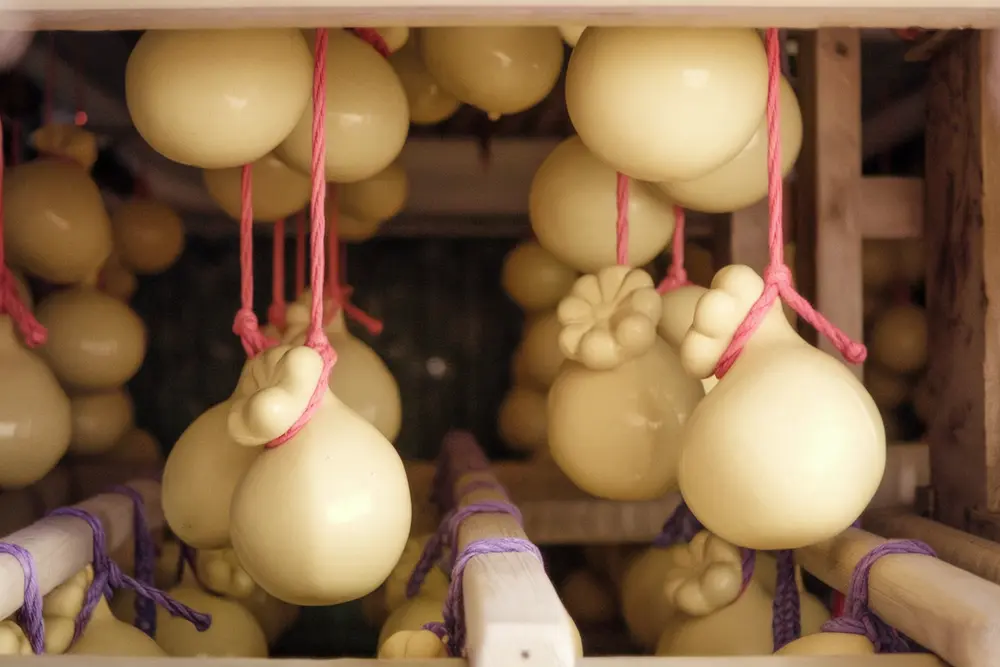
| Forms | Round, shaped with a “neck” for hanging |
| Age | Excellent at 3 months, peak at 2–3 years |
What is Caciocavallo Podolico Cheese?
Caciocavallo podolico is the variety of caciocavallo made exclusively from the milk of Podolica cows, produced the traditional way and only during certain periods of the year. The breed is raised in Abruzzo, Basilicata, Calabria, Campania, Molise, and Puglia. It came from Ukraine and arrived during the barbarian invasions.
The Podolica does well where other cattle struggle. Poor pasture, little water, hard living conditions: that is the animal's natural environment, and the milk it gives is limited and seasonal.
Aging is what shapes the cheese. Wheels can be held for five or six years, and that long maturation builds complex aromas of pasture and Mediterranean scrub along with a lingering taste that is hard to match.
It is treated as a noble cheese and eaten only at the table, usually at the end of a meal. The three best known versions are caciocavallo podolico del Gargano, lucano, and campano, all recognized by the ministry, at the request of Puglia, Basilicata, and Campania, among Italy's traditional agri-food products.
How Does Caciocavallo Podolico Cheese Compare?
The most relevant cheeses to compare Caciocavallo Podolico against.


