
Caciotta Cheese vs Paneer Cheese
Caciotta Cheese
Paneer Cheese
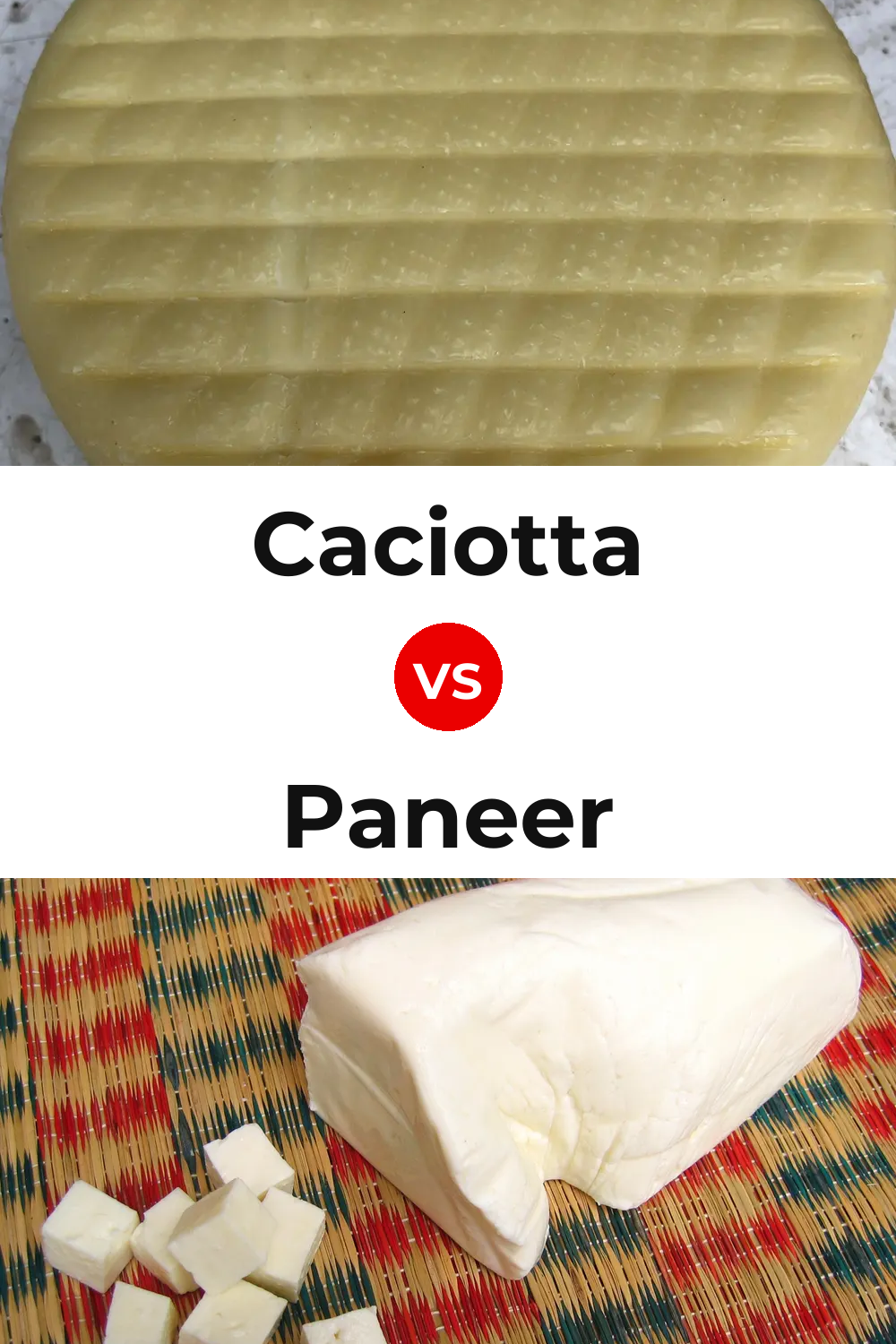
Caciotta Cheese is a semi-soft, artisan cow, goat, sheep, or buffalo-milk cheese from Italy, while Paneer Cheese is semisoft, crumbly and made from cow or buffalo milk, originating in Bangladesh and India.
What Is Caciotta Cheese?
Caciotta is an Italian cheese made from cow, sheep, goat, or water buffalo milk. It ripens for a short time and comes in small cylindrical wheels with a soft yellow rind, a pale body, and a mild flavor.
What Is Paneer Cheese?
Paneer is a fresh, non-aged cheese from South Asia, made by curdling cow or buffalo milk with acid instead of rennet. It does not melt, so it holds its shape in curries, fritters and skewered dishes like paneer tikka.
What's the Difference Between Caciotta Cheese and Paneer Cheese?
- Origin: Caciotta Cheese (Italy), Paneer Cheese (Bangladesh and India)
- Milk type: Caciotta Cheese (cow's, goat's, sheep's or water buffalo's milk), Paneer Cheese (cow's or water buffalo's milk)
- Texture: Caciotta Cheese (semi-soft, artisan), Paneer Cheese (Semisoft, crumbly)
- Rind: Caciotta Cheese (soft, yellow), Paneer Cheese (rindless)
- Aging: Caciotta Cheese (brief ripening), Paneer Cheese (Fresh)
- Taste: Caciotta Cheese (mild), Paneer Cheese (Mild, slightly milky)
Side-by-Side Comparison
| Caciotta Cheese | Paneer Cheese | |
|---|---|---|
| Country of Origin | Italy | Bangladesh And India |
| Specific Origin | Italy | Northern India, Pakistan |
| Milk Type | Cow's, goat's, sheep's or water buffalo's milk | Cow's or water buffalo's milk |
| Milk Treatment | — | Pasteurized |
| Texture | Semi-soft, artisan | Semisoft, crumbly |
| Rind | Soft, yellow | Rindless |
| Aging | Brief ripening | Fresh |
| Taste | Mild | Mild, slightly milky |
Taste Comparison: Does Caciotta Cheese Taste Like Paneer Cheese?
Caciotta Cheese reads as mild, while Paneer Cheese brings mild, slightly milky character. Aging plays into this as well. Caciotta Cheese at brief ripening develops a different profile than Paneer Cheese at fresh.
Can You Substitute Caciotta Cheese for Paneer Cheese?
Caciotta Cheese can stand in for Paneer Cheese in many dishes, but the switch will shift the overall character of the recipe. Expect semi-soft, artisan bite and body where the recipe calls for semisoft, crumbly. Flavor-wise, Caciotta Cheese reads as mild while Paneer Cheese brings mild, slightly milky notes.
Which Is Better, Caciotta Cheese or Paneer Cheese?
There's no single winner. It depends on your recipe and the profile you want. If you want a semi-soft, artisan cheese, go with Caciotta Cheese. For a semisoft, crumbly profile, Paneer Cheese is the better fit. Flavor-wise, Caciotta Cheese suits recipes that want mild notes, while Paneer Cheese fits dishes calling for mild, slightly milky.
Which is your favorite?
One click, anonymous. See what others chose.
Frequently Asked Questions
Is Caciotta Cheese the same as Paneer Cheese?
No, they're distinct cheeses. Caciotta Cheese originates in Italy, while Paneer Cheese comes from Bangladesh and India. Caciotta Cheese is made from cow, goat, sheep, or buffalo milk; Paneer Cheese uses cow or buffalo. Aging also differs: Caciotta Cheese is typically aged brief ripening, Paneer Cheese fresh.
Is Caciotta Cheese similar to Paneer Cheese?
Not closely. They use different milk bases and have distinct profiles.
Can I substitute Caciotta Cheese for Paneer Cheese?
You can, but expect a shift in richness and milk character.
Does Caciotta Cheese taste like Paneer Cheese?
Caciotta Cheese reads as mild, while Paneer Cheese is mild, slightly milky.
What is Caciotta Cheese made of?
Caciotta Cheese is made from cow, goat, sheep, or buffalo milk. It's typically aged brief ripening. It originates in Italy.
What is Paneer Cheese made of?
Paneer Cheese is made from cow or buffalo milk (pasteurized), using vinegar, lemon juice, yogurt, or buttermilk rennet. It's typically aged fresh. It originates in Bangladesh and India.
Which should I choose, Caciotta Cheese or Paneer Cheese?
It depends on the dish. The texture difference is the biggest practical tell. Caciotta Cheese is semi-soft, artisan, while Paneer Cheese is semisoft, crumbly.