
Džiugas Cheese vs Parmigiano Reggiano Cheese
Džiugas Cheese
Parmigiano Reggiano Cheese
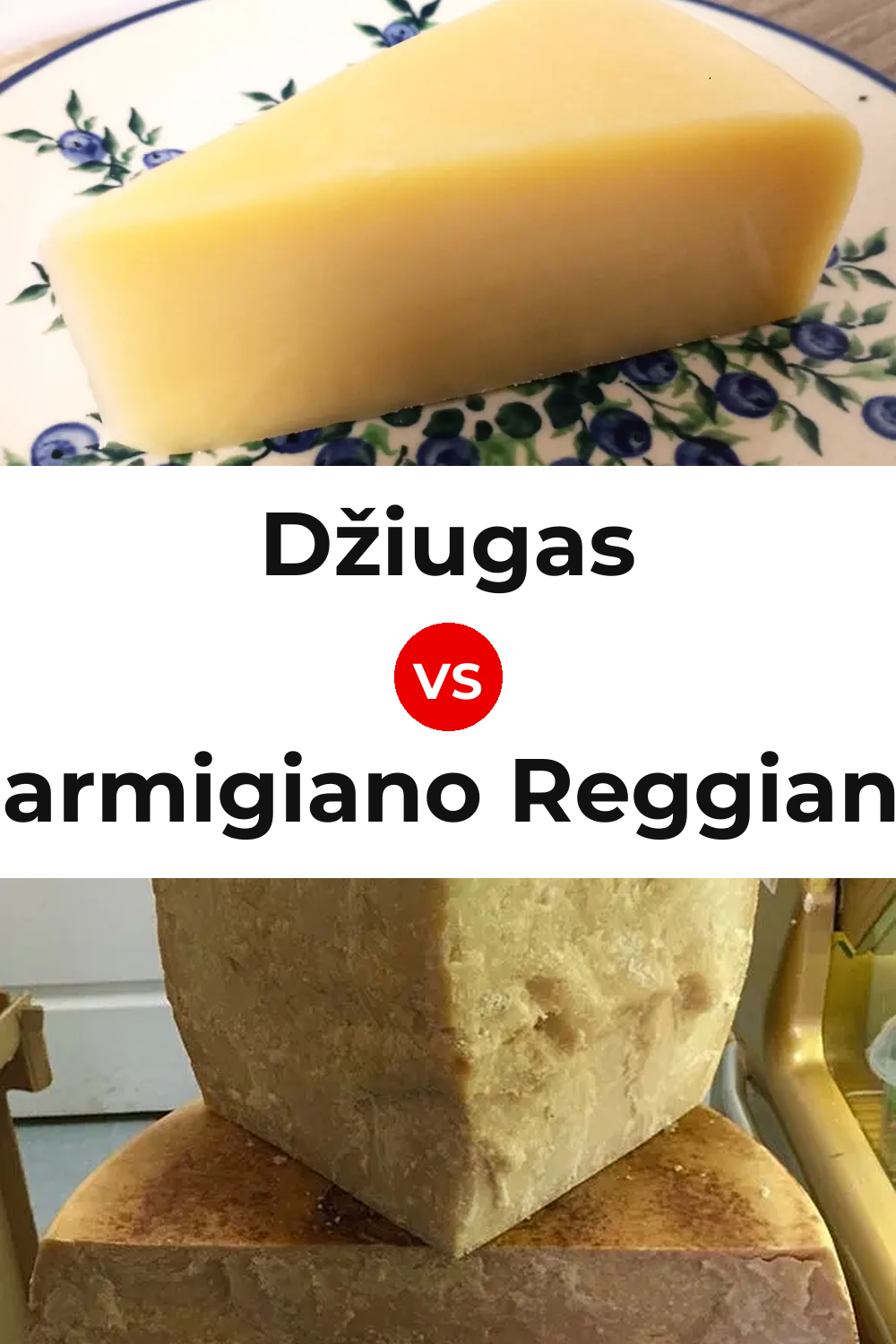
Džiugas Cheese is a hard but breaks easily; becomes harder and contains more crunchy crystals with age cow-milk cheese, while Parmigiano Reggiano Cheese is grainy, flaky and made from cow milk, originating in Italy.
What Is Džiugas Cheese?
Džiugas is a cheese from Lithuania, recognized as a Protected Geographical Indication (PGI) product. It is made from cow's milk that is standardized, pasteurized, and curdled with enzymes. The cheese is produced only from milk obtained during the grazing period, which enhances its organoleptic and microbiological qualities. Džiugas cheese is known for its long maturation process, which can range from 12 to 120 months. The cheese has a rich, sweet yet sharp taste and a hard texture that becomes crunchier with age. It is produced in the Telšiai City civil parish in north-western Lithuania. Džiugas cheese has gained a good reputation both locally and internationally, winning numerous awards and being recognized as a symbolic Lithuanian food product.
What Is Parmigiano Reggiano Cheese?
Parmigiano Reggiano is a hard, granular Italian cheese made from unpasteurised cow's milk and aged at least 12 months. Protected as a PDO across Parma, Reggio Emilia, Modena and parts of Bologna and Mantua, it is known for its sharp, salty, deeply savoury taste.
What's the Difference Between Džiugas Cheese and Parmigiano Reggiano Cheese?
- Milk treatment: Džiugas Cheese (Standardised and pasteurised), Parmigiano Reggiano Cheese (Raw)
- Texture: Džiugas Cheese (Hard but breaks easily; becomes harder and contains more crunchy crystals with age), Parmigiano Reggiano Cheese (Grainy, flaky)
- Aging: Džiugas Cheese (12 to 120 months), Parmigiano Reggiano Cheese (12 to 36 months)
- Taste: Džiugas Cheese (Rich, sweet yet sharp taste), Parmigiano Reggiano Cheese (Umami)
Side-by-Side Comparison
| Džiugas Cheese | Parmigiano Reggiano Cheese | |
|---|---|---|
| Country of Origin | — | Italy |
| Specific Origin | Telšiai City Civil Parish, Telšiai District, Samogitian Uplands, North-Western Lithuania | Emilia-Romagna Region |
| Milk Type | Cow's milk | Cow's milk |
| Milk Treatment | Standardised and pasteurised | Raw |
| Texture | Hard but breaks easily; becomes harder and contains more crunchy crystals with age | Grainy, flaky |
| Rind | — | Hard |
| Aging | 12 to 120 months | 12 to 36 months |
| Taste | Rich, sweet yet sharp taste | Umami |
Taste Comparison: Does Džiugas Cheese Taste Like Parmigiano Reggiano Cheese?
Džiugas Cheese reads as rich, sweet yet sharp taste, while Parmigiano Reggiano Cheese brings umami character. On the nose, Džiugas Cheese offers subtly fresh, with an aroma of lactic acid and dried cheese, contrasted with Parmigiano Reggiano Cheese's mild, milky. More specifically, Džiugas Cheese shows subtle fruity after-tastes, lactic acid typical of the cheese, while Parmigiano Reggiano Cheese leans toward lactic (fermented milk), sweet (fresh cream, melted butter), fruity or citrusy (apricot, banana, dried fruits, lemon, pineapple), balanced by savory nutty (hazelnut, walnut) and meaty. Aging plays into this as well. Džiugas Cheese at 12 to 120 months develops a different profile than Parmigiano Reggiano Cheese at 12 to 36 months.
Can You Substitute Džiugas Cheese for Parmigiano Reggiano Cheese?
In most recipes, Džiugas Cheese and Parmigiano Reggiano Cheese can be swapped with reasonable results. Both are cow-milk cheeses, so the base character carries over. Expect hard but breaks easily; becomes harder and contains more crunchy crystals with age bite and body where the recipe calls for grainy, flaky. Flavor-wise, Džiugas Cheese reads as rich, sweet yet sharp taste while Parmigiano Reggiano Cheese brings umami notes.
Which Is Better, Džiugas Cheese or Parmigiano Reggiano Cheese?
There's no single winner. It depends on your recipe and the profile you want. If you want a hard but breaks easily; becomes harder and contains more crunchy crystals with age cheese, go with Džiugas Cheese. For a grainy, flaky profile, Parmigiano Reggiano Cheese is the better fit. Flavor-wise, Džiugas Cheese suits recipes that want rich, sweet yet sharp taste notes, while Parmigiano Reggiano Cheese fits dishes calling for umami.
Which is your favorite?
One click, anonymous. See what others chose.
Frequently Asked Questions
Is Džiugas Cheese the same as Parmigiano Reggiano Cheese?
No, they're distinct cheeses. Aging also differs: Džiugas Cheese is typically aged 12 to 120 months, Parmigiano Reggiano Cheese 12 to 36 months.
Is Džiugas Cheese similar to Parmigiano Reggiano Cheese?
Somewhat. They share a cow-milk base but diverge in texture and flavor.
Can I substitute Džiugas Cheese for Parmigiano Reggiano Cheese?
You can, but expect a shift in bite and mouthfeel.
Does Džiugas Cheese taste like Parmigiano Reggiano Cheese?
Džiugas Cheese reads as rich, sweet yet sharp taste, while Parmigiano Reggiano Cheese is umami. Aromas also diverge. Džiugas Cheese leans subtly fresh, with an aroma of lactic acid and dried cheese, and Parmigiano Reggiano Cheese is closer to mild, milky.
What is Džiugas Cheese made of?
Džiugas Cheese is made from cow milk (standardised and pasteurised), using enzyme of microbiological origin rennet. It's typically aged 12 to 120 months.
What is Parmigiano Reggiano Cheese made of?
Parmigiano Reggiano Cheese is made from cow milk (raw), using calf rennet. It's typically aged 12 to 36 months. It originates in Italy.
Which should I choose, Džiugas Cheese or Parmigiano Reggiano Cheese?
It depends on the dish. The texture difference is the biggest practical tell. Džiugas Cheese is hard but breaks easily; becomes harder and contains more crunchy crystals with age, while Parmigiano Reggiano Cheese is grainy, flaky.