Feta Cheese vs Queijo São Jorge
Feta Cheese
Queijo São Jorge
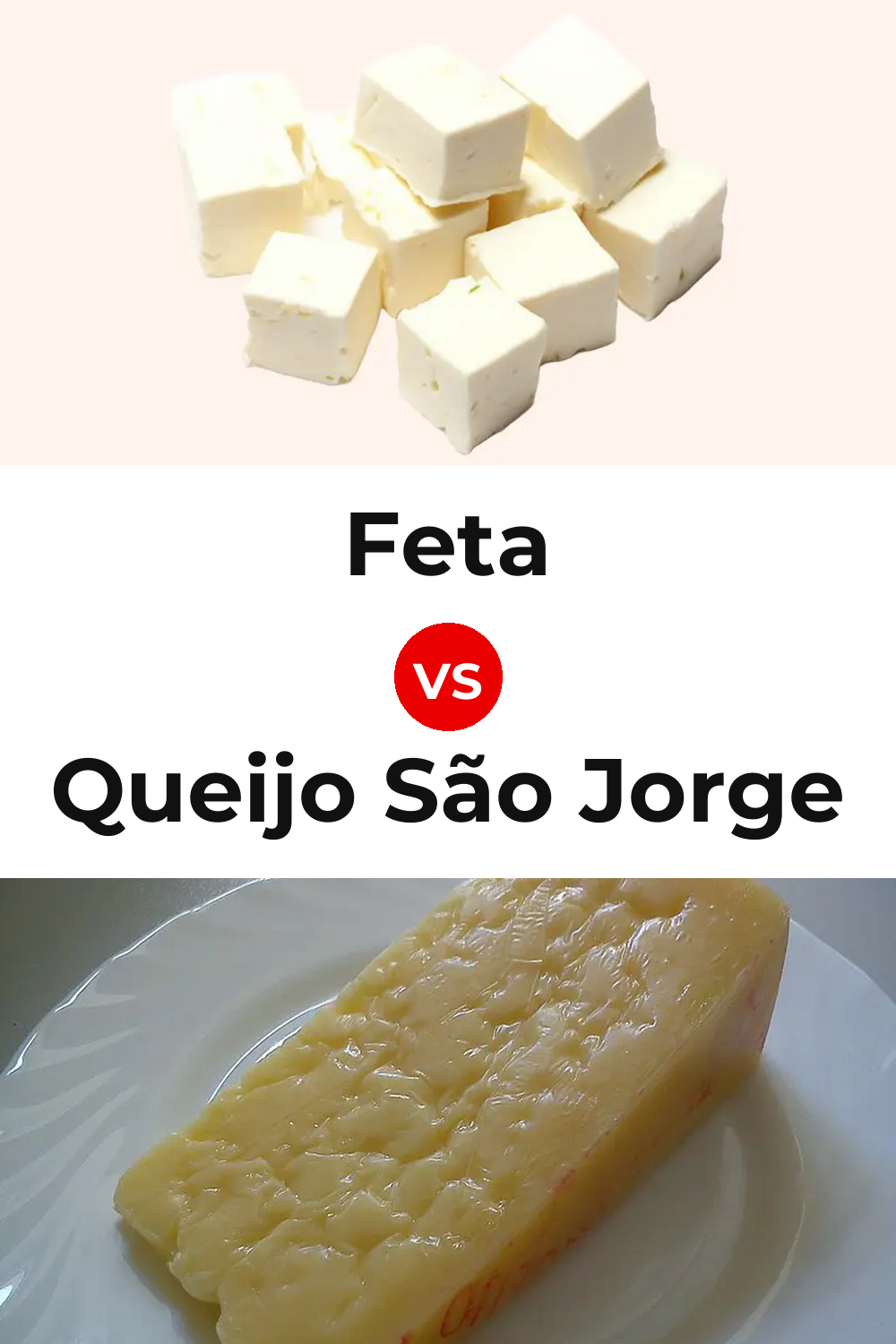
Feta Cheese is a soft, white, aged in brine goat and sheep-milk cheese from Greece, while Queijo São Jorge is firm consistency, hard or semi-hard and made from cow milk, originating in Portugal.
What Is Feta Cheese?
Feta is a Greek brined white cheese made from sheep's milk or a mix of sheep and goat's milk. It is crumbly and slightly grainy, tangy and salty, and it anchors dishes like Greek salad and spanakopita.
What Is Queijo São Jorge?
Queijo São Jorge is a semi-hard to hard cow's milk cheese made only on the island of São Jorge in the Azores. It is known for its firm, brittle yellowish paste, small irregular holes, and a strong, slightly spicy flavor that sharpens with age.
What's the Difference Between Feta Cheese and Queijo São Jorge?
- Origin: Feta Cheese (Greece), Queijo São Jorge (Portugal)
- Milk type: Feta Cheese (goat's and sheep's milk), Queijo São Jorge (Cow)
- Milk treatment: Feta Cheese (Pasteurized, sometimes raw), Queijo São Jorge (Raw)
- Texture: Feta Cheese (Soft, white, aged in brine), Queijo São Jorge (Firm consistency, hard or semi-hard)
- Rind: Feta Cheese (None), Queijo São Jorge (Natural)
- Aging: Feta Cheese (2 months to longer), Queijo São Jorge (minimum three months, up to 36 months for special editions)
- Taste: Feta Cheese (Sharp to mild), Queijo São Jorge (Peppery, grassy)
Side-by-Side Comparison
| Feta Cheese | Queijo São Jorge | |
|---|---|---|
| Country of Origin | Greece | Portugal |
| Specific Origin | Mainland Greece And Lesbos Prefecture | Island Of São Jorge, Azores |
| Milk Type | Goat's and sheep's milk | Cow |
| Milk Treatment | Pasteurized, sometimes raw | Raw |
| Texture | Soft, white, aged in brine | Firm consistency, hard or semi-hard |
| Rind | None | Natural |
| Aging | 2 months to longer | Minimum three months, up to 36 months for special editions |
| Taste | Sharp to mild | Peppery, grassy |
Taste Comparison: Does Feta Cheese Taste Like Queijo São Jorge?
Feta Cheese reads as sharp to mild, while Queijo São Jorge brings peppery, grassy character. On the nose, Feta Cheese offers ewe's milk, butter, yoghurt, contrasted with Queijo São Jorge's peppery, grassy. More specifically, Feta Cheese shows sharp, dry, hard to mild, rich, creamy depending on production methods, breed of animals, season, and diet. can be tangy or creamy. flavors of sheep’s milk, grass, and clover. variety ranges from region to region, and producer to producer., while Queijo São Jorge leans toward mild, sour aftertaste; musty, earthy, barnyardy (aged). Aging plays into this as well. Feta Cheese at 2 months to longer develops a different profile than Queijo São Jorge at minimum three months, up to 36 months for special editions.
Can You Substitute Feta Cheese for Queijo São Jorge?
Feta Cheese can stand in for Queijo São Jorge in many dishes, but the switch will shift the overall character of the recipe. Expect soft, white, aged in brine bite and body where the recipe calls for firm consistency, hard or semi-hard. Flavor-wise, Feta Cheese reads as sharp to mild while Queijo São Jorge brings peppery, grassy notes.
Which Is Better, Feta Cheese or Queijo São Jorge?
There's no single winner. It depends on your recipe and the profile you want. If you want a soft, white, aged in brine cheese, go with Feta Cheese. For a firm consistency, hard or semi-hard profile, Queijo São Jorge is the better fit. Flavor-wise, Feta Cheese suits recipes that want sharp to mild notes, while Queijo São Jorge fits dishes calling for peppery, grassy.
Which is your favorite?
One click, anonymous. See what others chose.
Frequently Asked Questions
Is Feta Cheese the same as Queijo São Jorge?
No, they're distinct cheeses. Feta Cheese originates in Greece, while Queijo São Jorge comes from Portugal. Feta Cheese is made from goat and sheep milk; Queijo São Jorge uses cow. Aging also differs: Feta Cheese is typically aged 2 months to longer, Queijo São Jorge minimum three months, up to 36 months for special editions.
Is Feta Cheese similar to Queijo São Jorge?
Not closely. They use different milk bases and have distinct profiles.
Can I substitute Feta Cheese for Queijo São Jorge?
You can, but expect a shift in richness and milk character.
Does Feta Cheese taste like Queijo São Jorge?
Feta Cheese reads as sharp to mild, while Queijo São Jorge is peppery, grassy. Aromas also diverge. Feta Cheese leans ewe's milk, butter, yoghurt, and Queijo São Jorge is closer to peppery, grassy.
What is Feta Cheese made of?
Feta Cheese is made from goat and sheep milk (pasteurized, sometimes raw), using rennet. It's typically aged 2 months to longer. It originates in Greece.
What is Queijo São Jorge made of?
Queijo São Jorge is made from cow milk (raw), using animal rennet. It's typically aged minimum three months, up to 36 months for special editions. It originates in Portugal.
Which should I choose, Feta Cheese or Queijo São Jorge?
It depends on the dish. The texture difference is the biggest practical tell. Feta Cheese is soft, white, aged in brine, while Queijo São Jorge is firm consistency, hard or semi-hard.