
Formaggio d'alpe ticinese Cheese vs Kanterkaas Cheese
Formaggio d'alpe ticinese Cheese
Kanterkaas Cheese
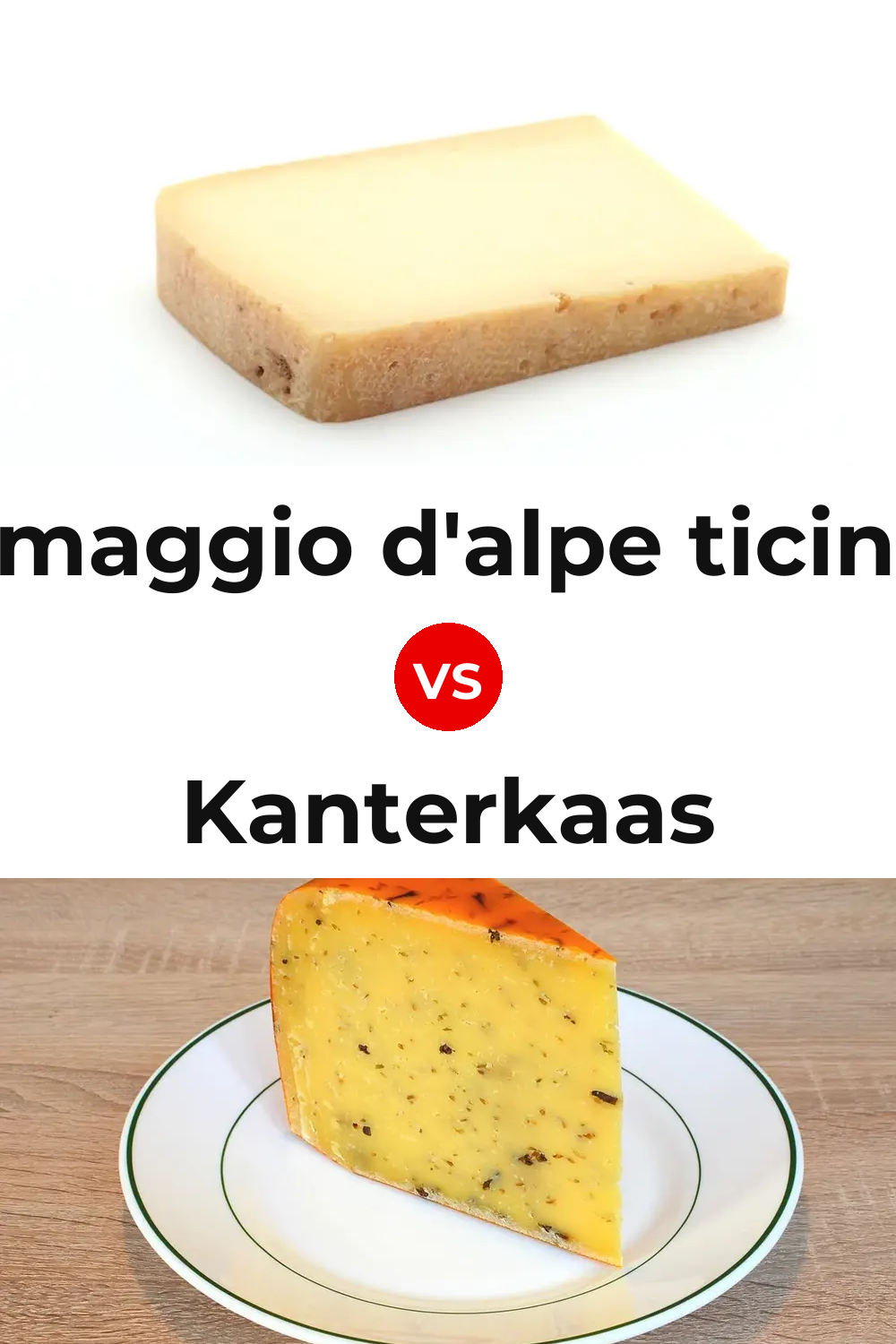
Formaggio d'alpe ticinese Cheese is a semi-hard cow or goat-milk cheese, while Kanterkaas Cheese is firm to hard and made from cow milk, originating in Netherlands.
Buy Formaggio d'alpe ticinese Cheese
Buy Kanterkaas Cheese
What Is Formaggio d'alpe ticinese Cheese?
Formaggio d'alpe ticinese is a semi-hard raw milk cheese made on the alpine pastures of Ticino, Switzerland, during the summer grazing months. It is known for its brown-grey rind and, in some valleys, a share of goat milk blended into the cow milk.
What Is Kanterkaas Cheese?
Kanterkaas is a Dutch cow's milk cheese from Friesland and the Westerkwartier, protected by a PDO since 2000. It comes plain, with cumin as Kanterkomijnekaas, or with cumin and cloves as Kanternagelkaas, and tastes sharp to strong.
What's the Difference Between Formaggio d'alpe ticinese Cheese and Kanterkaas Cheese?
- Milk type: Formaggio d'alpe ticinese Cheese (cow, sometimes with up to 30% goat), Kanterkaas Cheese (Cow)
- Milk treatment: Formaggio d'alpe ticinese Cheese (raw), Kanterkaas Cheese (Pasteurized)
- Texture: Formaggio d'alpe ticinese Cheese (semi-hard), Kanterkaas Cheese (Firm to hard)
- Rind: Formaggio d'alpe ticinese Cheese (natural, washed in brine), Kanterkaas Cheese (Natural or coated (colorless/yellow))
- Aging: Formaggio d'alpe ticinese Cheese (60 days to about 1 year), Kanterkaas Cheese (Minimum 4 weeks)
- Taste: Formaggio d'alpe ticinese Cheese (mild when young, spicier with age), Kanterkaas Cheese (Pleasant, sharp to strong (varies with age))
Side-by-Side Comparison
| Formaggio d'alpe ticinese Cheese | Kanterkaas Cheese | |
|---|---|---|
| Country of Origin | — | Netherlands |
| Specific Origin | Ticino, Switzerland | Friesland And Westerkwartier |
| Milk Type | Cow, sometimes with up to 30% goat | Cow |
| Milk Treatment | Raw | Pasteurized |
| Texture | Semi-hard | Firm to hard |
| Rind | Natural, washed in brine | Natural or coated (colorless/yellow) |
| Aging | 60 days to about 1 year | Minimum 4 weeks |
| Taste | Mild when young, spicier with age | Pleasant, sharp to strong (varies with age) |
Taste Comparison: Does Formaggio d'alpe ticinese Cheese Taste Like Kanterkaas Cheese?
Formaggio d'alpe ticinese Cheese reads as mild when young, spicier with age, while Kanterkaas Cheese brings pleasant, sharp to strong (varies with age) character. More specifically, Formaggio d'alpe ticinese Cheese shows varies by alp according to the local pasture flora, while Kanterkaas Cheese leans toward plain sharp to strong; kanterkomijnekaas fragrant and mild to strong; kanternagelkaas fragrant and sharp to strong. Aging plays into this as well. Formaggio d'alpe ticinese Cheese at 60 days to about 1 year develops a different profile than Kanterkaas Cheese at minimum 4 weeks.
Can You Substitute Formaggio d'alpe ticinese Cheese for Kanterkaas Cheese?
Formaggio d'alpe ticinese Cheese can stand in for Kanterkaas Cheese in many dishes, but the switch will shift the overall character of the recipe. Expect semi-hard bite and body where the recipe calls for firm to hard. Flavor-wise, Formaggio d'alpe ticinese Cheese reads as mild when young, spicier with age while Kanterkaas Cheese brings pleasant, sharp to strong (varies with age) notes.
Which Is Better, Formaggio d'alpe ticinese Cheese or Kanterkaas Cheese?
There's no single winner. It depends on your recipe and the profile you want. If you want a semi-hard cheese, go with Formaggio d'alpe ticinese Cheese. For a firm to hard profile, Kanterkaas Cheese is the better fit. Flavor-wise, Formaggio d'alpe ticinese Cheese suits recipes that want mild when young, spicier with age notes, while Kanterkaas Cheese fits dishes calling for pleasant, sharp to strong (varies with age).
Which is your favorite?
One click, anonymous. See what others chose.
Frequently Asked Questions
Is Formaggio d'alpe ticinese Cheese the same as Kanterkaas Cheese?
No, they're distinct cheeses. Formaggio d'alpe ticinese Cheese is made from cow or goat milk; Kanterkaas Cheese uses cow. Aging also differs: Formaggio d'alpe ticinese Cheese is typically aged 60 days to about 1 year, Kanterkaas Cheese minimum 4 weeks.
Is Formaggio d'alpe ticinese Cheese similar to Kanterkaas Cheese?
Not closely. They use different milk bases and have distinct profiles.
Can I substitute Formaggio d'alpe ticinese Cheese for Kanterkaas Cheese?
You can, but expect a shift in richness and milk character.
Does Formaggio d'alpe ticinese Cheese taste like Kanterkaas Cheese?
Formaggio d'alpe ticinese Cheese reads as mild when young, spicier with age, while Kanterkaas Cheese is pleasant, sharp to strong (varies with age).
What is Formaggio d'alpe ticinese Cheese made of?
Formaggio d'alpe ticinese Cheese is made from cow or goat milk (raw), using animal rennet. It's typically aged 60 days to about 1 year.
What is Kanterkaas Cheese made of?
Kanterkaas Cheese is made from cow milk (pasteurized), using animal rennet. It's typically aged minimum 4 weeks. It originates in Netherlands.
Which should I choose, Formaggio d'alpe ticinese Cheese or Kanterkaas Cheese?
It depends on the dish. The texture difference is the biggest practical tell. Formaggio d'alpe ticinese Cheese is semi-hard, while Kanterkaas Cheese is firm to hard.