Idiazabal Cheese vs Queso de Murcia al vino
Idiazabal Cheese
Queso de Murcia al vino
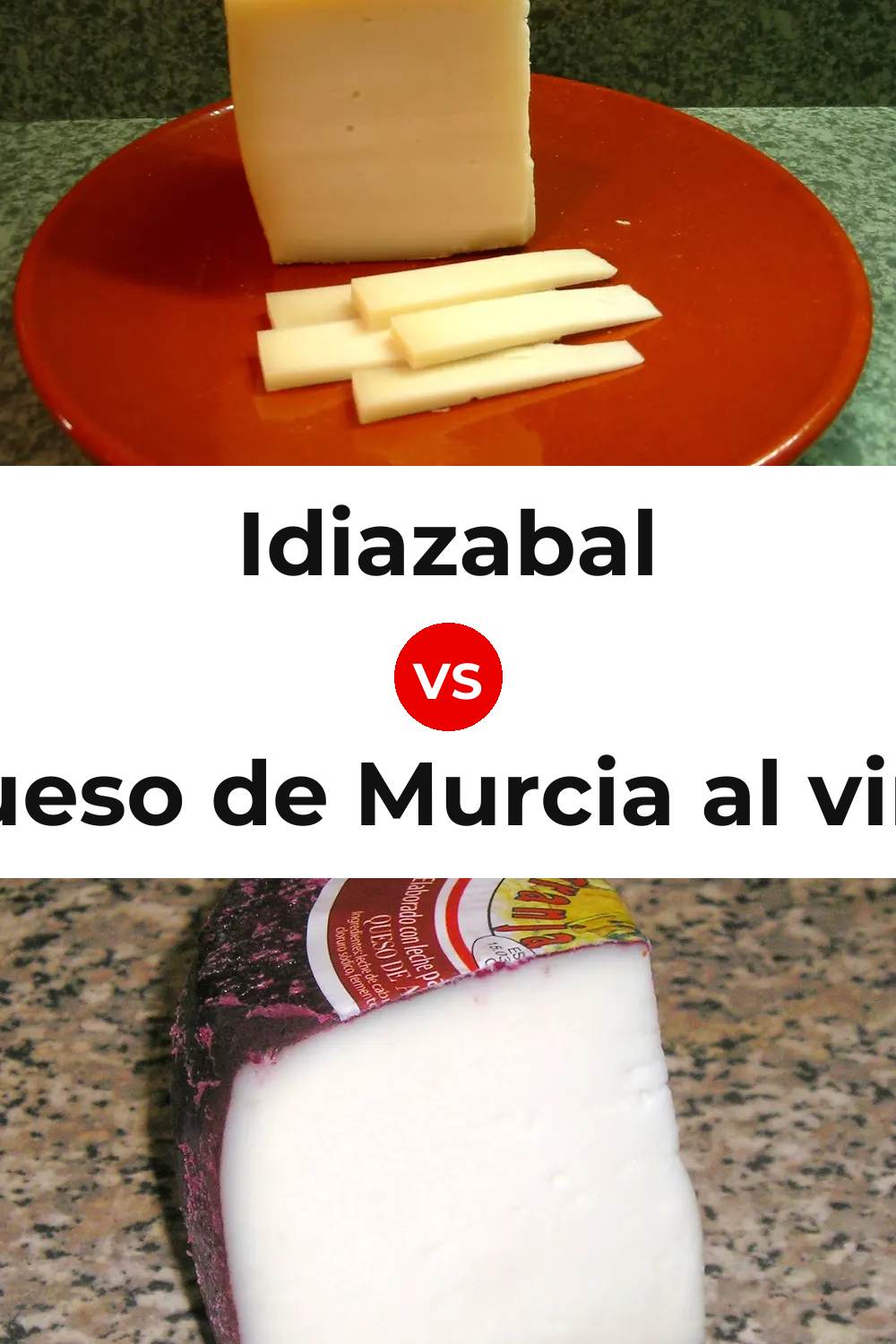
Idiazabal Cheese is a firm, slightly elastic sheep-milk cheese from Spain, while Queso de Murcia al vino is firm, elastic, uniform, creamy, unctuous and made from goat milk.
What Is Idiazabal Cheese?
Idiazabal is a pressed sheep's milk cheese from the Basque Country, made with unpasteurized milk and named after a town in Gipuzkoa. It is usually sold unsmoked, tastes strong and slightly piquant, and has held a Denomination of Origin since 1987.
What Is Queso de Murcia al vino?
Queso de Murcia al vino is a fatty goat's milk cheese from the province of Murcia in south-east Spain, with a Protected Designation of Origin. It is made from unpasteurized milk of Murcian goats, and its rind is washed in local red wine while it matures, which turns it purplish red.
What's the Difference Between Idiazabal Cheese and Queso de Murcia al vino?
- Milk type: Idiazabal Cheese (Sheep), Queso de Murcia al vino (Goat’s milk)
- Texture: Idiazabal Cheese (Firm, slightly elastic), Queso de Murcia al vino (Firm, elastic, uniform, creamy, unctuous)
- Rind: Idiazabal Cheese (Hard, smooth), Queso de Murcia al vino (Maroon-violet, smooth, fine, without cracks)
- Aging: Idiazabal Cheese (60 days), Queso de Murcia al vino (Minimum 30 days for 500g or smaller pieces)
- Taste: Idiazabal Cheese (Intense, slightly piquant), Queso de Murcia al vino (Low-to-medium intensity, persistent)
Side-by-Side Comparison
| Idiazabal Cheese | Queso de Murcia al vino | |
|---|---|---|
| Country of Origin | Spain | — |
| Specific Origin | Basque Country, Navarre | Murcia |
| Milk Type | Sheep | Goat’s milk |
| Milk Treatment | Raw | Raw |
| Texture | Firm, slightly elastic | Firm, elastic, uniform, creamy, unctuous |
| Rind | Hard, smooth | Maroon-violet, smooth, fine, without cracks |
| Aging | 60 days | Minimum 30 days for 500g or smaller pieces |
| Taste | Intense, slightly piquant | Low-to-medium intensity, persistent |
Taste Comparison: Does Idiazabal Cheese Taste Like Queso de Murcia al vino?
Idiazabal Cheese reads as intense, slightly piquant, while Queso de Murcia al vino brings low-to-medium intensity, persistent character. On the nose, Idiazabal Cheese offers lactic, roasted, animal, nutty, vegetable, contrasted with Queso de Murcia al vino's average-to-low intensity, lactic, animal (goat), wine cellar notes. More specifically, Idiazabal Cheese shows ranging from lactic and roasted notes to distinctive "acid" aromas due to lipolytic activity., while Queso de Murcia al vino leans toward balanced acidity and saltiness, fresh lactic notes (butter/cream), saltiness intensifies with age. Aging plays into this as well. Idiazabal Cheese at 60 days develops a different profile than Queso de Murcia al vino at minimum 30 days for 500g or smaller pieces.
Can You Substitute Idiazabal Cheese for Queso de Murcia al vino?
Idiazabal Cheese can stand in for Queso de Murcia al vino in many dishes, but the switch will shift the overall character of the recipe. Expect firm, slightly elastic bite and body where the recipe calls for firm, elastic, uniform, creamy, unctuous. Flavor-wise, Idiazabal Cheese reads as intense, slightly piquant while Queso de Murcia al vino brings low-to-medium intensity, persistent notes.
Which Is Better, Idiazabal Cheese or Queso de Murcia al vino?
There's no single winner. It depends on your recipe and the profile you want. If you want a firm, slightly elastic cheese, go with Idiazabal Cheese. For a firm, elastic, uniform, creamy, unctuous profile, Queso de Murcia al vino is the better fit. Flavor-wise, Idiazabal Cheese suits recipes that want intense, slightly piquant notes, while Queso de Murcia al vino fits dishes calling for low-to-medium intensity, persistent.
Which is your favorite?
One click, anonymous. See what others chose.
Frequently Asked Questions
Is Idiazabal Cheese the same as Queso de Murcia al vino?
No, they're distinct cheeses. Idiazabal Cheese is made from sheep milk; Queso de Murcia al vino uses goat. Aging also differs: Idiazabal Cheese is typically aged 60 days, Queso de Murcia al vino minimum 30 days for 500g or smaller pieces.
Is Idiazabal Cheese similar to Queso de Murcia al vino?
Not closely. They use different milk bases and have distinct profiles.
Can I substitute Idiazabal Cheese for Queso de Murcia al vino?
You can, but expect a shift in richness and milk character.
Does Idiazabal Cheese taste like Queso de Murcia al vino?
Idiazabal Cheese reads as intense, slightly piquant, while Queso de Murcia al vino is low-to-medium intensity, persistent. Aromas also diverge. Idiazabal Cheese leans lactic, roasted, animal, nutty, vegetable, and Queso de Murcia al vino is closer to average-to-low intensity, lactic, animal (goat), wine cellar notes.
What is Idiazabal Cheese made of?
Idiazabal Cheese is made from sheep milk (raw), using traditional lamb rennet. It's typically aged 60 days. It originates in Spain.
What is Queso de Murcia al vino made of?
Queso de Murcia al vino is made from goat milk (raw), using animal rennet. It's typically aged minimum 30 days for 500g or smaller pieces.
Which should I choose, Idiazabal Cheese or Queso de Murcia al vino?
It depends on the dish. The texture difference is the biggest practical tell. Idiazabal Cheese is firm, slightly elastic, while Queso de Murcia al vino is firm, elastic, uniform, creamy, unctuous.