
Lietuviškas varškės sūris Cheese vs Parmigiano Reggiano Cheese
Lietuviškas varškės sūris Cheese
Parmigiano Reggiano Cheese
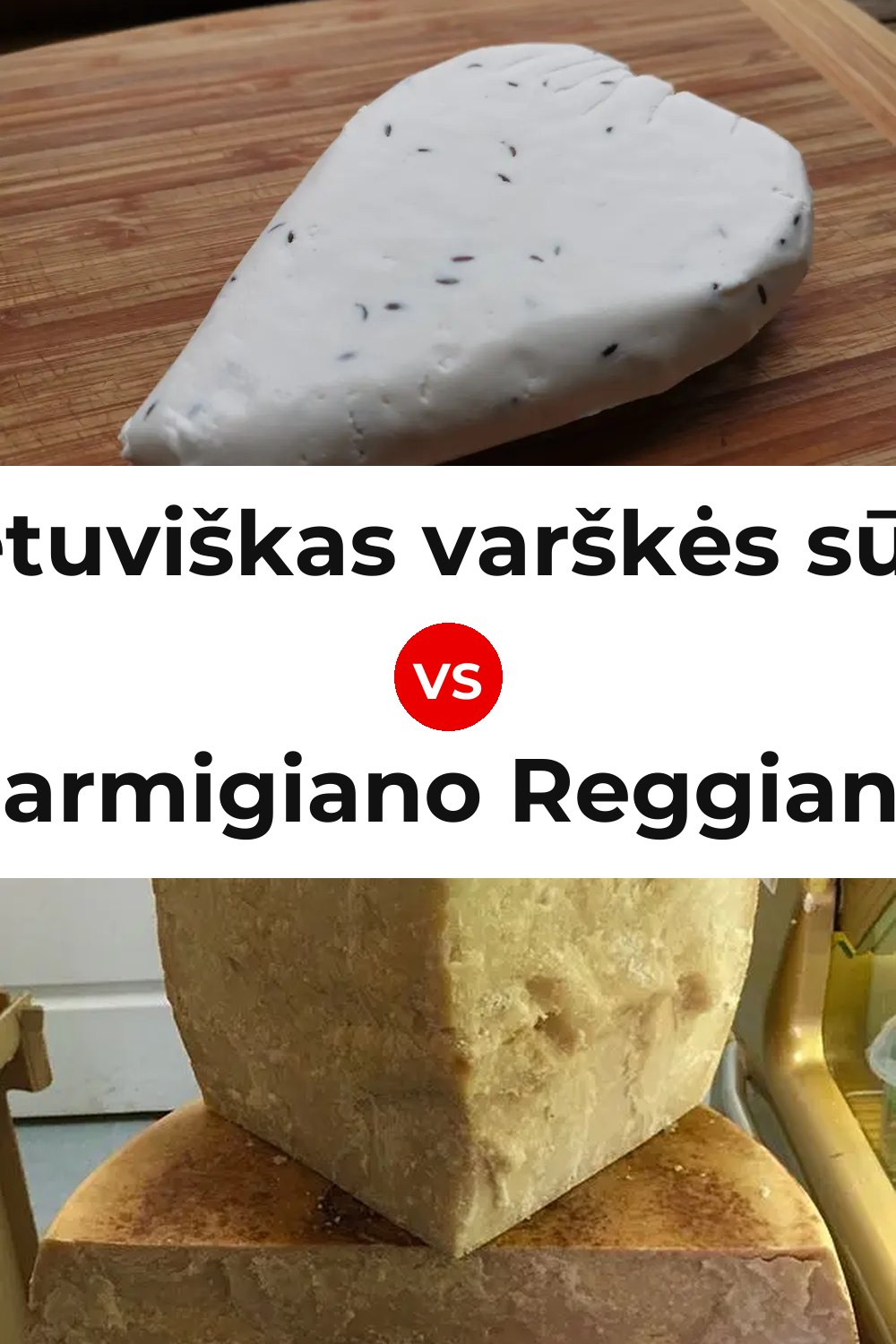
Lietuviškas varškės sūris Cheese is a soft, homogeneous, rather dense, may crumble when cut (fresh); homogeneous, dense, a little elastic (baked); homogeneous, dense, crumbly (smoked); homogeneous, hard, difficult to cut, crumbles when broken (dried) cow-milk cheese, while Parmigiano Reggiano Cheese is grainy, flaky and made from cow milk, originating in Italy.
What Is Lietuviškas varškės sūris Cheese?
Lietuviškas varškės sūris is a soft cow's milk curd cheese made in Lithuania and shaped into a triangular prism with rounded corners. It has been produced since the Middle Ages and joined the European Union list of protected products in 2013.
What Is Parmigiano Reggiano Cheese?
Parmigiano Reggiano is a hard, granular Italian cheese made from unpasteurised cow's milk and aged at least 12 months. Protected as a PDO across Parma, Reggio Emilia, Modena and parts of Bologna and Mantua, it is known for its sharp, salty, deeply savoury taste.
What's the Difference Between Lietuviškas varškės sūris Cheese and Parmigiano Reggiano Cheese?
- Milk treatment: Lietuviškas varškės sūris Cheese (Pasteurised), Parmigiano Reggiano Cheese (Raw)
- Texture: Lietuviškas varškės sūris Cheese (Soft, homogeneous, rather dense, may crumble when cut (fresh); homogeneous, dense, a little elastic (baked); homogeneous, dense, crumbly (smoked); homogeneous, hard, difficult to cut, crumbles when broken (dried)), Parmigiano Reggiano Cheese (Grainy, flaky)
- Taste: Lietuviškas varškės sūris Cheese (Characteristic lactic acid with hints of seasonings), Parmigiano Reggiano Cheese (Umami)
Side-by-Side Comparison
| Lietuviškas varškės sūris Cheese | Parmigiano Reggiano Cheese | |
|---|---|---|
| Country of Origin | — | Italy |
| Specific Origin | Lithuania | Emilia-Romagna Region |
| Milk Type | Cow's milk | Cow's milk |
| Milk Treatment | Pasteurised | Raw |
| Texture | Soft, homogeneous, rather dense, may crumble when cut (fresh); homogeneous, dense, a little elastic (baked); homogeneous, dense, crumbly (smoked); homogeneous, hard, difficult to cut, crumbles when broken (dried) | Grainy, flaky |
| Rind | — | Hard |
| Aging | — | 12 to 36 months |
| Taste | Characteristic lactic acid with hints of seasonings | Umami |
Taste Comparison: Does Lietuviškas varškės sūris Cheese Taste Like Parmigiano Reggiano Cheese?
Lietuviškas varškės sūris Cheese reads as characteristic lactic acid with hints of seasonings, while Parmigiano Reggiano Cheese brings umami character. On the nose, Lietuviškas varškės sūris Cheese offers characteristic lactic acid, smoky (for smoked cheese), contrasted with Parmigiano Reggiano Cheese's mild, milky. More specifically, Lietuviškas varškės sūris Cheese shows caraway, salt, smoky (for smoked cheese), while Parmigiano Reggiano Cheese leans toward lactic (fermented milk), sweet (fresh cream, melted butter), fruity or citrusy (apricot, banana, dried fruits, lemon, pineapple), balanced by savory nutty (hazelnut, walnut) and meaty.
Can You Substitute Lietuviškas varškės sūris Cheese for Parmigiano Reggiano Cheese?
In most recipes, Lietuviškas varškės sūris Cheese and Parmigiano Reggiano Cheese can be swapped with reasonable results. Both are cow-milk cheeses, so the base character carries over. Expect soft, homogeneous, rather dense, may crumble when cut (fresh); homogeneous, dense, a little elastic (baked); homogeneous, dense, crumbly (smoked); homogeneous, hard, difficult to cut, crumbles when broken (dried) bite and body where the recipe calls for grainy, flaky. Flavor-wise, Lietuviškas varškės sūris Cheese reads as characteristic lactic acid with hints of seasonings while Parmigiano Reggiano Cheese brings umami notes.
Which Is Better, Lietuviškas varškės sūris Cheese or Parmigiano Reggiano Cheese?
There's no single winner. It depends on your recipe and the profile you want. If you want a soft, homogeneous, rather dense, may crumble when cut (fresh); homogeneous, dense, a little elastic (baked); homogeneous, dense, crumbly (smoked); homogeneous, hard, difficult to cut, crumbles when broken (dried) cheese, go with Lietuviškas varškės sūris Cheese. For a grainy, flaky profile, Parmigiano Reggiano Cheese is the better fit. Flavor-wise, Lietuviškas varškės sūris Cheese suits recipes that want characteristic lactic acid with hints of seasonings notes, while Parmigiano Reggiano Cheese fits dishes calling for umami.
Which is your favorite?
One click, anonymous. See what others chose.
Frequently Asked Questions
Is Lietuviškas varškės sūris Cheese the same as Parmigiano Reggiano Cheese?
No, they're distinct cheeses.
Is Lietuviškas varškės sūris Cheese similar to Parmigiano Reggiano Cheese?
Somewhat. They share a cow-milk base but diverge in texture and flavor.
Can I substitute Lietuviškas varškės sūris Cheese for Parmigiano Reggiano Cheese?
You can, but expect a shift in bite and mouthfeel.
Does Lietuviškas varškės sūris Cheese taste like Parmigiano Reggiano Cheese?
Lietuviškas varškės sūris Cheese reads as characteristic lactic acid with hints of seasonings, while Parmigiano Reggiano Cheese is umami. Aromas also diverge. Lietuviškas varškės sūris Cheese leans characteristic lactic acid, smoky (for smoked cheese), and Parmigiano Reggiano Cheese is closer to mild, milky.
What is Lietuviškas varškės sūris Cheese made of?
Lietuviškas varškės sūris Cheese is made from cow milk (pasteurised), using none used rennet.
What is Parmigiano Reggiano Cheese made of?
Parmigiano Reggiano Cheese is made from cow milk (raw), using calf rennet. It's typically aged 12 to 36 months. It originates in Italy.
Which should I choose, Lietuviškas varškės sūris Cheese or Parmigiano Reggiano Cheese?
It depends on the dish. The texture difference is the biggest practical tell. Lietuviškas varškės sūris Cheese is soft, homogeneous, rather dense, may crumble when cut (fresh); homogeneous, dense, a little elastic (baked); homogeneous, dense, crumbly (smoked); homogeneous, hard, difficult to cut, crumbles when broken (dried), while Parmigiano Reggiano Cheese is grainy, flaky.