
Munster Cheese vs Munster / Munster-Géromé Cheese
Munster Cheese
Munster / Munster-Géromé Cheese
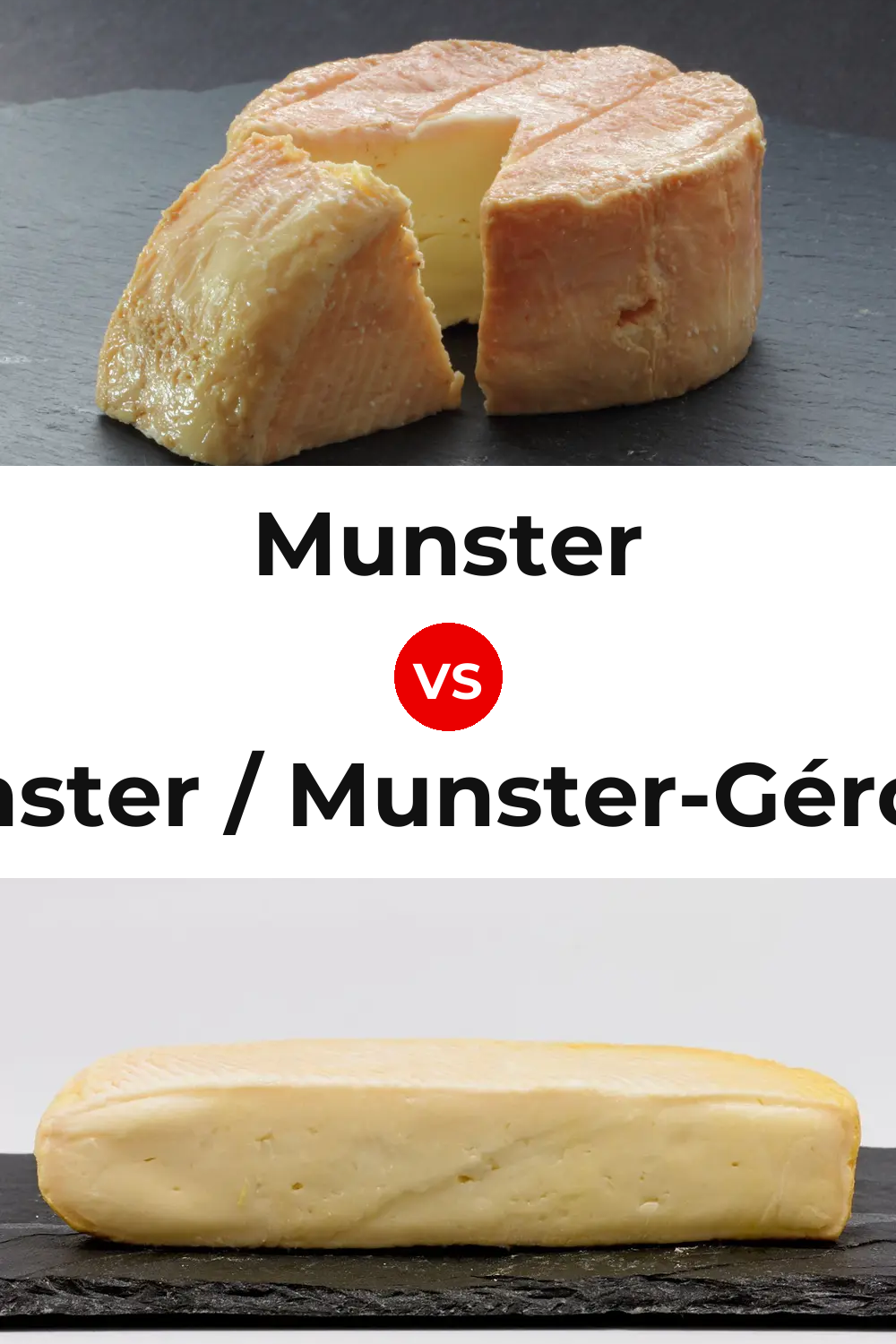
Munster Cheese is a soft cow-milk cheese from France, while Munster / Munster-Géromé Cheese is soft and made from cow milk.
Buy Munster Cheese
Buy Munster / Munster-Géromé Cheese
What Is Munster Cheese?
Munster, also called Munster-géromé, is a soft cheese made from raw cow's milk in the Vosges of eastern France. Brine washing during aging leaves it with a moist orange rind, a penetrating smell and a very strong taste.
What Is Munster / Munster-Géromé Cheese?
Munster or Munster-Géromé is a soft washed rind cheese made from cow's milk. It originates from France and is protected under the PDO (Protected Designation of Origin) status. The cheese is known for its pungent aroma and sweet taste with lactic, plant-based, woody, and slightly yeasty tones. It has a thin rind that ranges in color from ivory orange to reddish orange, due to the presence of Brevibacterium linens. The cheese is produced in various sizes and is matured for at least 14 to 21 days. It can contain caraway seeds, which add a distinct flavor. The cheese is traditionally made using milk from specific cow breeds, including Vosges, Simmental, Prim’Holstein, and Montbéliarde.
What's the Difference Between Munster Cheese and Munster / Munster-Géromé Cheese?
- Milk treatment: Munster Cheese (unpasteurized), Munster / Munster-Géromé Cheese (Can be raw or pasteurized)
- Rind: Munster Cheese (Washed, saltwater solution), Munster / Munster-Géromé Cheese (Thin and slightly smeared, ranging in color from ivory orange to reddish orange)
- Aging: Munster Cheese (4-6 weeks to 2-3 months), Munster / Munster-Géromé Cheese (At least 14 to 21 days)
- Taste: Munster Cheese (Strong, gamey), Munster / Munster-Géromé Cheese (Sweet with lactic, plant-based, woody, and slightly yeasty tones)
Side-by-Side Comparison
| Munster Cheese | Munster / Munster-Géromé Cheese | |
|---|---|---|
| Country of Origin | France | — |
| Specific Origin | Alsace, Lorraine, Franche-Comté | — |
| Milk Type | Cow's milk | Cow's milk |
| Milk Treatment | Unpasteurized | Can be raw or pasteurized |
| Texture | Soft | Soft |
| Rind | Washed, saltwater solution | Thin and slightly smeared, ranging in color from ivory orange to reddish orange |
| Aging | 4-6 weeks to 2-3 months | At least 14 to 21 days |
| Taste | Strong, gamey | Sweet with lactic, plant-based, woody, and slightly yeasty tones |
Taste Comparison: Does Munster Cheese Taste Like Munster / Munster-Géromé Cheese?
Munster Cheese reads as strong, gamey, while Munster / Munster-Géromé Cheese brings sweet with lactic, plant-based, woody, and slightly yeasty tones character. On the nose, Munster Cheese offers gamey, aromatic, contrasted with Munster / Munster-Géromé Cheese's pungent and slightly of ammonia. More specifically, Munster Cheese shows strong smell, sticky orange-red rind, mellow creamy finish, heightened bite. traditionally enjoyed with rye bread or biscuits with cumin seeds., while Munster / Munster-Géromé Cheese leans toward hay, ripe fruit, nuts. Aging plays into this as well. Munster Cheese at 4-6 weeks to 2-3 months develops a different profile than Munster / Munster-Géromé Cheese at at least 14 to 21 days.
Can You Substitute Munster Cheese for Munster / Munster-Géromé Cheese?
In most recipes, Munster Cheese and Munster / Munster-Géromé Cheese can be swapped with reasonable results. Both are cow-milk cheeses, so the base character carries over. Flavor-wise, Munster Cheese reads as strong, gamey while Munster / Munster-Géromé Cheese brings sweet with lactic, plant-based, woody, and slightly yeasty tones notes.
Which Is Better, Munster Cheese or Munster / Munster-Géromé Cheese?
There's no single winner. It depends on your recipe and the profile you want. Flavor-wise, Munster Cheese suits recipes that want strong, gamey notes, while Munster / Munster-Géromé Cheese fits dishes calling for sweet with lactic, plant-based, woody, and slightly yeasty tones.
Which is your favorite?
One click, anonymous. See what others chose.
Frequently Asked Questions
Is Munster Cheese the same as Munster / Munster-Géromé Cheese?
No, they're distinct cheeses. Aging also differs: Munster Cheese is typically aged 4-6 weeks to 2-3 months, Munster / Munster-Géromé Cheese at least 14 to 21 days.
Is Munster Cheese similar to Munster / Munster-Géromé Cheese?
Yes, they share close profiles. Same milk base and similar texture make them workable alternatives in many recipes.
Can I substitute Munster Cheese for Munster / Munster-Géromé Cheese?
Yes, quite easily. The milk base and texture are close enough that most recipes won't notice the swap.
Does Munster Cheese taste like Munster / Munster-Géromé Cheese?
Munster Cheese reads as strong, gamey, while Munster / Munster-Géromé Cheese is sweet with lactic, plant-based, woody, and slightly yeasty tones. Aromas also diverge. Munster Cheese leans gamey, aromatic, and Munster / Munster-Géromé Cheese is closer to pungent and slightly of ammonia.
What is Munster Cheese made of?
Munster Cheese is made from cow milk (unpasteurized), using traditional rennet. It's typically aged 4-6 weeks to 2-3 months. It originates in France.
What is Munster / Munster-Géromé Cheese made of?
Munster / Munster-Géromé Cheese is made from cow milk (can be raw or pasteurized), using calf abomasum rennet. It's typically aged at least 14 to 21 days.
Which should I choose, Munster Cheese or Munster / Munster-Géromé Cheese?
It depends on the dish. The table above is the fastest way to decide based on your recipe.