Port Salut Cheese vs Queijo Serra da Estrela
Port Salut Cheese
Queijo Serra da Estrela
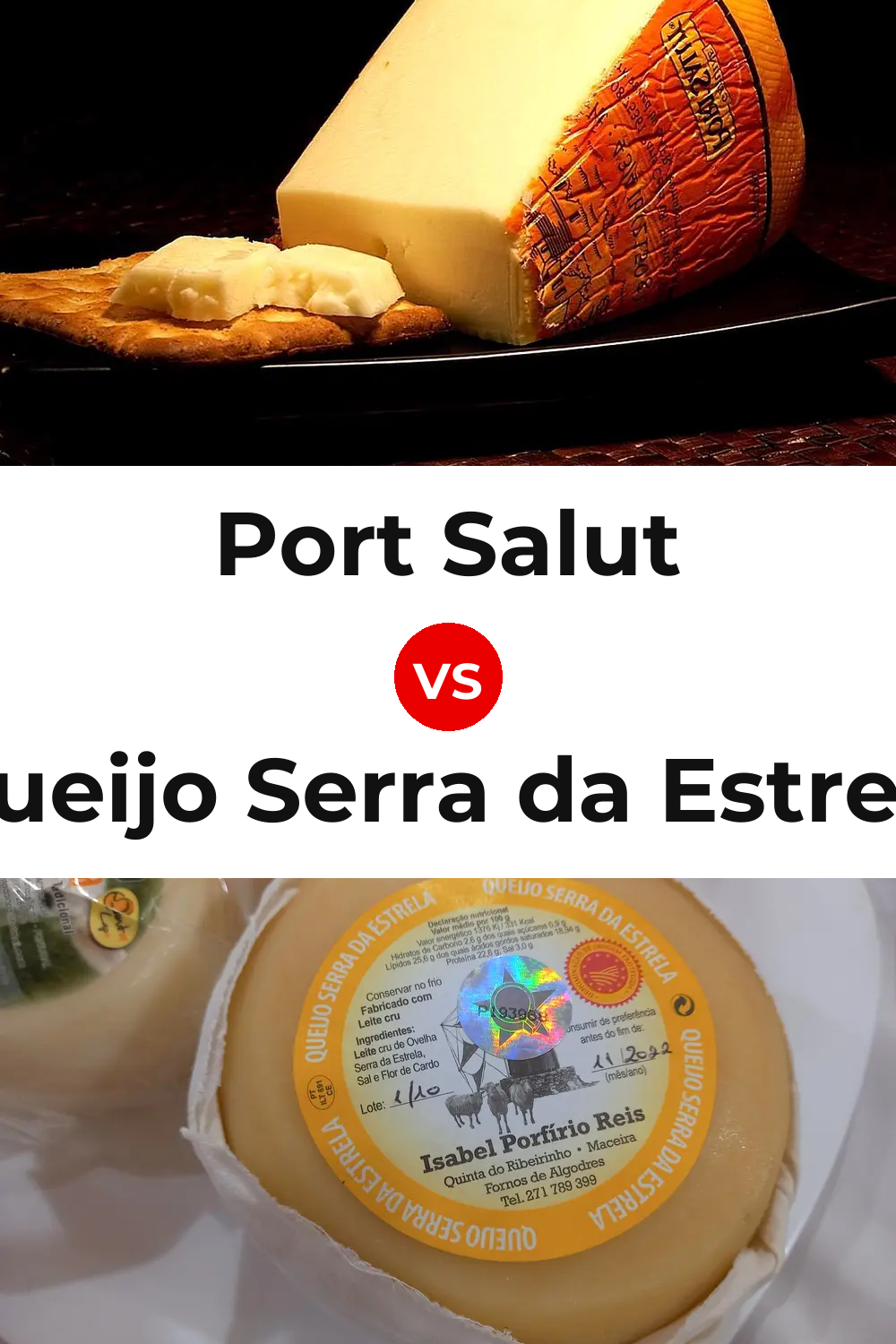
Port Salut Cheese is a semi-soft cow-milk cheese from France, while Queijo Serra da Estrela is closed, slightly buttery, creamy and smooth (standard); closed or with some eyes, slightly dry crumbly body (velho) and made from sheep milk, originating in Portugal.
What Is Port Salut Cheese?
Port Salut is a semi-soft cheese originally made by Trappist monks. It has a distinctive orange rind and a mild, savory flavor. Known for its smooth and creamy texture, Port Salut is a versatile cheese that's easily sliced and melts well, making it suitable for cooking as well as a table cheese.
What Is Queijo Serra da Estrela?
Queijo Serra da Estrela is a traditional cheese from Portugal, specifically protected under the designation of origin (PDO). It is made from raw ewe's milk from the Bordaleira Serra da Estrela and Churra Mondegueira breeds. The cheese uses the cardoon flower as a natural rennet. It is known for its unique texture and flavor, which are influenced by the specific agro-climatic conditions of the Beira uplands. The cheese is produced in a defined geographical area, ensuring its authenticity and quality. It has a minimum ripening time of 30 days, with a mature version called "Velho" that ripens for at least 120 days. The cheese is marketed in various sizes, with a minimum weight of
What's the Difference Between Port Salut Cheese and Queijo Serra da Estrela?
- Origin: Port Salut Cheese (France), Queijo Serra da Estrela (Portugal)
- Milk type: Port Salut Cheese (cow's milk), Queijo Serra da Estrela (Sheep)
- Milk treatment: Port Salut Cheese (pasteurized), Queijo Serra da Estrela (Raw)
- Texture: Port Salut Cheese (semi-soft), Queijo Serra da Estrela (Closed, slightly buttery, creamy and smooth (standard); closed or with some eyes, slightly dry crumbly body (Velho))
- Rind: Port Salut Cheese (washed), Queijo Serra da Estrela (Smooth and semi-soft (standard), smooth to slightly wrinkled and hard to extra hard (Velho))
- Taste: Port Salut Cheese (acidic, mellow), Queijo Serra da Estrela (Smooth, clean, and slightly acidic (standard); pleasant, lingering, clean, strong to slightly strong and slightly spicy/salty (Velho))
Side-by-Side Comparison
| Port Salut Cheese | Queijo Serra da Estrela | |
|---|---|---|
| Country of Origin | France | Portugal |
| Specific Origin | Brittany | Beira Uplands, Including Municipalities Such As Carregal Do Sal, Celorico Da Beira, And Others. |
| Milk Type | Cow's milk | Sheep |
| Milk Treatment | Pasteurized | Raw |
| Texture | Semi-soft | Closed, slightly buttery, creamy and smooth (standard); closed or with some eyes, slightly dry crumbly body (Velho) |
| Rind | Washed | Smooth and semi-soft (standard), smooth to slightly wrinkled and hard to extra hard (Velho) |
| Aging | — | Minimum 30 days; 120 days for "Velho" |
| Taste | Acidic, mellow | Smooth, clean, and slightly acidic (standard); pleasant, lingering, clean, strong to slightly strong and slightly spicy/salty (Velho) |
Which would you pick?
One click, anonymous — see what others chose.
Where to buy Port Salut Cheese and Queijo Serra da Estrela
Port Salut Cheese
Queijo Serra da Estrela
Taste Comparison: Does Port Salut Cheese Taste Like Queijo Serra da Estrela?
Port Salut Cheese reads as acidic, mellow, while Queijo Serra da Estrela brings smooth, clean, and slightly acidic (standard); pleasant, lingering, clean, strong to slightly strong and slightly spicy/salty (velho) character.
Can You Substitute Port Salut Cheese for Queijo Serra da Estrela?
Port Salut Cheese can stand in for Queijo Serra da Estrela in many dishes, but the switch will shift the overall character of the recipe. Expect semi-soft bite and body where the recipe calls for closed, slightly buttery, creamy and smooth (standard); closed or with some eyes, slightly dry crumbly body (velho). Flavor-wise, Port Salut Cheese reads as acidic, mellow while Queijo Serra da Estrela brings smooth, clean, and slightly acidic (standard); pleasant, lingering, clean, strong to slightly strong and slightly spicy/salty (velho) notes.
Which Is Better, Port Salut Cheese or Queijo Serra da Estrela?
There's no single winner. It depends on your recipe and the profile you want. If you want a semi-soft cheese, go with Port Salut Cheese. For a closed, slightly buttery, creamy and smooth (standard); closed or with some eyes, slightly dry crumbly body (velho) profile, Queijo Serra da Estrela is the better fit. Flavor-wise, Port Salut Cheese suits recipes that want acidic, mellow notes, while Queijo Serra da Estrela fits dishes calling for smooth, clean, and slightly acidic (standard); pleasant, lingering, clean, strong to slightly strong and slightly spicy/salty (velho).
Frequently Asked Questions
Is Port Salut Cheese the same as Queijo Serra da Estrela?
No, they're distinct cheeses. Port Salut Cheese originates in France, while Queijo Serra da Estrela comes from Portugal. Port Salut Cheese is made from cow milk; Queijo Serra da Estrela uses sheep.
Is Port Salut Cheese similar to Queijo Serra da Estrela?
Not closely. They use different milk bases and have distinct profiles.
Can I substitute Port Salut Cheese for Queijo Serra da Estrela?
You can, but expect a shift in richness and milk character.
Does Port Salut Cheese taste like Queijo Serra da Estrela?
Port Salut Cheese reads as acidic, mellow, while Queijo Serra da Estrela is smooth, clean, and slightly acidic (standard); pleasant, lingering, clean, strong to slightly strong and slightly spicy/salty (velho).
What is Port Salut Cheese made of?
Port Salut Cheese is made from cow milk (pasteurized). It originates in France.
What is Queijo Serra da Estrela made of?
Queijo Serra da Estrela is made from sheep milk (raw), using cardoon flower (cynara cardunculus, l) rennet. It's typically aged minimum 30 days; 120 days for "velho". It originates in Portugal.
Which should I choose, Port Salut Cheese or Queijo Serra da Estrela?
It depends on the dish. The texture difference is the biggest practical tell. Port Salut Cheese is semi-soft, while Queijo Serra da Estrela is closed, slightly buttery, creamy and smooth (standard); closed or with some eyes, slightly dry crumbly body (velho).
See full profiles: Port Salut Cheese and Queijo Serra da Estrela.