Afuega'l Pitu Cheese vs Caciocavallo Palermitano Cheese
Afuega'l Pitu Cheese
Caciocavallo Palermitano Cheese
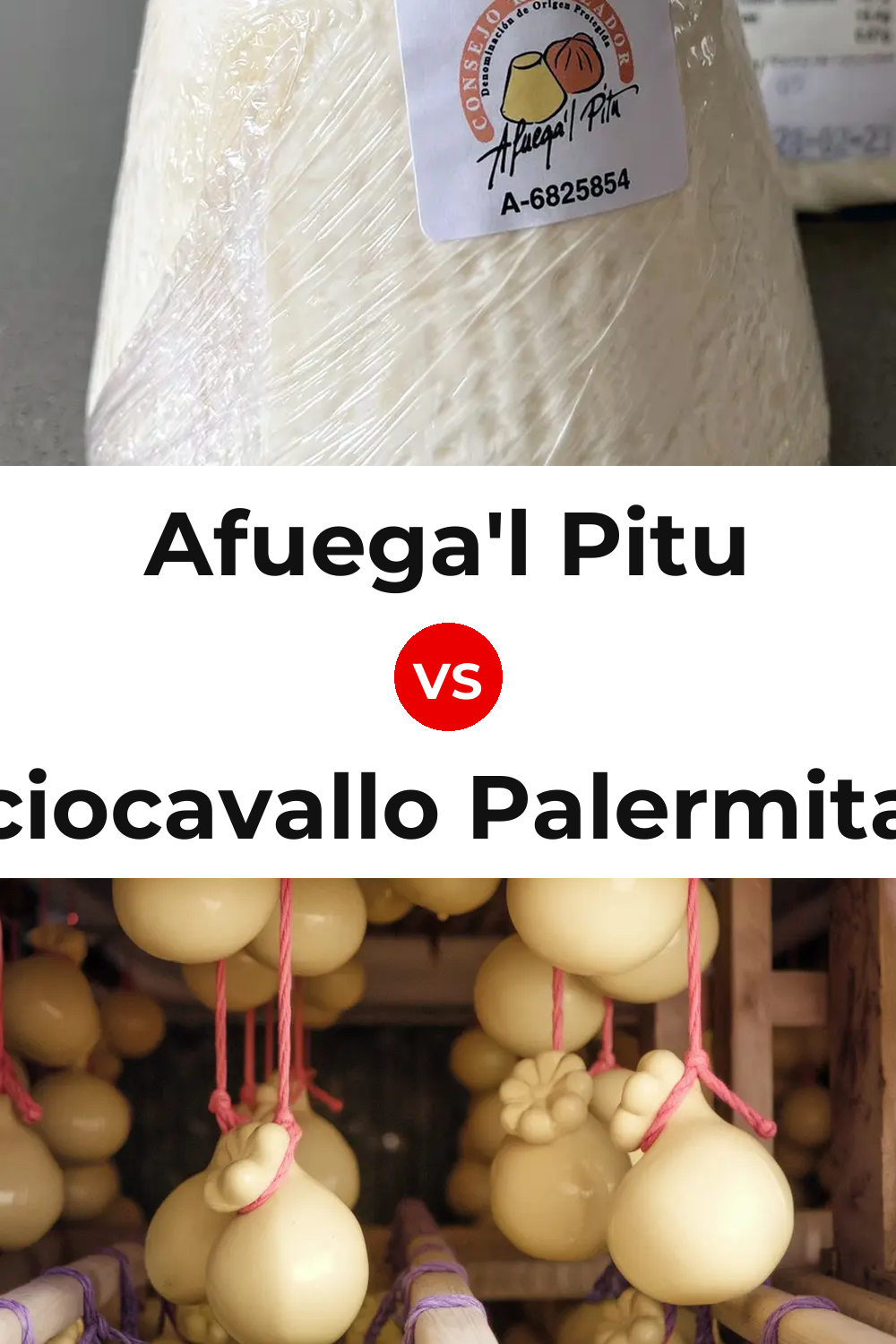
Afuega'l Pitu Cheese is a different varieties based on form, shape, and aging cow-milk cheese from Spain, while Caciocavallo Palermitano Cheese is firm and made from cow milk.
What Is Afuega'l Pitu Cheese?
Afuega'l pitu is an unpasteurized cow's milk cheese from Asturias in northern Spain, sold plain white or paprika red. Its name translates as "strangle the chicken," and it holds Protected Designation of Origin status from Spain and the EU.
What Is Caciocavallo Palermitano Cheese?
Caciocavallo Palermitano is a variant of Caciocavallo from the Palermo region of Sicily. It is made using traditional methods that include hanging the cheese in pairs tied with rope, hence the name "caciocavallo" (cheese on horseback). This cheese has a spicy, full-bodied flavor and a firm texture that softens as it matures.
What's the Difference Between Afuega'l Pitu Cheese and Caciocavallo Palermitano Cheese?
- Milk treatment: Afuega'l Pitu Cheese (unpasteurized), Caciocavallo Palermitano Cheese (Raw)
- Texture: Afuega'l Pitu Cheese (Different varieties based on form, shape, and aging), Caciocavallo Palermitano Cheese (Firm)
- Aging: Afuega'l Pitu Cheese (Fresh to mid-ripened), Caciocavallo Palermitano Cheese (Fresh or ripened (2 to >12 months))
- Taste: Afuega'l Pitu Cheese (Lactic, slightly sour, salted in fresh or hardly ripened cheeses; strong and spicy as ripening progresses), Caciocavallo Palermitano Cheese (Spicy)
Side-by-Side Comparison
| Afuega'l Pitu Cheese | Caciocavallo Palermitano Cheese | |
|---|---|---|
| Country of Origin | Spain | — |
| Specific Origin | Asturias | Province Of Palermo, Western Sicily |
| Milk Type | Cow's milk | Cow’s milk |
| Milk Treatment | Unpasteurized | Raw |
| Texture | Different varieties based on form, shape, and aging | Firm |
| Rind | White soft and rough in briefly ripened cheeses; moist, yellowish brown with moldy blue or white areas in ripened cheeses | — |
| Aging | Fresh to mid-ripened | Fresh or ripened (2 to >12 months) |
| Taste | Lactic, slightly sour, salted in fresh or hardly ripened cheeses; strong and spicy as ripening progresses | Spicy |
Taste Comparison: Does Afuega'l Pitu Cheese Taste Like Caciocavallo Palermitano Cheese?
Afuega'l Pitu Cheese reads as lactic, slightly sour, salted in fresh or hardly ripened cheeses; strong and spicy as ripening progresses, while Caciocavallo Palermitano Cheese brings spicy character. More specifically, Afuega'l Pitu Cheese shows sweet or hot spanish paprika in the roxu (red) version, while Caciocavallo Palermitano Cheese leans toward characteristic spicy notes from the native microflora; traditional process enhances flavor. Aging plays into this as well. Afuega'l Pitu Cheese at fresh to mid-ripened develops a different profile than Caciocavallo Palermitano Cheese at fresh or ripened (2 to >12 months).
Can You Substitute Afuega'l Pitu Cheese for Caciocavallo Palermitano Cheese?
In most recipes, Afuega'l Pitu Cheese and Caciocavallo Palermitano Cheese can be swapped with reasonable results. Both are cow-milk cheeses, so the base character carries over. Expect different varieties based on form, shape, and aging bite and body where the recipe calls for firm. Flavor-wise, Afuega'l Pitu Cheese reads as lactic, slightly sour, salted in fresh or hardly ripened cheeses; strong and spicy as ripening progresses while Caciocavallo Palermitano Cheese brings spicy notes.
Which Is Better, Afuega'l Pitu Cheese or Caciocavallo Palermitano Cheese?
There's no single winner. It depends on your recipe and the profile you want. If you want a different varieties based on form, shape, and aging cheese, go with Afuega'l Pitu Cheese. For a firm profile, Caciocavallo Palermitano Cheese is the better fit. Flavor-wise, Afuega'l Pitu Cheese suits recipes that want lactic, slightly sour, salted in fresh or hardly ripened cheeses; strong and spicy as ripening progresses notes, while Caciocavallo Palermitano Cheese fits dishes calling for spicy.
Which is your favorite?
One click, anonymous. See what others chose.
Frequently Asked Questions
Is Afuega'l Pitu Cheese the same as Caciocavallo Palermitano Cheese?
No, they're distinct cheeses. Aging also differs: Afuega'l Pitu Cheese is typically aged fresh to mid-ripened, Caciocavallo Palermitano Cheese fresh or ripened (2 to >12 months).
Is Afuega'l Pitu Cheese similar to Caciocavallo Palermitano Cheese?
Somewhat. They share a cow-milk base but diverge in texture and flavor.
Can I substitute Afuega'l Pitu Cheese for Caciocavallo Palermitano Cheese?
You can, but expect a shift in bite and mouthfeel.
Does Afuega'l Pitu Cheese taste like Caciocavallo Palermitano Cheese?
Afuega'l Pitu Cheese reads as lactic, slightly sour, salted in fresh or hardly ripened cheeses; strong and spicy as ripening progresses, while Caciocavallo Palermitano Cheese is spicy.
What is Afuega'l Pitu Cheese made of?
Afuega'l Pitu Cheese is made from cow milk (unpasteurized), using very small amounts of calf rennet. It's typically aged fresh to mid-ripened. It originates in Spain.
What is Caciocavallo Palermitano Cheese made of?
Caciocavallo Palermitano Cheese is made from cow milk (raw). It's typically aged fresh or ripened (2 to >12 months).
Which should I choose, Afuega'l Pitu Cheese or Caciocavallo Palermitano Cheese?
It depends on the dish. The texture difference is the biggest practical tell. Afuega'l Pitu Cheese is different varieties based on form, shape, and aging, while Caciocavallo Palermitano Cheese is firm.