Aged Goat Cheese vs Queso Camerano
Aged Goat Cheese
Queso Camerano
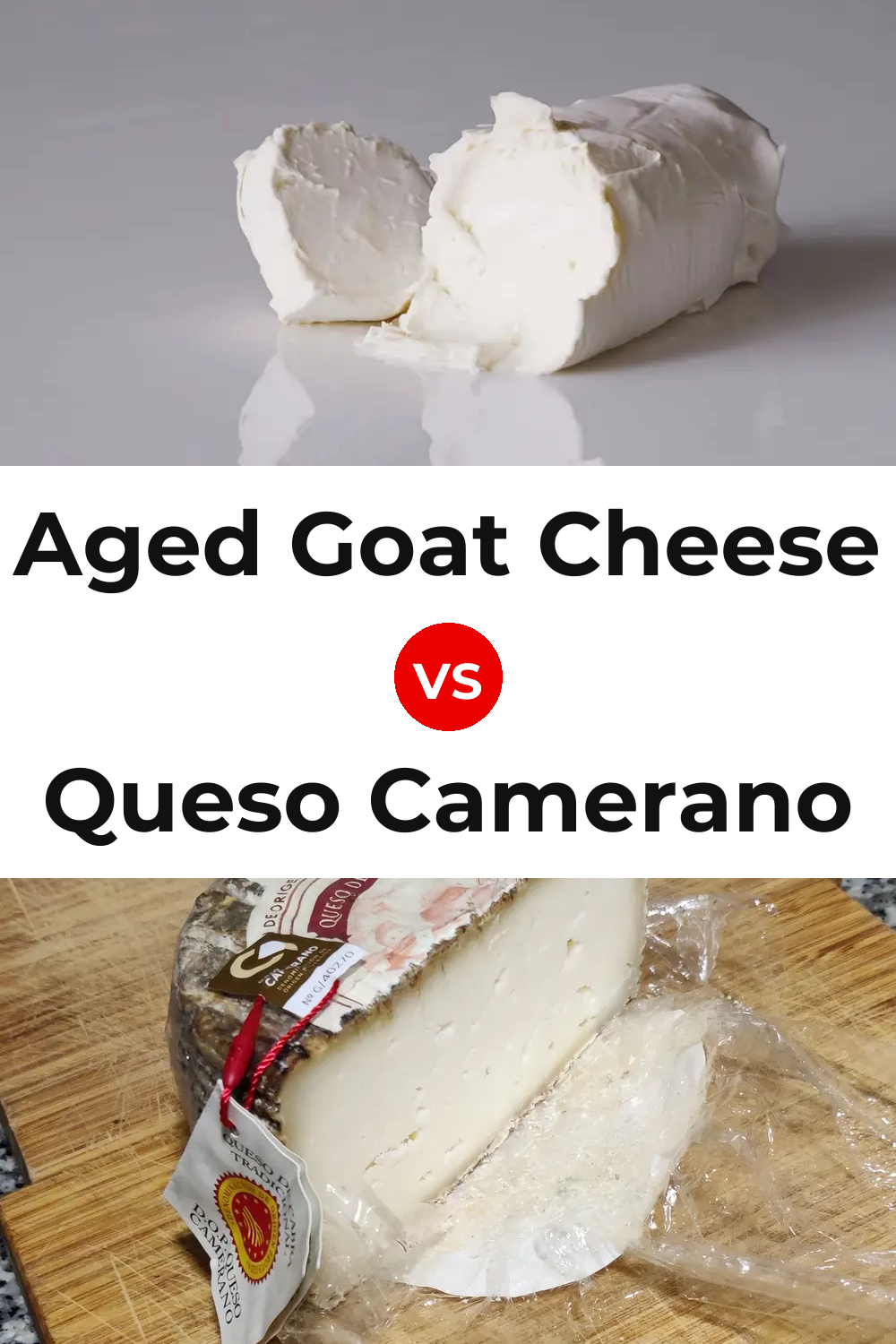
Aged Goat Cheese is a goat-milk cheese, while Queso Camerano is soft to semi-soft (fresh, soft); semi-hard to hard (semi-cured, cured) and made from goat milk.
What Is Aged Goat Cheese?
Aged Goat Cheese is made from goat's milk and is known for its firm texture and crumbly consistency. It typically has a sharp, tangy flavor with a hint of nuttiness. The aging process intensifies its taste, giving it a slightly earthy and piquant quality. The cheese usually has a pale ivory color, and its rind may develop a natural mold that adds to its depth of flavor. It can be sliced or crumbled, making it a great addition to salads, cheese boards, or as a topping for dishes that benefit from its bold taste. Aged Goat Cheese pairs well with fruits, nuts, and a variety of wines, particularly whites and light reds.
What Is Queso Camerano?
Queso Camerano is a goat's milk cheese from the Sierra de los Cameros in La Rioja, Spain, sold fresh, tierno, semi-cured or cured. It is known for the basketwork pattern left by the cilla, the wicker mold it is pressed in, and has held protected designation of origin status since 2009.
What's the Difference Between Aged Goat Cheese and Queso Camerano?
Side-by-Side Comparison
| Aged Goat Cheese | Queso Camerano | |
|---|---|---|
| Specific Origin | — | La Rioja (Rioja Alta, Sierra Rioja Alta, Sierra Rioja Media, Sierra De Rioja Baja, And Other Specified Municipalities) |
| Milk Type | Goat | Goat |
| Milk Treatment | — | Pasteurized (for fresh, soft, and semi-cured); raw or pasteurized (for cured) |
| Texture | — | Soft to semi-soft (fresh, soft); semi-hard to hard (semi-cured, cured) |
| Rind | — | None (fresh, soft); defined with mold (semi-cured, cured) |
| Aging | — | Fresh (0 days), Soft (15+ days), Semi-cured (30+ days), Cured (75+ days) |
| Taste | — | Mild, slightly acidic (fresh); stronger, slightly salty, musty (aged) |
Taste Comparison: Does Aged Goat Cheese Taste Like Queso Camerano?
Their flavor profiles are distinct.
Can You Substitute Aged Goat Cheese for Queso Camerano?
In most recipes, Aged Goat Cheese and Queso Camerano can be swapped with reasonable results. Both are goat-milk cheeses, so the base character carries over.
Which Is Better, Aged Goat Cheese or Queso Camerano?
There's no single winner. It depends on your recipe and the profile you want.
Which is your favorite?
One click, anonymous. See what others chose.
Frequently Asked Questions
Is Aged Goat Cheese the same as Queso Camerano?
No, they're distinct cheeses.
Is Aged Goat Cheese similar to Queso Camerano?
Somewhat. They share a goat-milk base but diverge in texture and flavor.
Can I substitute Aged Goat Cheese for Queso Camerano?
You can, but expect a shift in flavor and finish.
Does Aged Goat Cheese taste like Queso Camerano?
They have distinct flavor profiles. The taste row in the table above is the best direct comparison.
What is Aged Goat Cheese made of?
Aged Goat Cheese is made from goat milk.
What is Queso Camerano made of?
Queso Camerano is made from goat milk (pasteurized (for fresh, soft, and semi-cured); raw or pasteurized (for cured)), using kid, lamb or industrial rennet. It's typically aged fresh (0 days), soft (15+ days), semi-cured (30+ days), cured (75+ days).
Which should I choose, Aged Goat Cheese or Queso Camerano?
It depends on the dish. The table above is the fastest way to decide based on your recipe.