Queso Camerano 
Queso Camerano is a goat's milk cheese from the Sierra de los Cameros in La Rioja, Spain, sold fresh, tierno, semi-cured or cured. It is known for the basketwork pattern left by the cilla, the wicker mold it is pressed in, and has held protected designation of origin status since 2009.
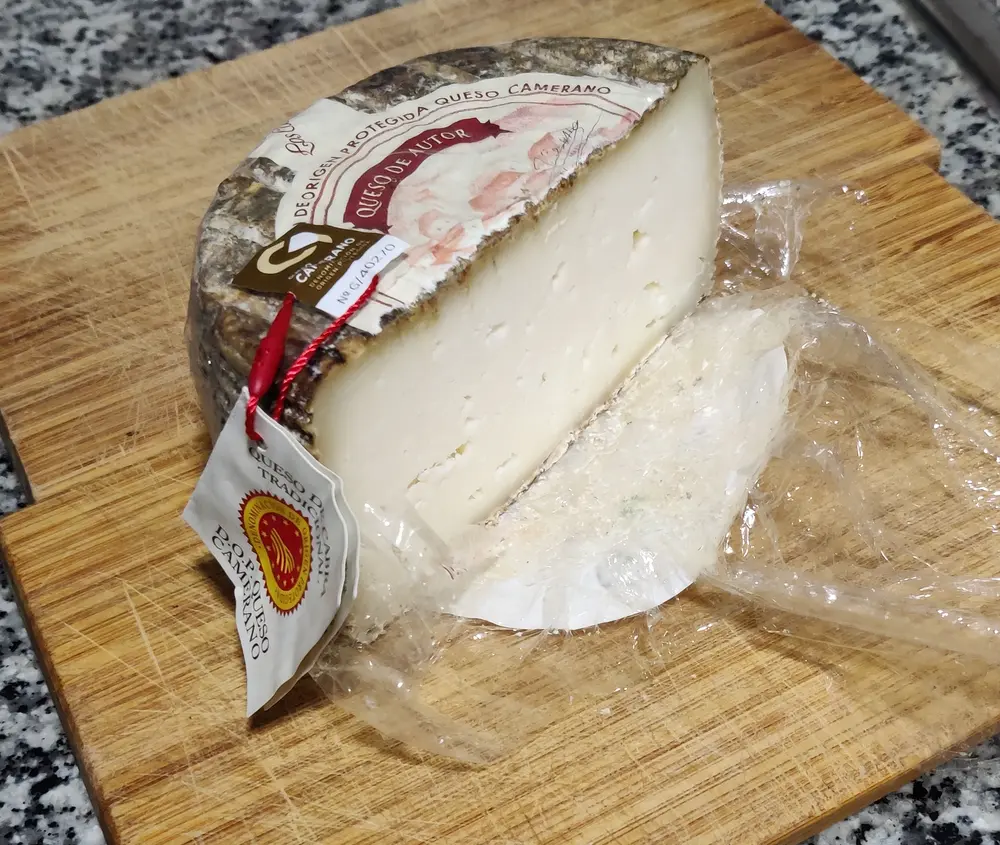
El Pantera, CC BY-SA 4.0, via Wikimedia Commons
Key Facts
| Country of Origin | Spain |
| Specific Origin | La Rioja (Rioja Alta, Sierra Rioja Alta, Sierra Rioja Media, Sierra de Rioja Baja, and other specified municipalities) |
| Protection | PDO (2009) |
| Milk Type | Goat |
| Milk Treatment | Pasteurized (for fresh, soft, and semi-cured); raw or pasteurized (for cured) |
| Fat Content | Minimum 35% (in solid content) |
| Moisture Content | Minimum 40% dry extract (fresh), 45% (tierno, semi-cured), 55% (cured) |
| Rind | None (fresh, soft); defined with mold (semi-cured, cured) |
| Texture | Soft to semi-soft (fresh, soft); semi-hard to hard (semi-cured, cured) |
| Flavor | Mild, slightly acidic (fresh); stronger, slightly salty, musty (aged) |
| Aroma | Lactic, grassy (fresh); musty, aged whey (semi-cured, cured) |
| Colors | White to ivory paste, greenish-brown external molds |
| Forms | Flattened cylinders, 200 to 800 g fresh, 200 to 1200 g aged, whole pieces |
| Age | Fresh (0 days), Soft (15+ days), Semi-cured (30+ days), Cured (75+ days) |
| Rennet Type | Kid, lamb or industrial |
| Also Known As | queso de los Cameros |
What is Queso Camerano?
Queso Camerano, also called queso de los Cameros, comes from the Sierra de los Cameros in La Rioja. The medieval writer Gonzalo de Berceo already mentioned cheeses made by the cameros, and the Catastro de Ensenada in the 18th century records goat herds in the Ebro valley around Logroño and Haro, where goat husbandry goes back to the 13th century. Tenants of the lords of los Cameros once paid some of their taxes in cheese. The application for protected designation of origin was published in 2006 and the registration was completed in November 2009, with entry in the European Union register on 4 December 2012.
Milk comes from Serrana, Murciano-Granadina, Malagueña and Alpina goats and their crosses. It is filtered, and milk from several farms is cleaned by centrifuge before pasteurizing at 71.7 C for 15 seconds. Calcium chloride is added, up to 250 mg per kilo of milk, along with lactic acid bacteria. Coagulation uses kid, lamb or industrial rennet. The curd is cut in stages until the grains reach the right size, and for semi-cured and cured cheeses the temperature is raised 2 to 5 C above the setting temperature.
After the whey drains, the curd goes into cilla molds and is pressed. Salting is done by immersion in fresh sodium chloride brine for up to 15 hours. The wheels are then turned regularly through maturing.
All four types are flattened cylinders marked by the braided wicker mold. The fresh cheese has soft paste, no ripening and weighs 200 to 800 grams, with a flavour between sweetish and acidic. Tierno is matured at least 15 days, semi-cured at least 30 days and cured at least 75 days; these weigh 200 to 1200 grams and carry a defined rind with greenish-brown molds. The paste runs white to ivory with very few eyes or none, and texture moves from semi-hard to firm and hard. Flavour is intense and well defined, with an acidic note in the younger cheeses.
It is sold as whole pieces, labelled with the protected designation of origin name and its logo bearing a number issued by the Consejo Regulador. The cheese was a staple of traditional mountain life in the sierra and appears in local rituals and celebrations.
How Does Queso Camerano Compare?
The most relevant cheeses to compare Queso Camerano against.


