Picón Bejes-Tresviso 
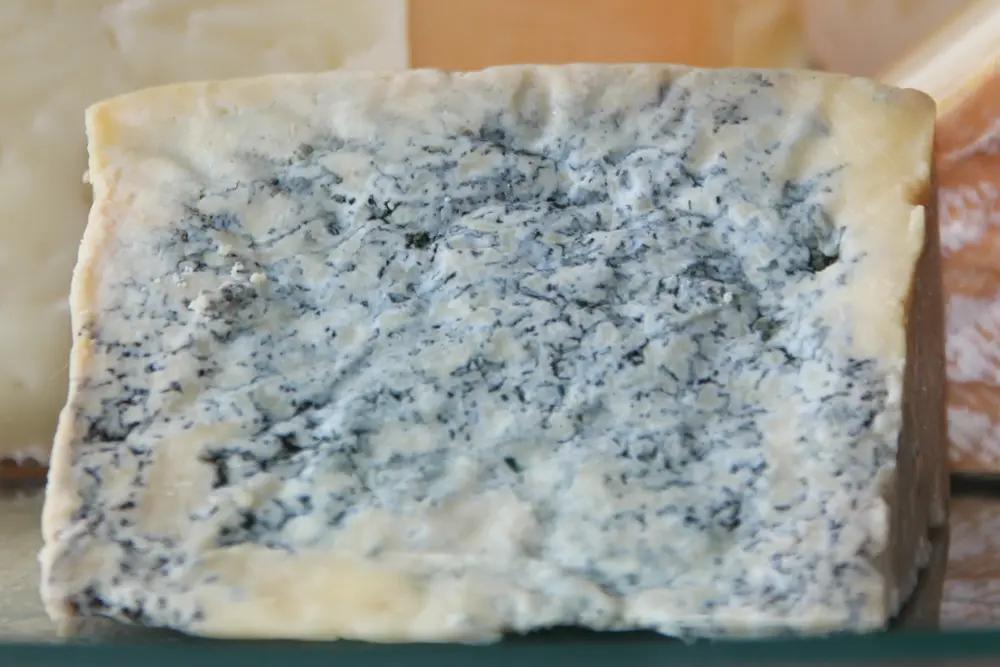
Picón Bejes-Tresviso is a blue cheese from the Liébana valley in Cantabria, Spain, made from a mix of cow, sheep and goat milk. It has held DO protection since 1994 and finishes in natural limestone caves, which gives it teal veins and a strong, slightly spicy bite.
Key Facts
| Country of Origin | Spain |
| Specific Origin | Liébana district (Potes, Pesaguero, Cabezón de Liébana, Camaleño, Castro Cillorigo, Tresviso, Vega de Liébana, and Peñarrubia) |
| Protection | PDO (1996) |
| Milk Type | Cow’s, sheep’s, and goat’s milk |
| Rind | Soft, thin, smooth |
| Texture | Soft, Semi-Hard, Compact with eyes |
| Flavor | Slightly piquant |
| Colors | White with greenish-blue veins |
| Forms | Cylindrical with flat faces |
| Age | At least 2 months in a natural limestone cave |
| Also Known As | Picón de Tresviso, Queso Picón de Bejes |
What is Picón Bejes-Tresviso Cheese?
Picón Bejes-Tresviso is a blue cheese from Cantabria, in the north of Spain. It has been protected under Denominación de Origen legislation since 1994, and before that it went by two names, Picón de Tresviso and Queso Picón de Bejes. The designated area centers on the Liébana valley, and only eight municipalities may make it: Potes, Pesaguero, Cabezón de Liébana, Camaleño, Cillorigo de Liébana, Peñarrubia, Tresviso and Vega de Liébana.
Cow, sheep and goat milk go into the mix, though the milk need not come from Bejes or Tresviso. A measured dose of rennet sets the curd, which is cut into hazelnut-sized pieces, drained and dried. Those pieces are laid loosely in the mould so air can circulate and penicillium spores can start growing. The cheese is then salted and given an initial drying and curing period of 12 to 18 days at 15 to 18 C (59 to 64 F).
Much of that work can happen in a modern industrial unit, but the DO rules require the final maturing to take place in a natural limestone cave of the kind common in Liébana, for at least two more months. The cool, humid air builds the taste and the brevibacterium crust found on many blue cheeses.
A finished wheel stands 7 to 15 cm (2.8 to 5.9 in) high and measures 15 to 20 cm (5.9 to 7.9 in) across, weighing between 700 g (1.5 lb) and 2.8 kg (6.2 lb). The rind is thin and grey to yellow-green. Inside, the paste is white, smooth and compact, cut through with streaks and patches of teal veins, and the flavour is powerful and slightly spicy.
Most cheeses now reach buyers in gold aluminum foil, which can be stamped with an authentication seal and serial number. The older wrapping of sycamore maple leaves predates the DO and is still used locally, but those cheeses carry no certification label, so leaf-bound Picón is rarely seen outside Liébana.
How Does Picón Bejes-Tresviso Cheese Compare?
The most relevant cheeses to compare Picón Bejes-Tresviso against.


