Queso de Acehúche 
Queso de Acehúche is a pressed uncooked cheese from the province of Cáceres in Extremadura, Spain, made with whole raw goat's milk. It has held a European PDO since 2022 and is known for its soft elastic paste and yellow to ochre rind, sometimes rubbed with olive oil or paprika.
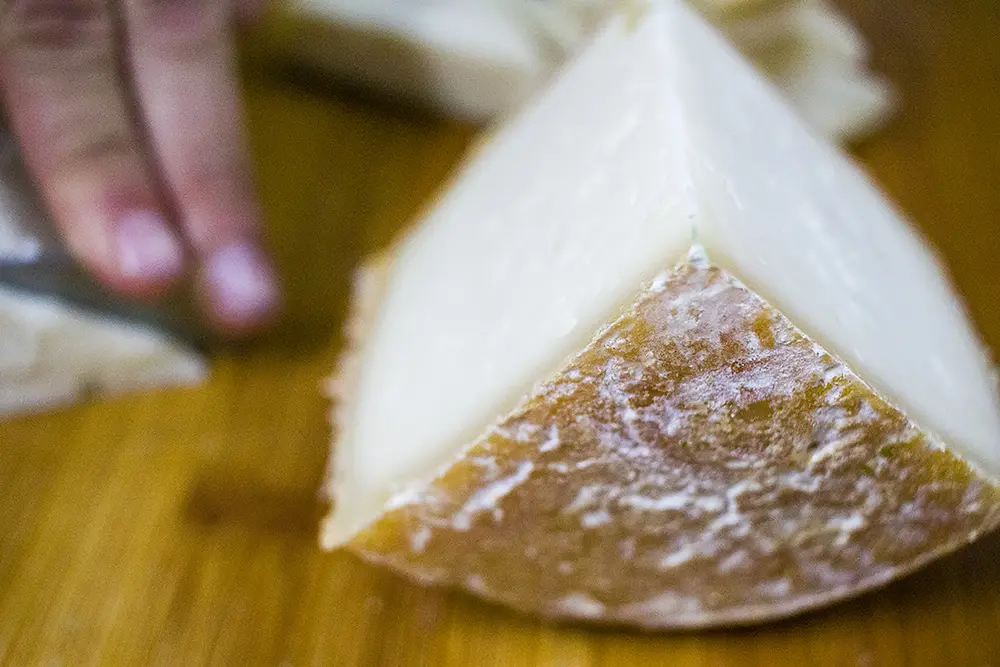
Carmenventurav, CC BY-SA 4.0, via Wikimedia Commons
Key Facts
| Country of Origin | Spain |
| Specific Origin | Cáceres, Extremadura |
| Protection | PDO (2020) |
| Milk Type | Goat |
| Milk Treatment | Raw |
| Fat Content | Minimum 45% in dry matter |
| Moisture Content | Minimum 50% total dry extract |
| Rind | Waxy, yellow to dark ochre, may develop a smear; can be coated in paprika or oil |
| Texture | Semi-hard, elastic, slightly moist |
| Flavor | Low saltiness, moderate acidity, low bitterness, low pungency, more pronounced in aged cheeses |
| Aroma | Medium to high intensity, lactic (goat’s milk) with putrid notes |
| Colors | White to ivory |
| Forms | Cylindrical wheels |
| Age | Minimum 40 days |
| Also Known As | Acehúche |
What is Queso de Acehúche?
Queso de Acehúche comes from the province of Cáceres in Extremadura, Spain. It has carried a European protected designation of origin since 2022.
The milk comes from Murciana-Granadina, Florida, Malagueña, Retinta and Verata goats, or crosses of those breeds, raised in the comarcas of Valle del Alagón and Tajo-Salor-Almonte. Whole raw milk is set with rennet and the curd is cut, moulded, then pressed lightly by hand. The pressing stays gentle, so the paste remains fairly soft and the cheese behaves much like a soft-paste cheese even though it belongs to the pressed uncooked family. Wheels are salted by hand or in a brine bath and ripened for at least 40 days.
Once the rind has formed, some wheels are washed during ripening by rubbing them with wet hands. That smooths the rind and gives it a stronger taste. The step is called sobao.
Wheels weigh from 200 g to 1.2 kg (about 7 oz to 2.6 lb). They are cylindrical, with a radius of 3.5 cm (1.4 in) or more and a height shorter than that radius. The rind runs from yellow to ochre and feels slightly rough, unless it has been washed. The paste is white and compact, sometimes with a few round holes, and it turns supple, elastic and sticky in the mouth. Fat is at least 45 percent of dry matter, dry matter at least 50 percent of the weight, salt at least 4 percent, and the pH sits between 5 and 6.
Shops often sell it in halves or quarters rather than whole. Rinds are sometimes rubbed with olive oil or paprika before sale.
How Does Queso de Acehúche Compare?
The most relevant cheeses to compare Queso de Acehúche against.


