Queso Zamorano 
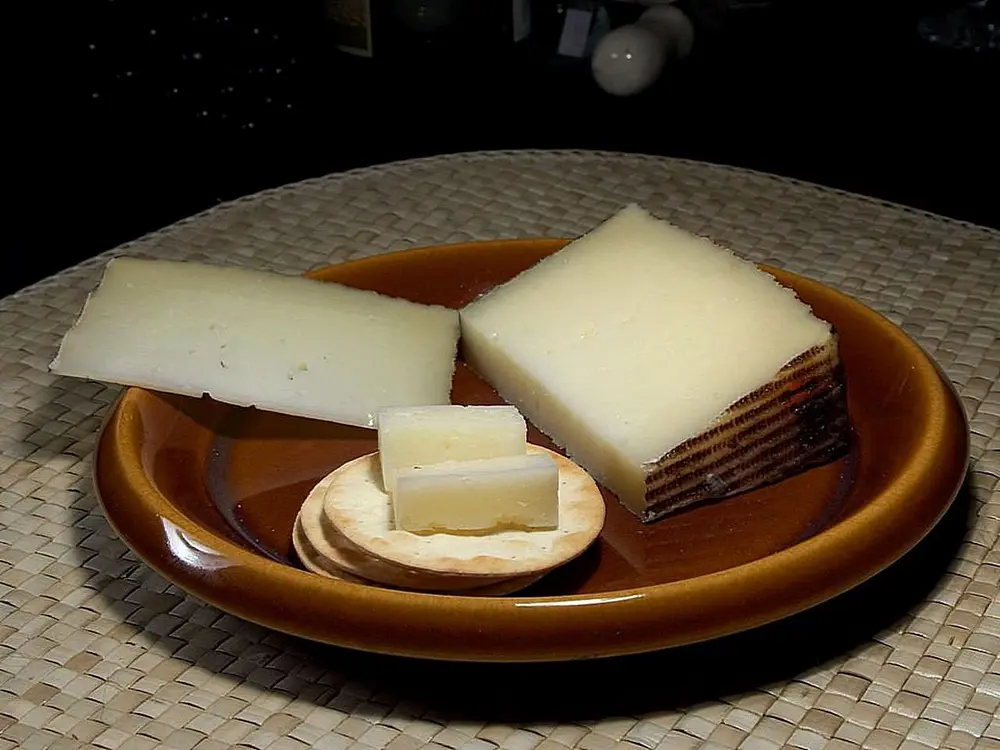
Zamorano is a hard sheep's milk cheese from the province of Zamora, Spain, typically aged about six months in cellars. Wheels run about 11 kg (24 lb), carry a zigzag pattern on the rind, and taste creamy and nutty with a hint of piquancy.
Key Facts
| Country of Origin | Spain |
| Specific Origin | Province of Zamora, Castile-León region |
| Protection | PDO (1996) |
| Milk Type | Sheep's milk |
| Milk Treatment | Unpasteurized |
| Rind | Pale yellow to dark gray |
| Texture | Firm and compact |
| Flavor | Intense, nutty, buttery, slightly piquant |
| Aroma | Sweet |
| Colors | Pale yellow to dark gray |
| Forms | Cylindrical, distinctive zigzag pattern on the sides |
| Age | More than 100 days |
| Rennet Type | Animal rennet |
| Alternative Spellings | Queso zamorano |
| Also Known As | Zamorano DOP, Zamorano |
What is Queso Zamorano?
Zamorano comes from the province of Zamora in Spain, where cheese making reaches far back. Clay drainage molds from the Bronze Age are kept in the Museum of Zamora. Columella wrote about how cheese was made and stored there under Roman rule, and town ordinances, feudal contracts and tithe records kept mentioning it for centuries after.
The milk comes from Churra and Castilian sheep, the breeds that dominate the region. Cold, humid conditions and long aging in cellars shape the cheese as much as the milk does. Wheels are turned often and rubbed with olive oil, which is what darkens the rind.
The shape is cylindrical, roughly 11 kg (24 lb), with a distinctive zigzag pattern on the rind like Castellano or Manchego. It is hard, aged about six months, and tastes creamy, sweet and savory with a hint of piquancy. Some tasters call it hearty and nutty, close to Manchego in flavor.
A Denominación de Origen sets out how it is produced, what goes into it and how it matures. Today it is one of the most sought after products of the province.
How Does Queso Zamorano Compare?
The most relevant cheeses to compare Queso Zamorano against.


