Quesucos de Liébana 
Quesucos de Liébana are small cheeses from the Liébana valley in Cantabria, Spain, made from cow, sheep or goat milk or a mix of the three. They come smoked and unsmoked, with a firm semi-hard paste and a mild, slightly sweet taste.
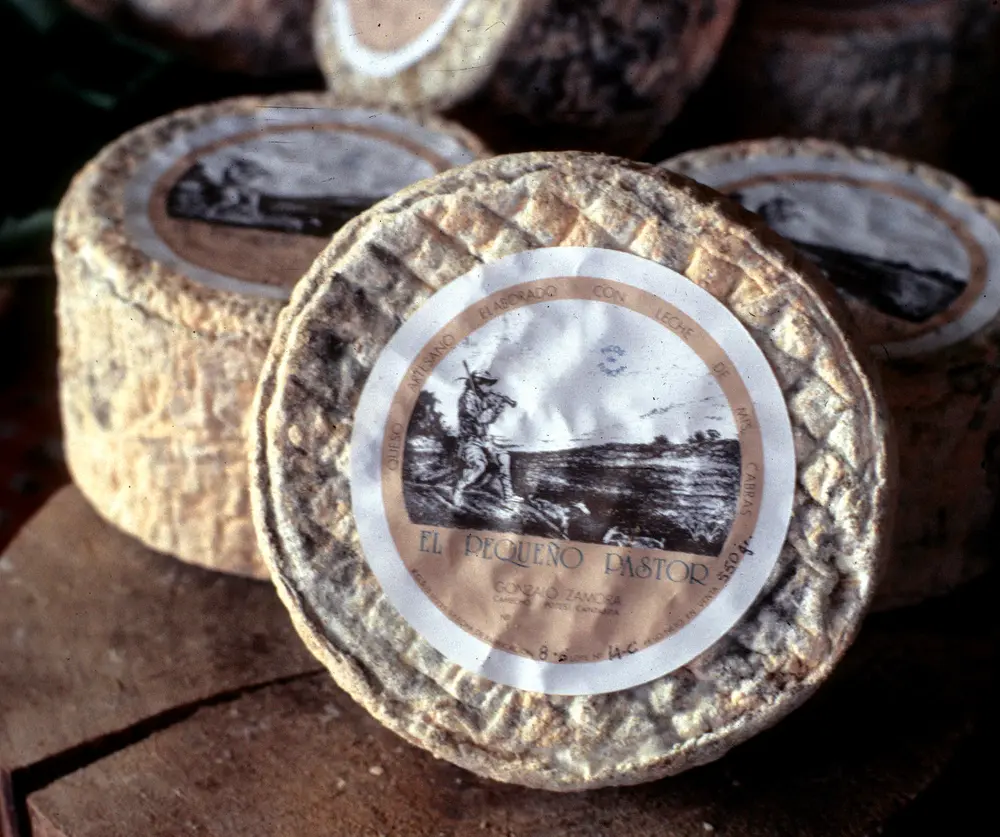
LBM1948, CC BY-SA 4.0, via Wikimedia Commons
Key Facts
| Country of Origin | Spain |
| Specific Origin | Liébana district, Cantabria |
| Protection | PDO (1996) |
| Milk Type | Cow’s, ewe’s, goat’s milk |
| Fat Content | Minimum 45% on dry matter |
| Moisture Content | Minimum 30% |
| Rind | Natural, rough and irregular |
| Texture | Firm, compact |
| Flavor | Mild and milky, with a smoked variant offering a distinct smoky taste |
| Aroma | Natural or smoked, depending on the variety |
| Colors | Yellowish paste |
| Forms | Cylindrical or wheel-shaped |
| Rennet Type | Animal |
What is Quesucos de Liébana Cheese?
Liébana is rough, hard-to-reach country in Cantabria, Spain. Shepherds there kept their milk from going to waste by turning it into small cheeses, the quesucos. Under the protected designation, the milk has to come from Potes, Pesaguero, Cabezón de Liébana, Camaleño, Cillorigo de Liébana, Tresviso, Vega de Liébana and Peñarrubia, and the cheese is made and matured in the same area.
Three species supply the milk: Tudanca, Brown Alpine and Friesian cows, Lacha sheep, and Pyrenean and Picos de Europa goats. It is coagulated with animal rennet at 28 to 32 °C (82 to 90 °F), then the curd goes into moulds that shape it and let it drain on its own. Salt is added at 2 to 3 percent of the cheese weight. Smoking, done over juniper wood for a day to a day and a half, was a shepherd's way of making the cheese last longer.
The shape is cylindrical or discoidal, 8 to 12 cm (3 to 5 in) wide and 3 to 10 cm (1 to 4 in) high. The rind is rough and uneven. Inside, the paste is firm and compact, faintly yellow, brown in the smoked ones, with a few holes spread at random. Fat runs at no less than 45 percent on dry matter and moisture at no less than 30 percent. The taste is mild and a little sweet. The smoked Áliva cheese stands apart: golden yellow rind marked with squares or diamonds, sometimes flecked green, a bone-white paste that cuts tender and shows the layers it was moulded in.
Young quesucos go into pastries, doughs, fillings, baked dishes and salads, and they melt readily. The smoked Áliva does not melt; it is eaten with wood-oven bread or breaded in flour, egg and breadcrumbs and fried, with a green salad alongside. Older ones grate and gratin well, and the smoked cheese works in sauces. Fruity Spanish wines such as Valdepeñas, Rioja, Bierzo and Ribera del Duero suit them, as does the local tostadillo.
How Does Quesucos de Liébana Cheese Compare?
The most relevant cheeses to compare Quesucos de Liébana against.


_02.jpg)