
Anthotyro Cheese vs Kasseri Cheese
Anthotyro Cheese
Kasseri Cheese
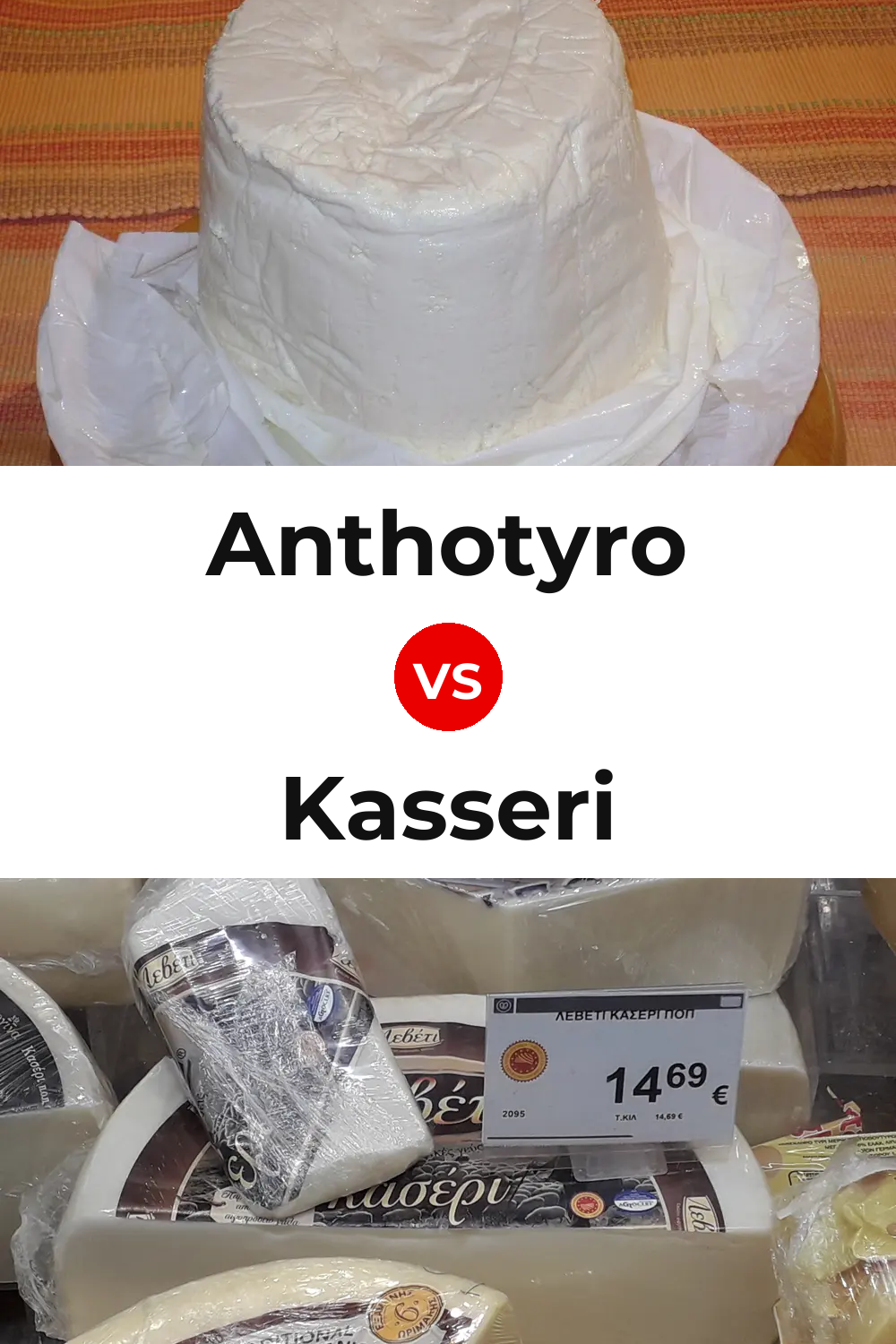
Anthotyro Cheese is a hard goat or sheep-milk cheese from Greece, while Kasseri Cheese is hard and made from goat or sheep milk, originating in Greece.
Buy Anthotyro Cheese
Buy Kasseri Cheese
What Is Anthotyro Cheese?
Anthotyros is a Greek cheese made from sheep or goat milk mixed with whey, about nine parts milk to one. It comes fresh, soft and sweet with no salt, or dried into a hard salty cheese similar to Mizithra.
What Is Kasseri Cheese?
Kasseri is a pale yellow, medium-hard to hard Greek cheese made from sheep milk with at most 20% goat's milk. It belongs to the pasta filata family and is best known as the cheese in saganaki and kasseropita.
What's the Difference Between Anthotyro Cheese and Kasseri Cheese?
- Milk treatment: Anthotyro Cheese (unpasteurized where law allows), Kasseri Cheese (Traditionally raw, increasingly pasteurized)
- Rind: Anthotyro Cheese (natural), Kasseri Cheese (Develops as ages)
- Taste: Anthotyro Cheese (salty, tangy), Kasseri Cheese (Rich)
Side-by-Side Comparison
| Anthotyro Cheese | Kasseri Cheese | |
|---|---|---|
| Country of Origin | Greece | Greece |
| Specific Origin | Macedonia, Thrace, Thessalia, Peloponissos, Ionian Islands, Aegean Islands, Crete Island And Epirus | Thrace, Macedonia, Thessaly, Lesbos |
| Milk Type | Sheep's or goat's milk | Sheep's milk, sometimes with goat's milk |
| Milk Treatment | Unpasteurized where law allows | Traditionally raw, increasingly pasteurized |
| Texture | Hard | Hard |
| Rind | Natural | Develops as ages |
| Aging | — | At least 3 months |
| Taste | Salty, tangy | Rich |
Taste Comparison: Does Anthotyro Cheese Taste Like Kasseri Cheese?
Anthotyro Cheese reads as salty, tangy, while Kasseri Cheese brings rich character. On the nose, Anthotyro Cheese offers strong, contrasted with Kasseri Cheese's flowery. More specifically, Anthotyro Cheese shows sweet, creamy and unsalted when fresh, while Kasseri Cheese leans toward rich, complex flavors, buttery texture, flowery aroma when aged. similar to asiago and parmigiano reggiano when aged 10+ months..
Can You Substitute Anthotyro Cheese for Kasseri Cheese?
In most recipes, Anthotyro Cheese and Kasseri Cheese can be swapped with reasonable results. Both are goat or sheep-milk cheeses, so the base character carries over. Flavor-wise, Anthotyro Cheese reads as salty, tangy while Kasseri Cheese brings rich notes.
Which Is Better, Anthotyro Cheese or Kasseri Cheese?
There's no single winner. It depends on your recipe and the profile you want. Flavor-wise, Anthotyro Cheese suits recipes that want salty, tangy notes, while Kasseri Cheese fits dishes calling for rich.
Which is your favorite?
One click, anonymous. See what others chose.
Frequently Asked Questions
Is Anthotyro Cheese the same as Kasseri Cheese?
No, they're distinct cheeses.
Is Anthotyro Cheese similar to Kasseri Cheese?
Yes, they share close profiles. Same milk base and similar texture make them workable alternatives in many recipes.
Can I substitute Anthotyro Cheese for Kasseri Cheese?
Yes, quite easily. The milk base and texture are close enough that most recipes won't notice the swap.
Does Anthotyro Cheese taste like Kasseri Cheese?
Anthotyro Cheese reads as salty, tangy, while Kasseri Cheese is rich. Aromas also diverge. Anthotyro Cheese leans strong, and Kasseri Cheese is closer to flowery.
What is Anthotyro Cheese made of?
Anthotyro Cheese is made from goat or sheep milk (unpasteurized where law allows). It originates in Greece.
What is Kasseri Cheese made of?
Kasseri Cheese is made from goat or sheep milk (traditionally raw, increasingly pasteurized), using natural rennet. It's typically aged at least 3 months. It originates in Greece.
Which should I choose, Anthotyro Cheese or Kasseri Cheese?
It depends on the dish. The table above is the fastest way to decide based on your recipe.