
Banon Cheese vs Colony cheese
Banon Cheese
Colony cheese
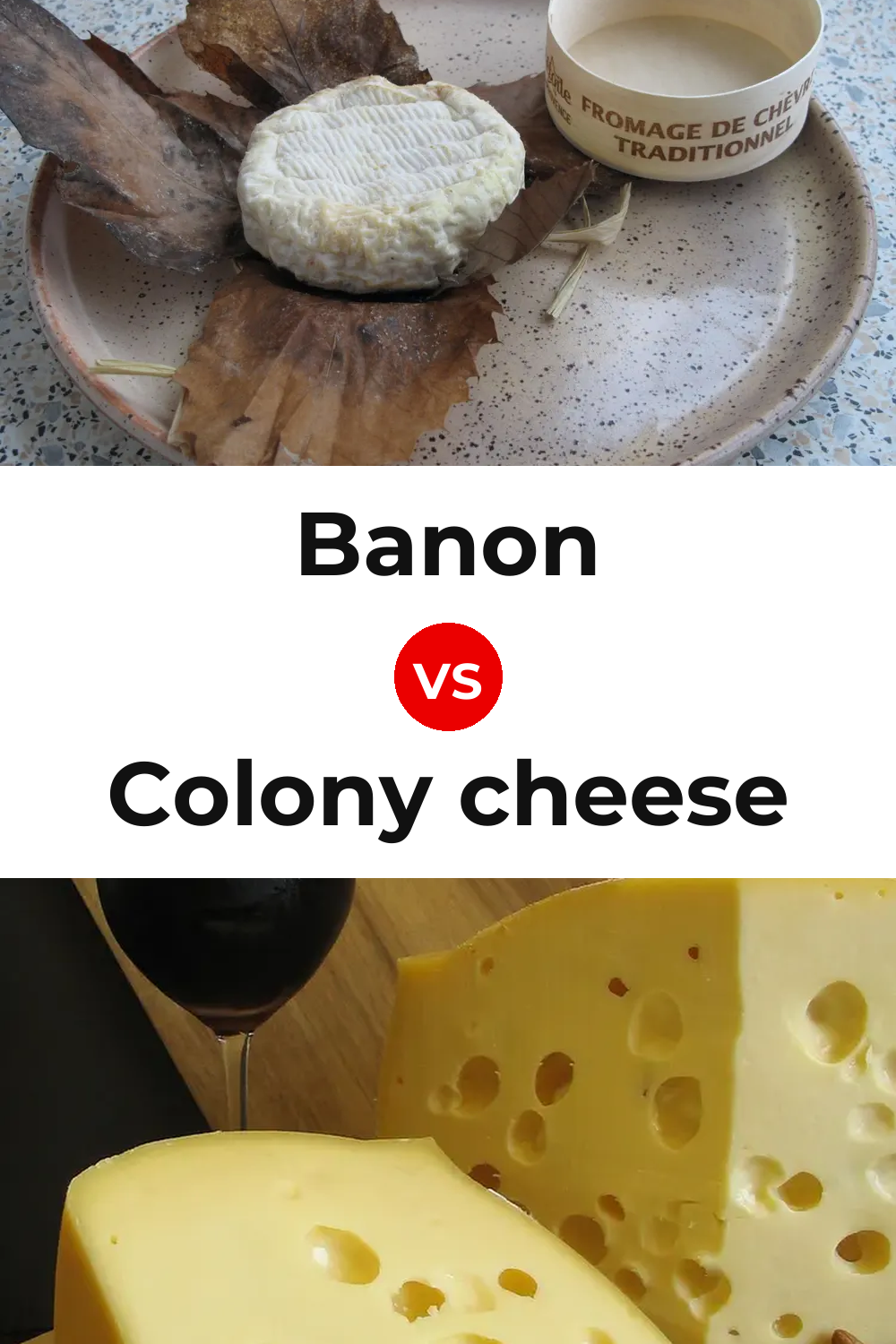
Banon Cheese is a creamy, soft, and tender goat-milk cheese from France, while Colony cheese is semi-hard, artisan, originating in Brazil.
Buy Banon Cheese
Buy Colony cheese
What Is Banon Cheese?
Banon is an unpasteurized goat cheese from Provence, sold as a small 100 g disc wrapped in chestnut leaves and tied with raffia. It ages about two weeks, gets dipped in eau de vie before wrapping, and has held AOC status since July 2003.
What Is Colony cheese?
Colony cheese, also called queijo colonial, is a semi-hard artisan cheese from Rio Grande do Sul in southern Brazil. It is known for a pale yellow paste, a natural rind, and a creamy texture with pungent, spicy flavor.
What's the Difference Between Banon Cheese and Colony cheese?
- Origin: Banon Cheese (France), Colony cheese (Brazil)
- Texture: Banon Cheese (Creamy, soft, and tender), Colony cheese (semi-hard, artisan)
- Rind: Banon Cheese (Wrapped in chestnut leaves), Colony cheese (natural)
- Taste: Banon Cheese (Mild and intense, with notes of mushrooms and forest floor), Colony cheese (creamy, pungent, spicy)
Side-by-Side Comparison
| Banon Cheese | Colony cheese | |
|---|---|---|
| Country of Origin | France | Brazil |
| Specific Origin | Provence (Alpes-De-Haute Provence, Hautes-Alpes, Vaucluse, Drome) | Rio Grande Do Sul |
| Milk Type | Goat's milk | — |
| Milk Treatment | Unpasteurized | — |
| Texture | Creamy, soft, and tender | Semi-hard, artisan |
| Rind | Wrapped in chestnut leaves | Natural |
| Aging | 15 days | — |
| Taste | Mild and intense, with notes of mushrooms and forest floor | Creamy, pungent, spicy |
Taste Comparison: Does Banon Cheese Taste Like Colony cheese?
Banon Cheese reads as mild and intense, with notes of mushrooms and forest floor, while Colony cheese brings creamy, pungent, spicy character. On the nose, Banon Cheese offers earthy, contrasted with Colony cheese's lactic, pungent, spicy.
Can You Substitute Banon Cheese for Colony cheese?
Banon Cheese can stand in for Colony cheese in many dishes, but the switch will shift the overall character of the recipe. Expect creamy, soft, and tender bite and body where the recipe calls for semi-hard, artisan. Flavor-wise, Banon Cheese reads as mild and intense, with notes of mushrooms and forest floor while Colony cheese brings creamy, pungent, spicy notes.
Which Is Better, Banon Cheese or Colony cheese?
There's no single winner. It depends on your recipe and the profile you want. If you want a creamy, soft, and tender cheese, go with Banon Cheese. For a semi-hard, artisan profile, Colony cheese is the better fit. Flavor-wise, Banon Cheese suits recipes that want mild and intense, with notes of mushrooms and forest floor notes, while Colony cheese fits dishes calling for creamy, pungent, spicy.
Which is your favorite?
One click, anonymous. See what others chose.
Frequently Asked Questions
Is Banon Cheese the same as Colony cheese?
No, they're distinct cheeses. Banon Cheese originates in France, while Colony cheese comes from Brazil.
Is Banon Cheese similar to Colony cheese?
Not closely. They use different milk bases and have distinct profiles.
Can I substitute Banon Cheese for Colony cheese?
You can, but expect a shift in bite and mouthfeel.
Does Banon Cheese taste like Colony cheese?
Banon Cheese reads as mild and intense, with notes of mushrooms and forest floor, while Colony cheese is creamy, pungent, spicy. Aromas also diverge. Banon Cheese leans earthy, and Colony cheese is closer to lactic, pungent, spicy.
What is Banon Cheese made of?
Banon Cheese is made from goat milk (unpasteurized). It's typically aged 15 days. It originates in France.
What is Colony cheese made of?
Colony cheese is made from milk. It originates in Brazil.
Which should I choose, Banon Cheese or Colony cheese?
It depends on the dish. The texture difference is the biggest practical tell. Banon Cheese is creamy, soft, and tender, while Colony cheese is semi-hard, artisan.