Beaufort Cheese vs Dorset Blue Cheese
Beaufort Cheese
Dorset Blue Cheese
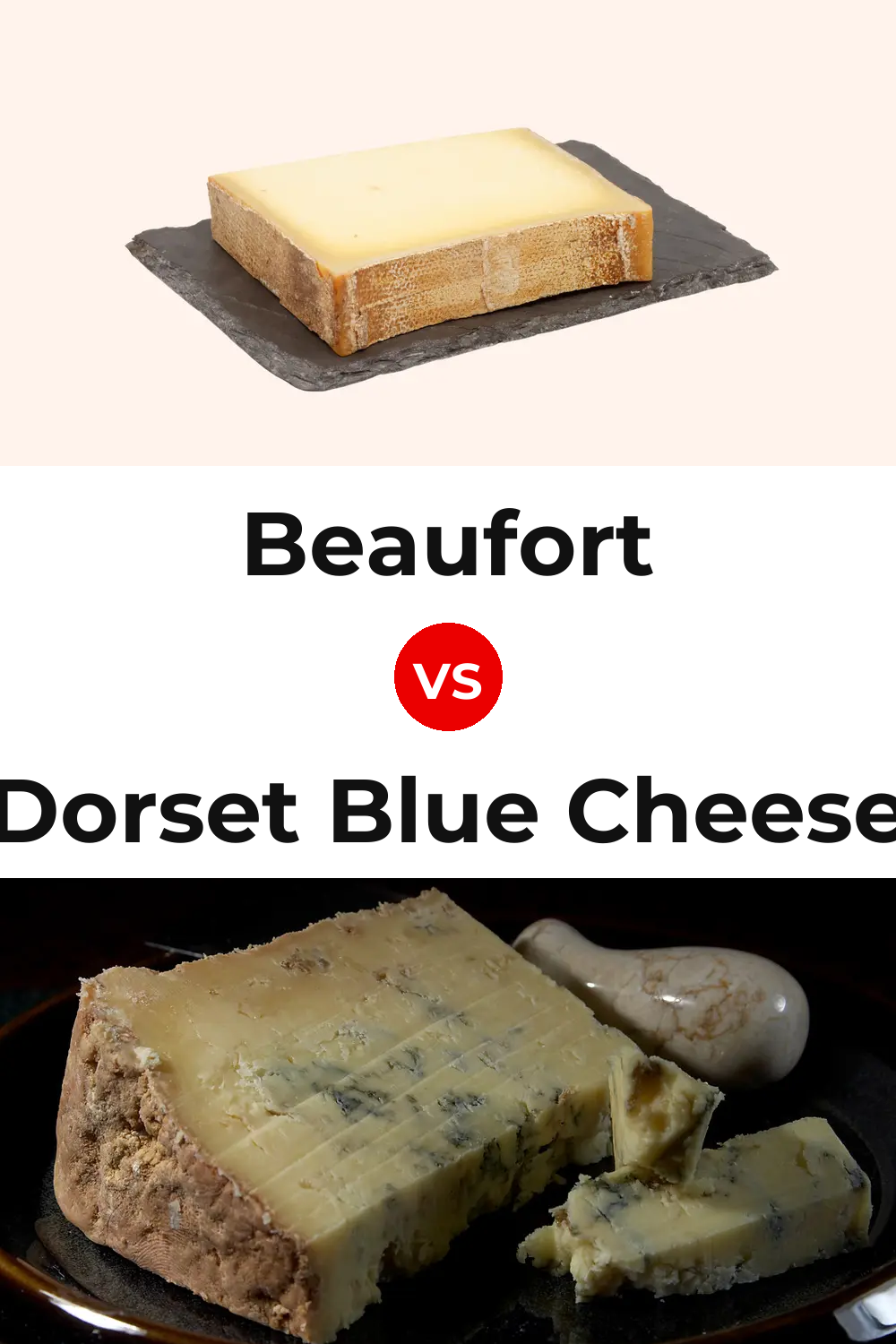
Beaufort Cheese is a hard cow-milk cheese from France, while Dorset Blue Cheese is firm and made from cow milk.
What Is Beaufort Cheese?
Beaufort is a smooth, creamy cheese from the Savoie region of France. Known for its distinct concave wheel shape, it is produced from raw cow's milk and aged in mountain caves for a minimum of five months. Beaufort has a strong, sweet taste and is often used in fondue due to its excellent melting properties.
What Is Dorset Blue Cheese?
Dorset Blue Cheese is a lightly pressed, firm-textured blue cheese made in Dorset, England. It has a uniform color with irregular blue-green veining and a rough, dry brown mold coating. The cheese has a piquant, peppery flavor that ranges from mild to strong. Made using skimmed cow’s milk, the tradition of using lower-fat milk dates back to the 18th and 19th centuries when it was made from residual milk left after cream skimming. The production process includes hand-breaking curds, salting, light pressing, and maturing for 12 to 20 weeks. The cheese is pierced after four weeks to develop its signature blue veining. Dorset’s lush pasture, supported by Oxford clay soil, contributes to the unique flavor of the milk used in the cheese.
What's the Difference Between Beaufort Cheese and Dorset Blue Cheese?
- Milk treatment: Beaufort Cheese (Raw), Dorset Blue Cheese (Skimmed)
- Texture: Beaufort Cheese (Hard), Dorset Blue Cheese (Firm)
- Rind: Beaufort Cheese (Even yellow color), Dorset Blue Cheese (Rough, dry brown mold coating)
- Aging: Beaufort Cheese (5 to 12+ months), Dorset Blue Cheese (12 to 20 weeks)
Side-by-Side Comparison
| Beaufort Cheese | Dorset Blue Cheese | |
|---|---|---|
| Country of Origin | France | — |
| Specific Origin | Beaufortin Valley, Savoie Region | Dorset, England |
| Milk Type | Cow's milk | Cow |
| Milk Treatment | Raw | Skimmed |
| Texture | Hard | Firm |
| Rind | Even yellow color | Rough, dry brown mold coating |
| Aging | 5 to 12+ months | 12 to 20 weeks |
| Taste | — | Piquant, peppery, mild to strong |
Taste Comparison: Does Beaufort Cheese Taste Like Dorset Blue Cheese?
Their flavor profiles are distinct. Aging plays into this as well. Beaufort Cheese at 5 to 12+ months develops a different profile than Dorset Blue Cheese at 12 to 20 weeks.
Can You Substitute Beaufort Cheese for Dorset Blue Cheese?
In most recipes, Beaufort Cheese and Dorset Blue Cheese can be swapped with reasonable results. Both are cow-milk cheeses, so the base character carries over. Expect hard bite and body where the recipe calls for firm.
Which Is Better, Beaufort Cheese or Dorset Blue Cheese?
There's no single winner. It depends on your recipe and the profile you want. If you want a hard cheese, go with Beaufort Cheese. For a firm profile, Dorset Blue Cheese is the better fit.
Which is your favorite?
One click, anonymous. See what others chose.
Frequently Asked Questions
Is Beaufort Cheese the same as Dorset Blue Cheese?
No, they're distinct cheeses. Aging also differs: Beaufort Cheese is typically aged 5 to 12+ months, Dorset Blue Cheese 12 to 20 weeks.
Is Beaufort Cheese similar to Dorset Blue Cheese?
Somewhat. They share a cow-milk base but diverge in texture and flavor.
Can I substitute Beaufort Cheese for Dorset Blue Cheese?
You can, but expect a shift in bite and mouthfeel.
Does Beaufort Cheese taste like Dorset Blue Cheese?
They have distinct flavor profiles. The taste row in the table above is the best direct comparison.
What is Beaufort Cheese made of?
Beaufort Cheese is made from cow milk (raw), using dried calves’ abomasum in recuite rennet. It's typically aged 5 to 12+ months. It originates in France.
What is Dorset Blue Cheese made of?
Dorset Blue Cheese is made from cow milk (skimmed). It's typically aged 12 to 20 weeks.
Which should I choose, Beaufort Cheese or Dorset Blue Cheese?
It depends on the dish. The texture difference is the biggest practical tell. Beaufort Cheese is hard, while Dorset Blue Cheese is firm.