Beaufort 
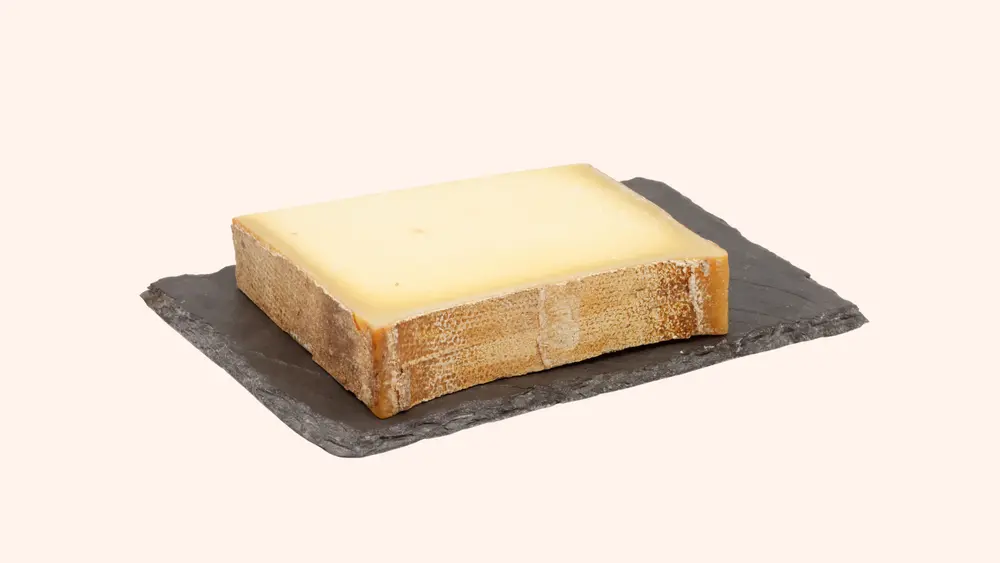
Beaufort is a firm raw cow's milk cheese from the Savoie region of the French Alps, part of the gruyère family. Its wheels take a concave shape from the beechwood hoop, and the cheese melts easily enough to be a standard choice for fondue.
Key Facts
| Country of Origin | France |
| Specific Origin | Beaufortin Valley, Savoie region |
| Protection | AOC (1968), PDO (2009), PDO (1996) |
| Milk Type | Cow's milk |
| Milk Treatment | Raw |
| Rind | Even yellow color |
| Texture | Hard |
| Flavor | Strong |
| Aroma | Fruity, nutty |
| Colors | Ivory to slightly yellow |
| Forms | Wheels |
| Age | 5 to 12+ months |
| Rennet Type | Dried calves’ abomasum in recuite |
| Also Known As | Beaufort AOP Chalet Alpage Meule, Beaufort AOC |
What is Beaufort Cheese?
Beaufort belongs to the gruyère family and comes from the French Alps. It is made in the Beaufortain, Tarentaise and Maurienne valleys and in parts of the Val d'Arly, across 450,000 hectares of Savoie. The cheesemonger Patrick Rance suggested that a cheese Pliny the Elder mentioned in this region may have resembled Beaufort, but Pliny gave no description, so nothing can be settled. Beaufort was first certified as an appellation d'origine contrôlée in 1968. Three varieties exist: Beaufort d'été, Beaufort d'alpage, made in chalets on high pastures, and Beaufort d'hiver.
It takes 11 liters (2.9 U.S. gal) of milk to make 1 kg (2.2 lb) of cheese. One variety uses milk from Tarine or Abondance cows grazing in the Alps. The milk is heated, acidified and coagulated, then the curds go into a beechwood hoop that shapes the concave sides. Wheels are pressed for 24 hours, removed from the hoops and cooled for another 24.
After a soak in brine, the cheese sits on spruce shelves for one to two months. One side is salted by hand each morning, then the wheel is turned and massaged each afternoon. Once the rind has matured, the cheese is smear-ripened with a mixture called morge, which builds the strong flavor and the pale yellow rind. Aging runs 6 to 12 months in a cool mountain cellar, sometimes longer.
The paste is pale yellow, smooth and creamy, without the holes found in some other alpine cheeses. The aroma stands out. Descriptions run from strong to mildly pungent, and it recalls the pastures where the Tarentaise and Abondance cows graze.
Beaufort melts easily, which is why it turns up so often in fondue. It is also eaten with fish, salmon in particular, and sources say it pairs well with white wine.
How Does Beaufort Cheese Compare?
The most relevant cheeses to compare Beaufort against.


