Bleu des Causses 
Bleu des Causses is a French blue cheese made from whole cow's milk and ripened three to six months in the limestone caves of the Gorges du Tarn. Many people treat it as a gentler cow's milk counterpart to Roquefort.
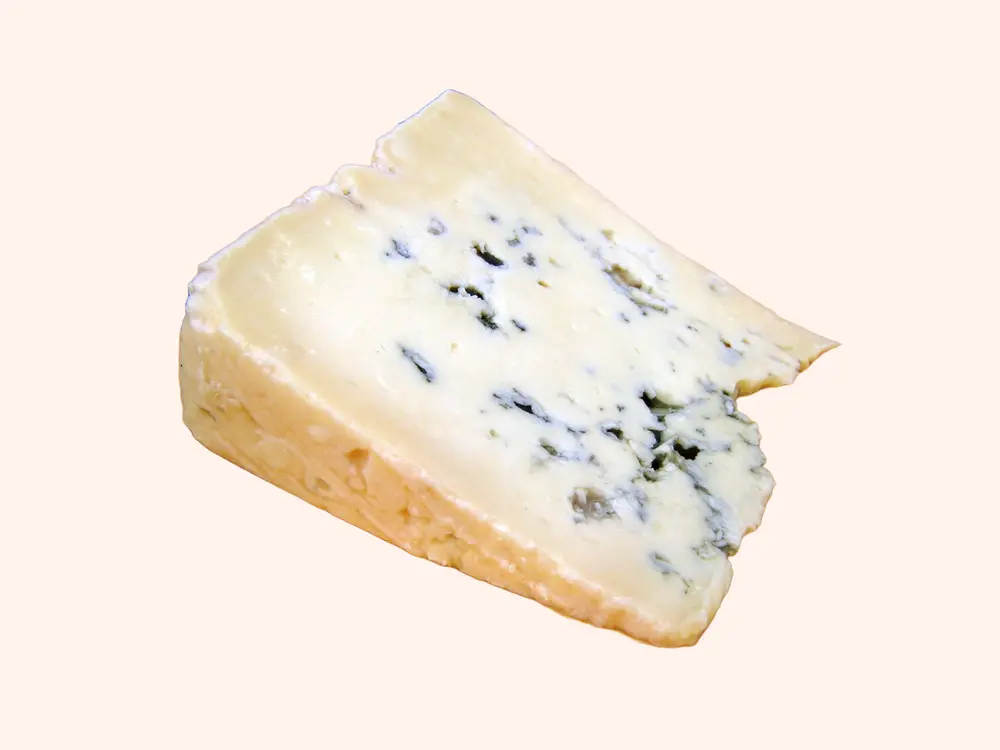
Key Facts
| Country of Origin | France |
| Specific Origin | Gorges du Tarn, Languedoc region; five cantons of Aveyron (Campagnac, Cornus, Millau, Peyreleau, Saint Affrique), Trier (Gard), Pégairolles of Escalette (Hérault) |
| Protection | AOC (1953), PDO (1996) |
| Milk Type | Cow’s milk |
| Milk Treatment | Raw |
| Fat Content | High fat content of 45 percent |
| Texture | Semisoft; Blue-veined |
| Flavor | Sweet yet spicy, not too salty or bitter |
| Aroma | Sophisticated bouquet |
| Colors | Ivory, blue-veined |
| Age | At least 70 days and not more than 190 days |
| Also Known As | Blau dels Causses (Occitan) |
What is Bleu des Causses Cheese?
Bleu des Causses comes from the limestone causses of southern France, and its story runs alongside Roquefort. For a long stretch the cheeses of this country were made from cow's milk, sheep's milk, or a mix of the two, depending on the season and on the cheesemaker.
That ended in 1925. When the Roquefort name won administrative recognition, ripening was tied to Roquefort-sur-Soulzon and cow's milk cheeses were shut out. The cow's milk producers organized on their own, first behind the collective mark Valmont for bleu de l'Aveyron. Decrees in 1941 and 1946 settled the name Bleu des Causses, a union was formed in July 1948, and AOC recognition came on 8 June 1949. The geographical area was drawn in 1953.
Whole cow's milk is worked warm, 30 to 33 °C (86 to 91.4 °F), with rennet and with spores of Penicillium roqueforti grown from strains selected in the ripening zone. The curd is cut and stirred until the grains round off and give up their whey, then drained in perforated molds and turned to help it along. Salting is done dry, never in brine.
The wheels then travel to the cellars, where they are brushed or washed and wiped, then pierced so air can move through the paste and the mold spreads evenly. They sit on racks in caves cooled by fleurines, cracks in the rock that let air circulate and hold humidity and temperature steady. Nothing is chilled before sale. From production to finished cheese takes at least 70 days, and ripening typically runs three to six months.
Fat content is 45 percent, and much of the aroma comes from those cellars rather than from anything added. The thin, aromatic vegetation of the dry limestone plateaus feeds into the milk and shows up in the finished cheese. Only a handful of small producers still make it.
How Does Bleu des Causses Cheese Compare?
The most relevant cheeses to compare Bleu des Causses against.


