Laguiole 
Laguiole is a pressed, uncooked cheese from the Aubrac plateau in southern France, made only from raw Simmental or Aubrac cow's milk. Protected by AOC since 1961, it is the main cheese in aligot, the regional dish of mashed potatoes with cream and butter.
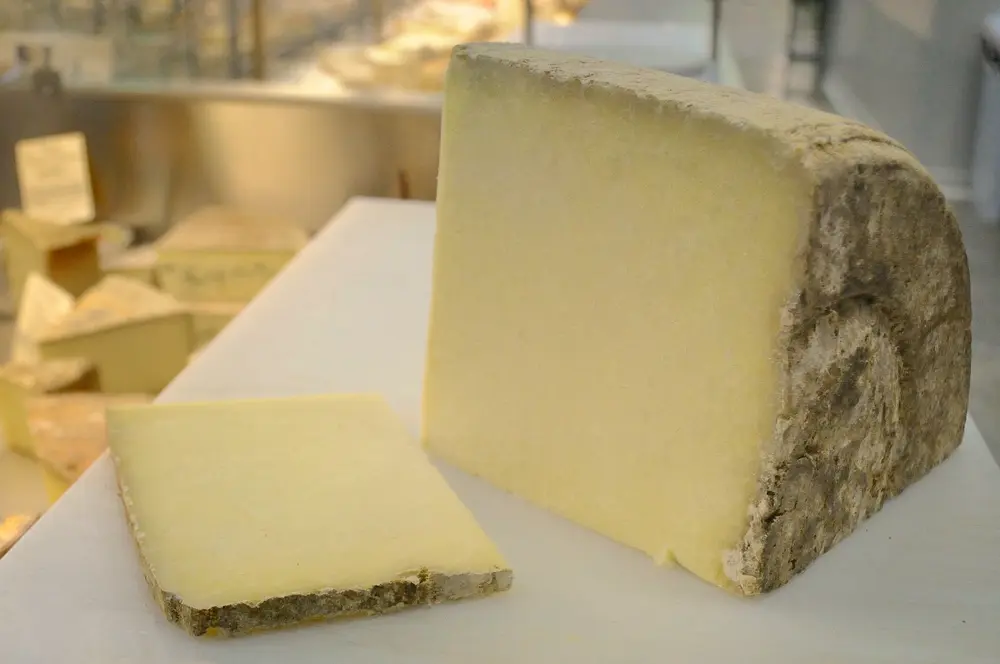
Key Facts
| Country of Origin | France |
| Specific Origin | Aveyron department |
| Protection | PDO (1996), PDO (2015) |
| Milk Type | Cow's milk |
| Milk Treatment | Unpasteurized |
| Fat Content | 45% |
| Rind | Dry whitish to light gray, aging to amber-brown to granite gray |
| Texture | Firm and supple |
| Flavor | Medium to intense |
| Aroma | Milky and fresh grass, dried meat |
| Colors | Ivory to straw yellow |
| Forms | Cylindrical |
| Age | 4-10+ months |
| Alternative Spellings | Tome de Laguiole |
| Also Known As | La Guiòla |
What is Laguiole Cheese?
Laguiole comes from the plateau of Aubrac, between 800 and 1400 metres, in the Aveyron region of southern France. It takes its name from the small town of Laguiole. Accounts say monks at a monastery in the mountains of Aubrac invented the cheese in the 19th century and passed the recipe to the buronniers, the owners of the mountain huts known as burons. It has been protected by the French AOC since 1961 and by PDO since 1996.
One producer is licensed to make it today, the cooperative Jeune Montagne, working across three departments: Aveyron, Cantal and Lozère. The milk is raw and unpasteurised, from French Simmental or Aubrac cows, collected between May and October above 800 m. Production begins with renneting, after which the curd is pressed in two consecutive stages. Maturing takes at least six months and can run to twelve. In 1998 the cooperative made 666 tonnes from milk gathered on 79 farms.
A tome weighs 40 to 50 kg (88 to 110 lb) and carries a bull sign, its name stamped on the rind, and an aluminum identification plaque. The rind is natural and thick. Inside, the paste is straw coloured, supple and firm, with a rich, creamy texture and 45% fat. One description calls it tender on the palate, with a first hazelnut taste that shifts into a subtle acidic bouquet, light floral aromas and a slight bitterness alongside a low acidic piquancy from the salt.
Tome de Laguiole is one of the principal ingredients in aligot, mashed potatoes beaten with cheese, cream and butter. Fruity red wines go with it, such as Marcillac, Cahors or Etraygues.
How Does Laguiole Cheese Compare?
The most relevant cheeses to compare Laguiole against.


