Langres 
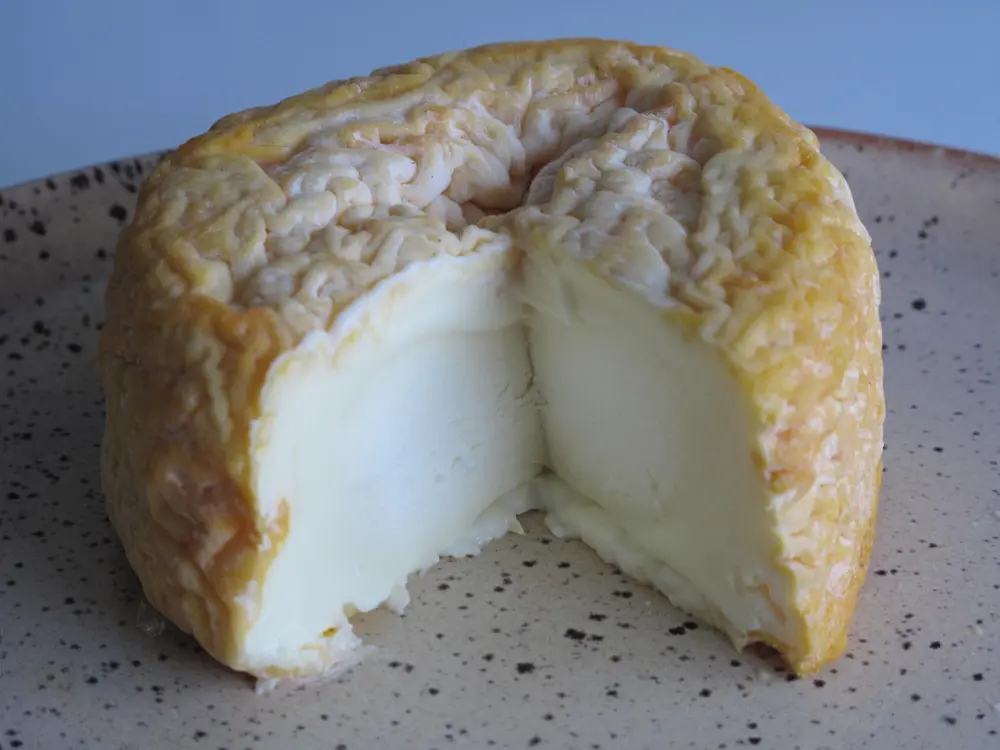
Langres is a cow's milk cheese from the plateau of Langres in Champagne-Ardenne, France. It is a small cylinder with a Penicillium candidum rind tinted orange by annatto, known for the concave dent in its top called the fontaine.
Key Facts
| Country of Origin | France |
| Specific Origin | Plateau de Langres, Champagne region |
| Protection | PDO (2009), PDO (1996) |
| Milk Type | Cow's milk |
| Milk Treatment | Unpasteurized |
| Rind | Soft, orange |
| Texture | Semisoft |
| Flavor | Creamy, nutty |
| Aroma | Creamy aromas |
| Colors | Orange |
| Forms | Cylindrical |
| Age | 5 weeks |
What is Langres Cheese?
Langres comes from the plateau of Langres, in the Champagne-Ardenne region of France. It has held Appellation d'origine contrôlée status since 1991. The specifications behind that status were approved by Decree No. 2009-49 of January 13, 2009, published in the Journal Officiel two days later.
The protected area takes in two districts of Haute-Marne, Chaumont and Langres, one canton in the Vosges, Neufchâteau, and four villages in Côte-d'Or. Milk has to come from French Simmental, Montbéliarde or Brown Swiss cows. Prim'Holstein cattle are tolerated, but only up to half the herd, and cows must graze at least six months a year.
A wheel is cylindrical and weighs about 180 g. The rind is white with Penicillium candidum, and annatto gives it its orange color. The top sinks into a concave dent, the fontaine. Inside, the pâte is soft, cream colored and slightly crumbly.
Five weeks of aging brings it to the table. May through August is the best window, though it eats well from March to December too. Next to Époisses, its local rival, it is the quieter of the two.
Output stays small. Production in 1998 ran to about 305 tons, down 1.61% from 1996. By 2016 three dairies, one of them a farm producer, were making 605.5 tonnes between them.
How Does Langres Cheese Compare?
The most relevant cheeses to compare Langres against.


