Brocciu 
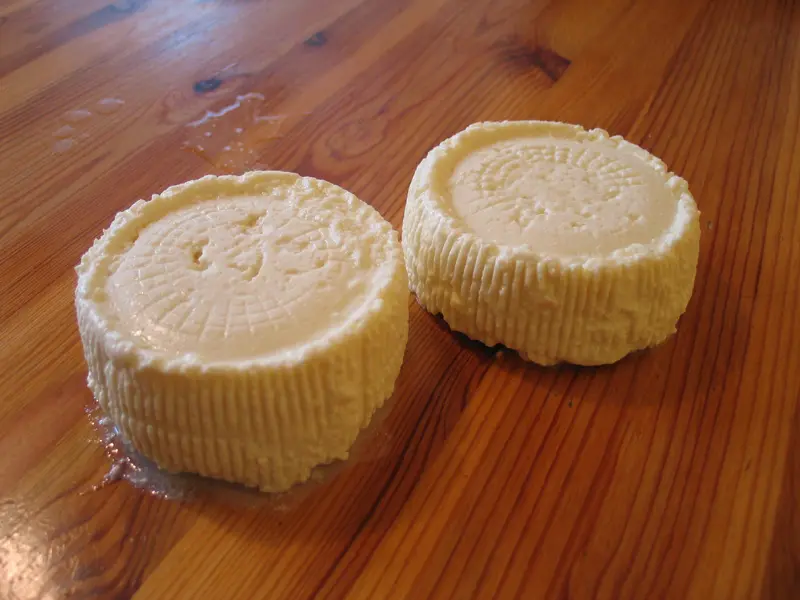
Brocciu is a Corsican cheese made from a mix of whey and ewe's milk. It is eaten fresh or ripened for a few weeks, and it holds less lactose than Italian ricotta, which it often replaces.
Key Facts
| Country of Origin | France |
| Specific Origin | Corsica |
| Protection | AOC (1998), PDO (2003) |
| Milk Type | Goat's or sheep's milk |
| Milk Treatment | Pasteurized |
| Fat Content | 40-50% |
| Rind | None |
| Texture | Soft, creamy |
| Flavor | Meltingly creamy, saltier when matured |
| Aroma | Delicious |
| Colors | White |
| Forms | Cylindrical molds |
| Age | Fresh or matured |
| Also Known As | Brocciu AOC, Brocciu AOP |
What is Brocciu Cheese?
Brocciu comes from the island of Corsica, where it is considered the most representative food of the place. It has been described as the most famous cheese in Corsica. The name is related to the French word brousse, which means fresh cheese made with goat or ewe's milk.
Making it starts with whey rather than milk alone. The whey is heated to a low temperature, a few degrees below 100 F (38 C), then ewe's milk is added and the mix is heated again to just under 200 F (93 C). After heating, the cheese is drained in rush baskets.
What comes out is a young white cheese with some of the character of a whey cheese. Because it carries less lactose than Italian ricotta, it works as a substitute for it.
Brocciu is ready to eat as soon as it is made. It can also be ripened for a few weeks, and Corsicans call that version brocciu passu or brocciu vechju, with an ideal affinage of 48 hours to one month. In Corsican cooking it appears in countless dishes, from first courses through to desserts, and it is frequently paired with Corsican white wines.
How Does Brocciu Cheese Compare?
The most relevant cheeses to compare Brocciu against.


