Crème Fraîche
Crème fraîche is a French soured cream made from cream and a bacterial culture, with 10 to 45% butterfat and a pH near 4.5. It is less sour than sour cream, and its fat content keeps it from curdling in hot sauces.
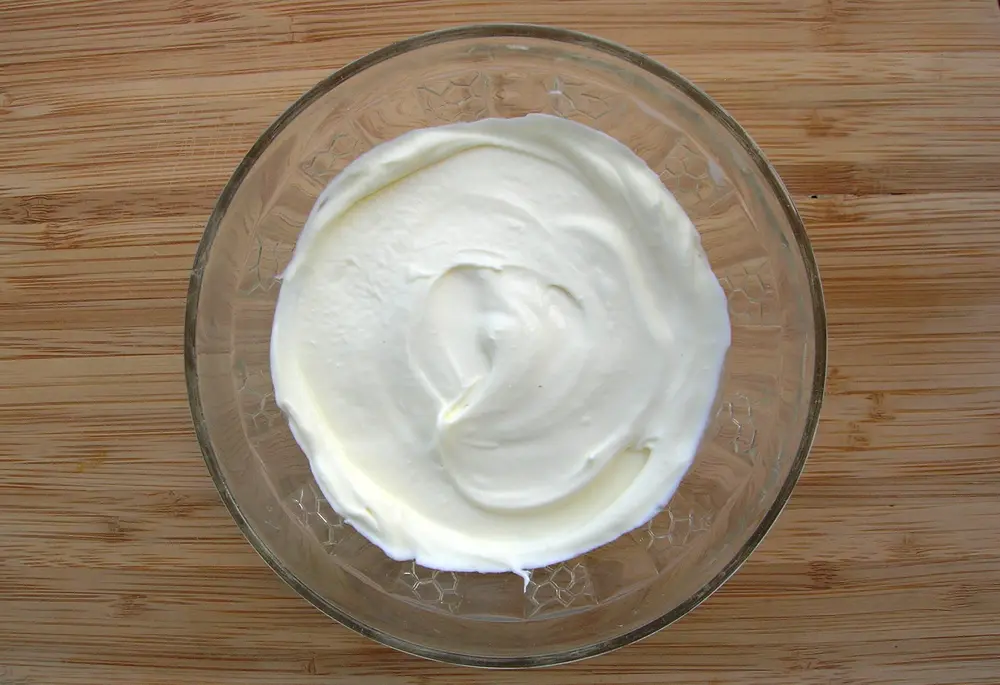
Key Facts
| Country of Origin | France |
| Specific Origin | Normandy, France |
| Fat Content | 10 to 45% butterfat |
| Texture | Thick, highly viscous |
| Flavor | Mildly sour |
| Also Known As | crème épaisse, crème fraîche fermentée |
What is Crème Fraîche Cheese?
Crème fraîche is a soured cream, a dairy product rather than a cheese. The name is French for fresh cream. It carries 10 to 45% butterfat and a pH of roughly 4.5, which makes it less sour and fatter than sour cream.
Normandy built its reputation. Cream from a defined area around Isigny-sur-Mer, in the Calvados department, received an appellation d'origine contrôlée in 1986, and as of 2018 it was still the only cream to hold one. Large quantities also come from Brittany, Poitou-Charentes, Lorraine and Champagne-Ardenne.
Making it is straightforward. A starter culture goes into heavy cream, which then stands at a suitable temperature until it thickens. The culture combines Lactococcus cremoris, L. lactis and L. lactis biovar diacetylactis, and those bacteria give the taste that sets it apart from sour cream. European rules permit two ingredients only, cream and culture, so no stabilizers, bulking agents or emulsifiers. Home cooks sometimes stand in cultured buttermilk as the starter.
The finished cream is thick and highly viscous, built from an acid gel of fat globules coated in milk protein. Standard versions hold 30 to 45% milkfat. Low-fat versions sold in North America and the UK sit near 15% and need xanthan gum or maize starch to hold their texture, and they are less stable under heat.
French cooks use it hot and cold. It finishes savory sauces without splitting, and it forms the base of many desserts and dessert sauces. It is also served over fruit and baked goods and stirred into soups.
How Does Crème Fraîche Cheese Compare?
The most relevant cheeses to compare Crème Fraîche against.


