Beaufort Cheese vs Gamonedo Cheese
Beaufort Cheese
Gamonedo Cheese
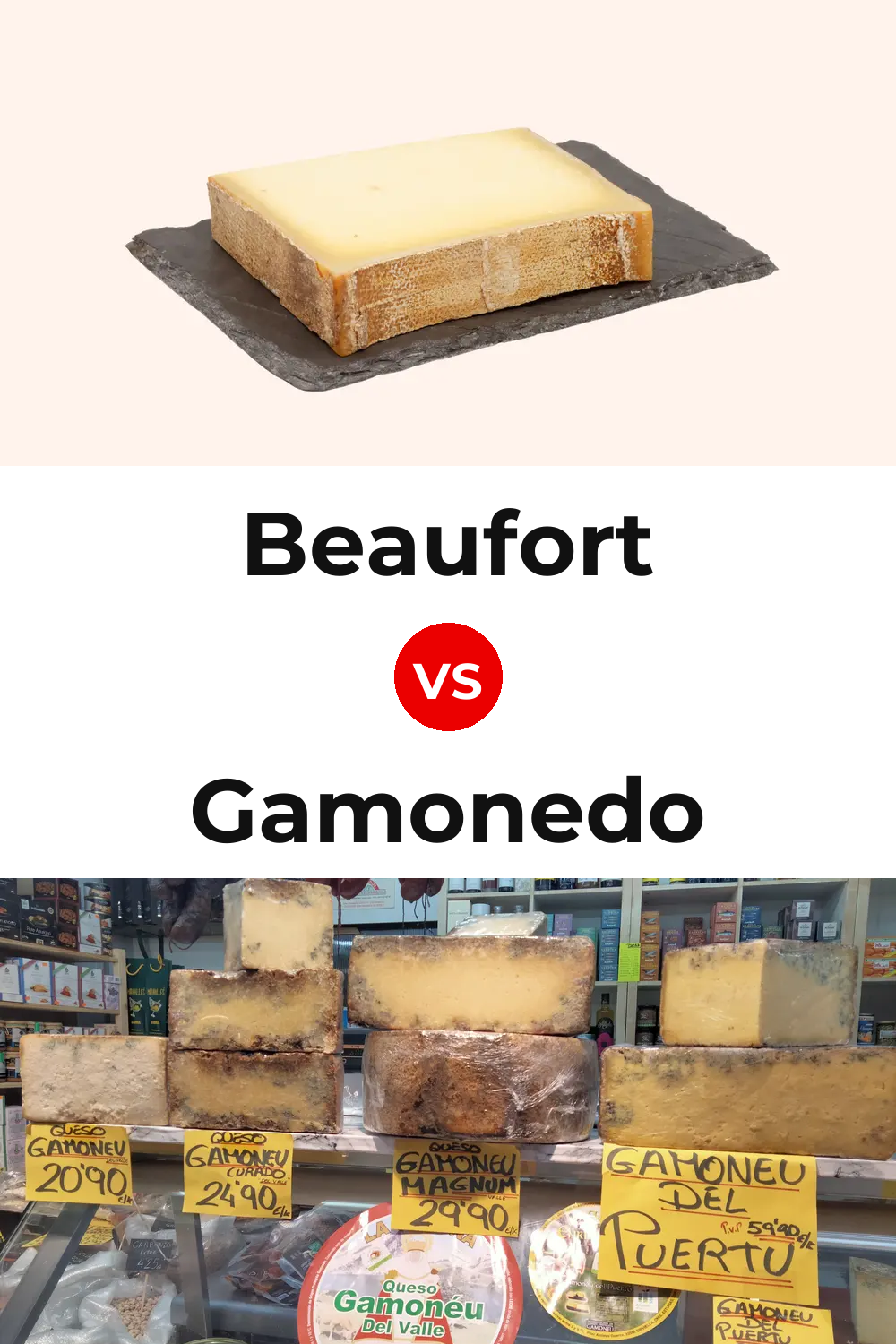
Beaufort Cheese is a hard cow-milk cheese from France, while Gamonedo Cheese is harder and drier (del puertu), richer and creamier (del valle) and made from cow, goat, and sheep milk, originating in Spain.
What Is Beaufort Cheese?
Beaufort is a firm raw cow's milk cheese from the Savoie region of the French Alps, part of the gruyère family. Its wheels take a concave shape from the beechwood hoop, and the cheese melts easily enough to be a standard choice for fondue.
What Is Gamonedo Cheese?
Gamonéu is a fatty, lightly smoked Spanish cheese made in parts of Asturias from a blend of cow, goat and sheep milk. It holds a Protected Designation of Origin and comes in two forms: del Puertu from the high passes and del Valle from the lower valleys.
What's the Difference Between Beaufort Cheese and Gamonedo Cheese?
- Origin: Beaufort Cheese (France), Gamonedo Cheese (Spain)
- Milk type: Beaufort Cheese (cow's milk), Gamonedo Cheese (Raw cow’s, sheep’s, and goat’s milk, or any combination. Breeds: Friesian, Asturiana de los Valles, etc.)
- Texture: Beaufort Cheese (Hard), Gamonedo Cheese (harder and drier (del Puertu), richer and creamier (del Valle))
- Rind: Beaufort Cheese (Even yellow color), Gamonedo Cheese (inedible, thin, natural)
- Aging: Beaufort Cheese (5 to 12+ months), Gamonedo Cheese (Minimum of sixty days up to five months)
- Taste: Beaufort Cheese (strong), Gamonedo Cheese (Buttery, slightly nutty)
Side-by-Side Comparison
| Beaufort Cheese | Gamonedo Cheese | |
|---|---|---|
| Country of Origin | France | Spain |
| Specific Origin | Beaufortin Valley, Savoie Region | Asturian Region |
| Milk Type | Cow's milk | Raw cow’s, sheep’s, and goat’s milk, or any combination. Breeds: Friesian, Asturiana de los Valles, etc. |
| Milk Treatment | Raw | Raw |
| Texture | Hard | Harder and drier (del Puertu), richer and creamier (del Valle) |
| Rind | Even yellow color | Inedible, thin, natural |
| Aging | 5 to 12+ months | Minimum of sixty days up to five months |
| Taste | Strong | Buttery, slightly nutty |
Taste Comparison: Does Beaufort Cheese Taste Like Gamonedo Cheese?
Beaufort Cheese reads as strong, while Gamonedo Cheese brings buttery, slightly nutty character. More specifically, Beaufort Cheese shows ivory or slightly yellow color, occasional small eyes and thin slits, while Gamonedo Cheese leans toward hint of hazelnut, smokiness, and pungency. Aging plays into this as well. Beaufort Cheese at 5 to 12+ months develops a different profile than Gamonedo Cheese at minimum of sixty days up to five months.
Can You Substitute Beaufort Cheese for Gamonedo Cheese?
Beaufort Cheese can stand in for Gamonedo Cheese in many dishes, but the switch will shift the overall character of the recipe. Expect hard bite and body where the recipe calls for harder and drier (del puertu), richer and creamier (del valle). Flavor-wise, Beaufort Cheese reads as strong while Gamonedo Cheese brings buttery, slightly nutty notes.
Which Is Better, Beaufort Cheese or Gamonedo Cheese?
There's no single winner. It depends on your recipe and the profile you want. If you want a hard cheese, go with Beaufort Cheese. For a harder and drier (del puertu), richer and creamier (del valle) profile, Gamonedo Cheese is the better fit. Flavor-wise, Beaufort Cheese suits recipes that want strong notes, while Gamonedo Cheese fits dishes calling for buttery, slightly nutty.
Which is your favorite?
One click, anonymous. See what others chose.
Frequently Asked Questions
Is Beaufort Cheese the same as Gamonedo Cheese?
No, they're distinct cheeses. Beaufort Cheese originates in France, while Gamonedo Cheese comes from Spain. Beaufort Cheese is made from cow milk; Gamonedo Cheese uses cow, goat, and sheep. Aging also differs: Beaufort Cheese is typically aged 5 to 12+ months, Gamonedo Cheese minimum of sixty days up to five months.
Is Beaufort Cheese similar to Gamonedo Cheese?
Not closely. They use different milk bases and have distinct profiles.
Can I substitute Beaufort Cheese for Gamonedo Cheese?
You can, but expect a shift in richness and milk character.
Does Beaufort Cheese taste like Gamonedo Cheese?
Beaufort Cheese reads as strong, while Gamonedo Cheese is buttery, slightly nutty.
What is Beaufort Cheese made of?
Beaufort Cheese is made from cow milk (raw), using dried calves’ abomasum in recuite rennet. It's typically aged 5 to 12+ months. It originates in France.
What is Gamonedo Cheese made of?
Gamonedo Cheese is made from cow, goat, and sheep milk (raw). It's typically aged minimum of sixty days up to five months. It originates in Spain.
Which should I choose, Beaufort Cheese or Gamonedo Cheese?
It depends on the dish. The texture difference is the biggest practical tell. Beaufort Cheese is hard, while Gamonedo Cheese is harder and drier (del puertu), richer and creamier (del valle).