Bitto Cheese vs Swiss Cheese
Bitto Cheese
Swiss Cheese
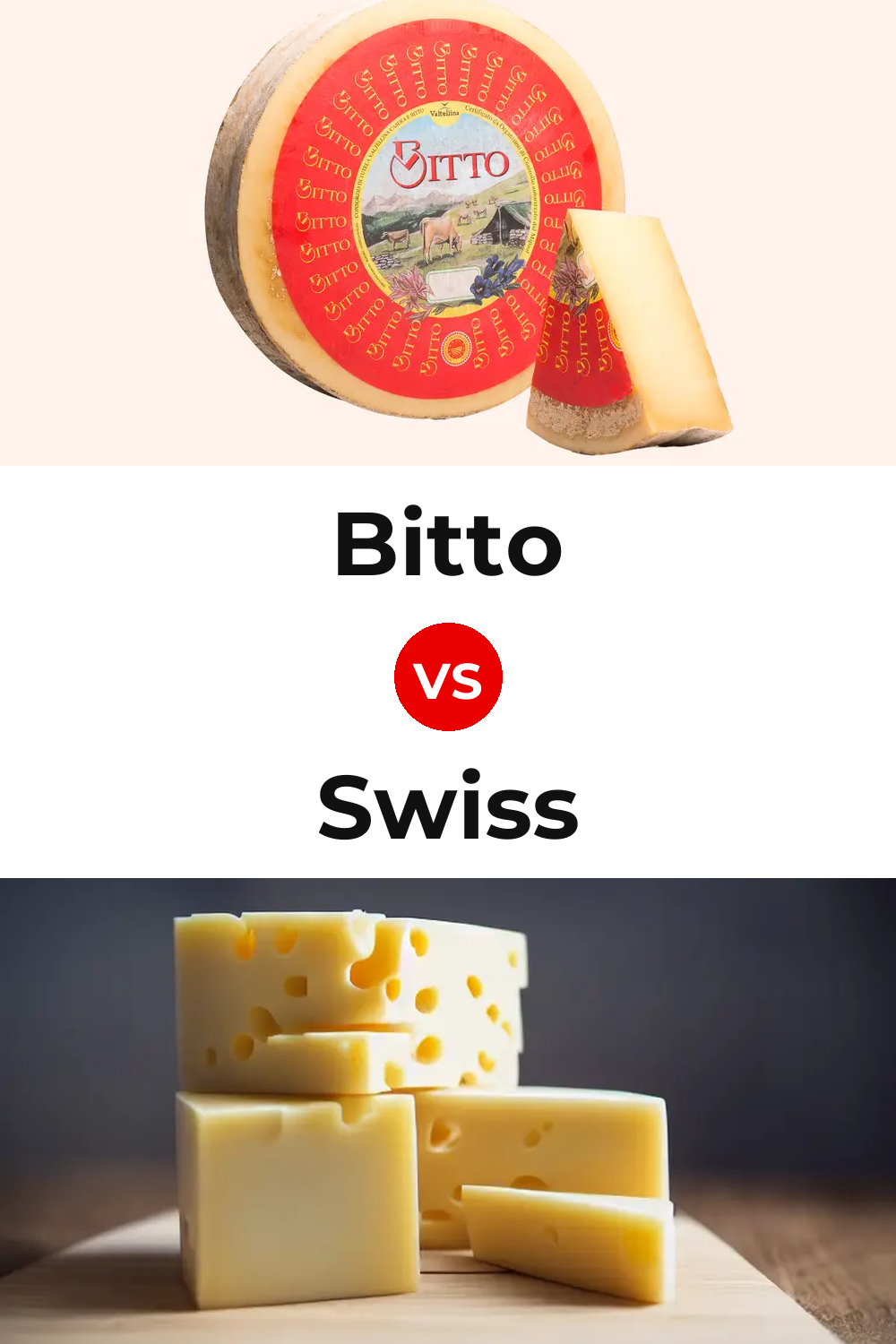
Bitto Cheese is a fine-grained, sometimes with very few small holes; hard cheese from one year cow and goat-milk cheese from Italy, while Swiss Cheese is semi-firm and made from cow milk, originating in United States.
What Is Bitto Cheese?
Bitto is a raw-milk PDO cheese from the alpine pastures of Sondrio in Lombardy, made only between 1 June and 30 September from cow's milk, sometimes with up to 10 percent goat's milk. Young wheels taste mild and sweet, and some are aged for years.
What Is Swiss Cheese?
Swiss cheese is the North American name for any cheese made in the style of Emmental, the yellow, medium-hard cheese from the Emmental region of Switzerland. Most versions carry the round holes called eyes and a nutty, slightly sweet flavor.
What's the Difference Between Bitto Cheese and Swiss Cheese?
- Origin: Bitto Cheese (Italy), Swiss Cheese (United States)
- Milk type: Bitto Cheese (Cow's milk primarily, with non-mandatory addition of raw goat’s milk up to 10%), Swiss Cheese (Cow)
- Milk treatment: Bitto Cheese (Raw), Swiss Cheese (Pasteurized)
- Texture: Bitto Cheese (fine-grained, sometimes with very few small holes; hard cheese from one year), Swiss Cheese (Semi-Firm)
- Rind: Bitto Cheese (smooth, 2 to 4 mm thick, straw-yellow turning brownish yellow with age), Swiss Cheese (None)
- Aging: Bitto Cheese (Minimum of 70 days), Swiss Cheese (Typically 1-3 months)
- Taste: Bitto Cheese (mild and sweet when young, stronger and spicier with age), Swiss Cheese (Mild, Nutty, Slightly Sweet)
Side-by-Side Comparison
| Bitto Cheese | Swiss Cheese | |
|---|---|---|
| Country of Origin | Italy | United States |
| Specific Origin | Province Of Sondrio, Lombardy, Including Neighboring Upland Pastures Of Lecco And Bergamo | Emmental, Switzerland; Now Widely Made In The U.S. |
| Milk Type | Cow's milk primarily, with non-mandatory addition of raw goat’s milk up to 10% | Cow |
| Milk Treatment | Raw | Pasteurized |
| Texture | Fine-grained, sometimes with very few small holes; hard cheese from one year | Semi-Firm |
| Rind | Smooth, 2 to 4 mm thick, straw-yellow turning brownish yellow with age | None |
| Aging | Minimum of 70 days | Typically 1-3 months |
| Taste | Mild and sweet when young, stronger and spicier with age | Mild, Nutty, Slightly Sweet |
Taste Comparison: Does Bitto Cheese Taste Like Swiss Cheese?
Bitto Cheese reads as mild and sweet when young, stronger and spicier with age, while Swiss Cheese brings mild, nutty, slightly sweet character. More specifically, Bitto Cheese shows cooked at 118–126°f, finely cut curd, matured for a minimum of 70 days, while Swiss Cheese leans toward buttery, slightly sweet, nutty, less intense than traditional swiss. Aging plays into this as well. Bitto Cheese at minimum of 70 days develops a different profile than Swiss Cheese at typically 1-3 months.
Can You Substitute Bitto Cheese for Swiss Cheese?
Bitto Cheese can stand in for Swiss Cheese in many dishes, but the switch will shift the overall character of the recipe. Expect fine-grained, sometimes with very few small holes; hard cheese from one year bite and body where the recipe calls for semi-firm. Flavor-wise, Bitto Cheese reads as mild and sweet when young, stronger and spicier with age while Swiss Cheese brings mild, nutty, slightly sweet notes.
Which Is Better, Bitto Cheese or Swiss Cheese?
There's no single winner. It depends on your recipe and the profile you want. If you want a fine-grained, sometimes with very few small holes; hard cheese from one year cheese, go with Bitto Cheese. For a semi-firm profile, Swiss Cheese is the better fit. Flavor-wise, Bitto Cheese suits recipes that want mild and sweet when young, stronger and spicier with age notes, while Swiss Cheese fits dishes calling for mild, nutty, slightly sweet.
Which is your favorite?
One click, anonymous. See what others chose.
Frequently Asked Questions
Is Bitto Cheese the same as Swiss Cheese?
No, they're distinct cheeses. Bitto Cheese originates in Italy, while Swiss Cheese comes from United States. Bitto Cheese is made from cow and goat milk; Swiss Cheese uses cow. Aging also differs: Bitto Cheese is typically aged minimum of 70 days, Swiss Cheese typically 1-3 months.
Is Bitto Cheese similar to Swiss Cheese?
Not closely. They use different milk bases and have distinct profiles.
Can I substitute Bitto Cheese for Swiss Cheese?
You can, but expect a shift in richness and milk character.
Does Bitto Cheese taste like Swiss Cheese?
Bitto Cheese reads as mild and sweet when young, stronger and spicier with age, while Swiss Cheese is mild, nutty, slightly sweet.
What is Bitto Cheese made of?
Bitto Cheese is made from cow and goat milk (raw), using calf rennet. It's typically aged minimum of 70 days. It originates in Italy.
What is Swiss Cheese made of?
Swiss Cheese is made from cow milk (pasteurized), using microbial or vegetarian rennet. It's typically aged typically 1-3 months. It originates in United States.
Which should I choose, Bitto Cheese or Swiss Cheese?
It depends on the dish. The texture difference is the biggest practical tell. Bitto Cheese is fine-grained, sometimes with very few small holes; hard cheese from one year, while Swiss Cheese is semi-firm.