Brin d'Amour Cheese vs Queijo da Beira Baixa
Brin d'Amour Cheese
Queijo da Beira Baixa
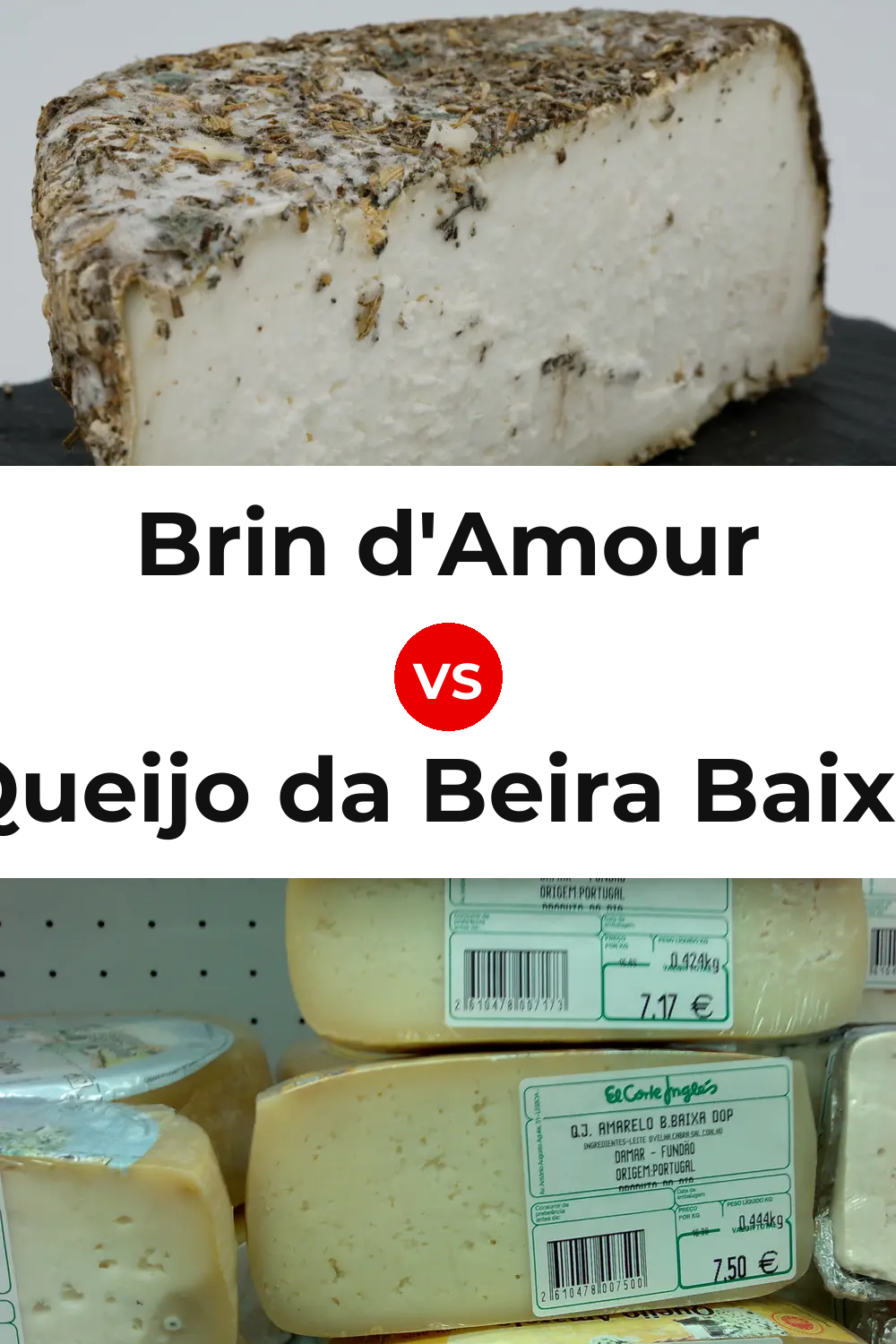
Brin d'Amour Cheese is a soft to firm sheep-milk cheese from France, while Queijo da Beira Baixa is semi-hard, semi-soft, hard, or very hard (depending on type) and made from goat and sheep milk.
What Is Brin d'Amour Cheese?
Brin d'Amour is a cheese from Corsica, France, made from pasteurized sheep's milk. It has a soft to firm texture and a natural rind. The flavor is earthy with a pronounced milk taste that becomes stronger as it ages. The herbaceous aroma comes from the coating of local herbs on the rind, which also influences the flavor over time. The cheese is white in color and typically aged for 1 to 3 months. As it matures, the herbal influence becomes more prominent. Brin d'Amour offers a taste of Corsica with each bite.
What Is Queijo da Beira Baixa?
Queijo da Beira Baixa is a type of cheese from Portugal, specifically from the Beira Baixa region. It includes three types: Amarelo, Castelo Branco, and Picante. The cheese is made from raw milk of Merino sheep and Charnequeiro goats, or other breeds adapted to the region. The cheese is known for its intense aroma and pronounced, clean, and spicy flavor, which intensifies with age. The minimum curing period is 40 days for Amarelo and Castelo Branco types, and 120 days for the Picante type. The cheese can be marketed whole or in portions, and some types may be immersed in olive oil or sealed with paprika paste. The production and maturation of the cheese take place in the demarcated geographical area of Beira Baixa.
What's the Difference Between Brin d'Amour Cheese and Queijo da Beira Baixa?
- Milk type: Brin d'Amour Cheese (sheep's milk), Queijo da Beira Baixa (Sheep and Goat)
- Milk treatment: Brin d'Amour Cheese (pasteurized), Queijo da Beira Baixa (Raw)
- Texture: Brin d'Amour Cheese (Soft to firm), Queijo da Beira Baixa (Semi-hard, semi-soft, hard, or very hard (depending on type))
- Rind: Brin d'Amour Cheese (Natural), Queijo da Beira Baixa (Semi-hard, firm, solid, or rindless (depending on type))
- Aging: Brin d'Amour Cheese (1 to 3 months), Queijo da Beira Baixa (Minimum 40 days for Amarelo and Castelo Branco types, 120 days for Picante type)
- Taste: Brin d'Amour Cheese (Earthy), Queijo da Beira Baixa (Intense, clean, slightly acidic, spicy, and salty (depending on type))
Side-by-Side Comparison
| Brin d'Amour Cheese | Queijo da Beira Baixa | |
|---|---|---|
| Country of Origin | France | — |
| Specific Origin | Corsica, France | Beira Baixa Region |
| Milk Type | Sheep's milk | Sheep and Goat |
| Milk Treatment | Pasteurized | Raw |
| Texture | Soft to firm | Semi-hard, semi-soft, hard, or very hard (depending on type) |
| Rind | Natural | Semi-hard, firm, solid, or rindless (depending on type) |
| Aging | 1 to 3 months | Minimum 40 days for Amarelo and Castelo Branco types, 120 days for Picante type |
| Taste | Earthy | Intense, clean, slightly acidic, spicy, and salty (depending on type) |
Taste Comparison: Does Brin d'Amour Cheese Taste Like Queijo da Beira Baixa?
Brin d'Amour Cheese reads as earthy, while Queijo da Beira Baixa brings intense, clean, slightly acidic, spicy, and salty (depending on type) character. On the nose, Brin d'Amour Cheese offers herbaceous, contrasted with Queijo da Beira Baixa's intense. More specifically, Brin d'Amour Cheese shows pronounced milk flavor, intensifies with age; herb influence grows, while Queijo da Beira Baixa leans toward slightly spicy, salty, and powerful. Aging plays into this as well. Brin d'Amour Cheese at 1 to 3 months develops a different profile than Queijo da Beira Baixa at minimum 40 days for amarelo and castelo branco types, 120 days for picante type.
Can You Substitute Brin d'Amour Cheese for Queijo da Beira Baixa?
Brin d'Amour Cheese can stand in for Queijo da Beira Baixa in many dishes, but the switch will shift the overall character of the recipe. Expect soft to firm bite and body where the recipe calls for semi-hard, semi-soft, hard, or very hard (depending on type). Flavor-wise, Brin d'Amour Cheese reads as earthy while Queijo da Beira Baixa brings intense, clean, slightly acidic, spicy, and salty (depending on type) notes.
Which Is Better, Brin d'Amour Cheese or Queijo da Beira Baixa?
There's no single winner. It depends on your recipe and the profile you want. If you want a soft to firm cheese, go with Brin d'Amour Cheese. For a semi-hard, semi-soft, hard, or very hard (depending on type) profile, Queijo da Beira Baixa is the better fit. Flavor-wise, Brin d'Amour Cheese suits recipes that want earthy notes, while Queijo da Beira Baixa fits dishes calling for intense, clean, slightly acidic, spicy, and salty (depending on type).
Which is your favorite?
One click, anonymous. See what others chose.
Frequently Asked Questions
Is Brin d'Amour Cheese the same as Queijo da Beira Baixa?
No, they're distinct cheeses. Brin d'Amour Cheese is made from sheep milk; Queijo da Beira Baixa uses goat and sheep. Aging also differs: Brin d'Amour Cheese is typically aged 1 to 3 months, Queijo da Beira Baixa minimum 40 days for amarelo and castelo branco types, 120 days for picante type.
Is Brin d'Amour Cheese similar to Queijo da Beira Baixa?
Not closely. They use different milk bases and have distinct profiles.
Can I substitute Brin d'Amour Cheese for Queijo da Beira Baixa?
You can, but expect a shift in richness and milk character.
Does Brin d'Amour Cheese taste like Queijo da Beira Baixa?
Brin d'Amour Cheese reads as earthy, while Queijo da Beira Baixa is intense, clean, slightly acidic, spicy, and salty (depending on type). Aromas also diverge. Brin d'Amour Cheese leans herbaceous, and Queijo da Beira Baixa is closer to intense.
What is Brin d'Amour Cheese made of?
Brin d'Amour Cheese is made from sheep milk (pasteurized). It's typically aged 1 to 3 months. It originates in France.
What is Queijo da Beira Baixa made of?
Queijo da Beira Baixa is made from goat and sheep milk (raw), using cardoon preparation or animal rennet (depending on type) rennet. It's typically aged minimum 40 days for amarelo and castelo branco types, 120 days for picante type.
Which should I choose, Brin d'Amour Cheese or Queijo da Beira Baixa?
It depends on the dish. The texture difference is the biggest practical tell. Brin d'Amour Cheese is soft to firm, while Queijo da Beira Baixa is semi-hard, semi-soft, hard, or very hard (depending on type).