Queso de Burgos vs Kashkaval Cheese
Queso de Burgos
Kashkaval Cheese
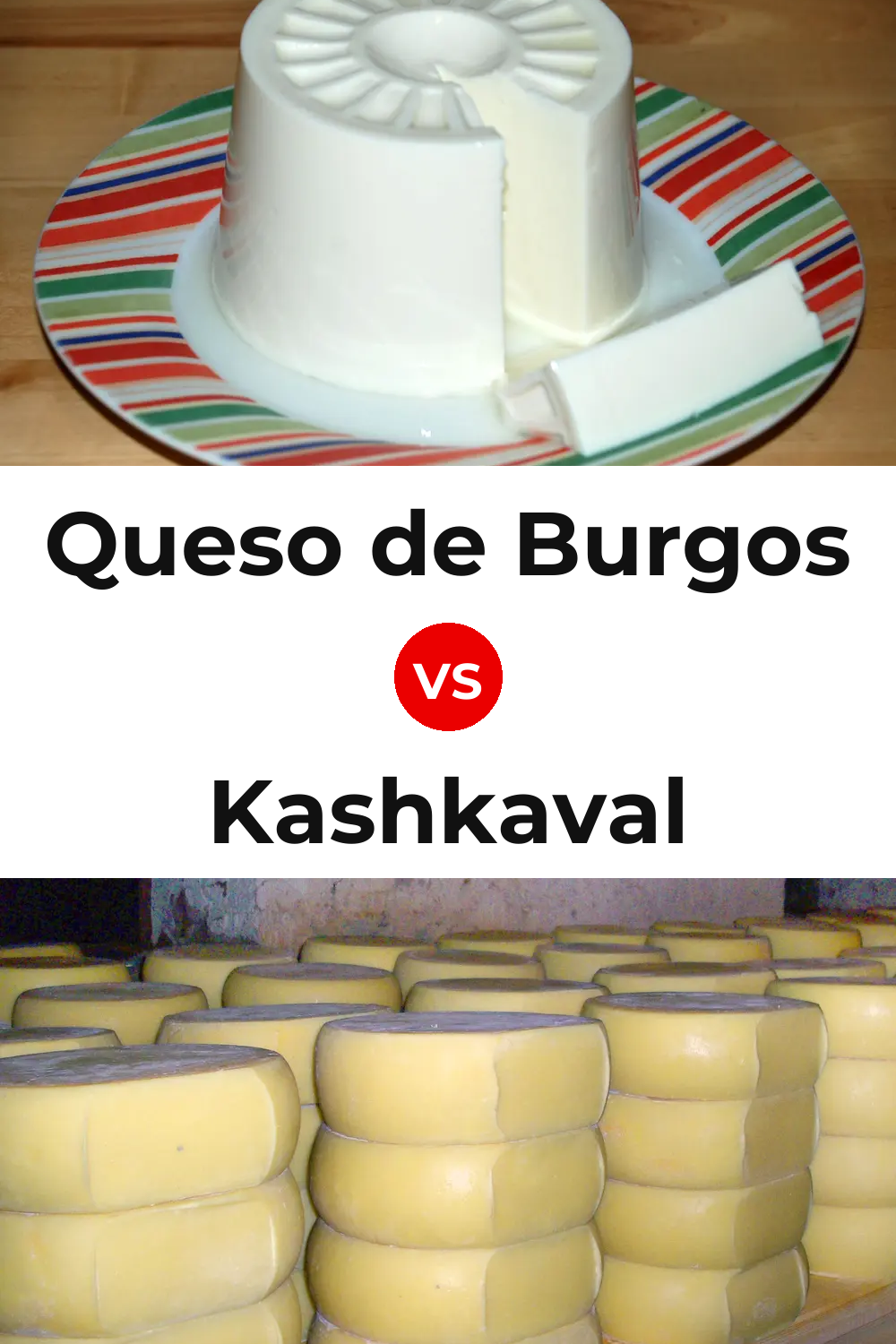
Queso de Burgos is a fresh, slightly grainy or buttery, elastic, slightly fatty cow and sheep-milk cheese from Spain, while Kashkaval Cheese is medium-hard to hard, elastic and made from cow or sheep milk, originating in Bulgaria, Romania, Serbia and Turkey.
What Is Queso de Burgos?
Queso de Burgos is a fresh cheese from the province of Burgos, Spain. It is made from a blend of whole, fresh, and pasteurized cow’s and sheep’s milk, with different types distinguished by the percentage of sheep’s milk used. The cheese has a cylindrical or cylindrical-conical shape and a moist, white to slightly yellowish appearance. It has no rind and features a soft, slightly grainy or buttery texture with small holes due to incomplete curd setting. The flavor is mild, milky, and slightly sweet, with varying intensities of sheep’s milk taste depending on the type. The cheese is not pressed or matured and retains a fresh milk aroma. The production process follows traditional methods specific to Burgos, emphasizing its historical reputation and unique regional characteristics.
What Is Kashkaval Cheese?
Kashkaval is a popular type of yellow cheese made from cow's milk, or sometimes from sheep's milk, in various countries across the Balkans. It has a semi-hard texture and a rich, slightly tangy flavor that becomes sharper with age. Kashkaval is versatile in cooking, used for grating, slicing, and melting in dishes like pizzas, sandwiches, and casseroles.
What's the Difference Between Queso de Burgos and Kashkaval Cheese?
- Origin: Queso de Burgos (Spain), Kashkaval Cheese (Bulgaria, Romania, Serbia and Turkey)
- Milk type: Queso de Burgos (Cow’s and sheep’s milk), Kashkaval Cheese (cow's or sheep's milk)
- Milk treatment: Queso de Burgos (Pasteurized), Kashkaval Cheese (Varied)
- Texture: Queso de Burgos (Fresh, slightly grainy or buttery, elastic, slightly fatty), Kashkaval Cheese (Medium-hard to hard, elastic)
- Rind: Queso de Burgos (None), Kashkaval Cheese (Varied)
- Aging: Queso de Burgos (Fresh, not matured), Kashkaval Cheese (Minimum of two months)
- Taste: Queso de Burgos (Mild, milky, and slightly sweet), Kashkaval Cheese (Piquant)
Side-by-Side Comparison
| Queso de Burgos | Kashkaval Cheese | |
|---|---|---|
| Country of Origin | Spain | Bulgaria, Romania, Serbia And Turkey |
| Specific Origin | Province Of Burgos | No Specific Location |
| Milk Type | Cow’s and sheep’s milk | Cow's or sheep's milk |
| Milk Treatment | Pasteurized | Varied |
| Texture | Fresh, slightly grainy or buttery, elastic, slightly fatty | Medium-hard to hard, elastic |
| Rind | None | Varied |
| Aging | Fresh, not matured | Minimum of two months |
| Taste | Mild, milky, and slightly sweet | Piquant |
Taste Comparison: Does Queso de Burgos Taste Like Kashkaval Cheese?
Queso de Burgos reads as mild, milky, and slightly sweet, while Kashkaval Cheese brings piquant character. On the nose, Queso de Burgos offers smells of fresh milk; varies in intensity based on sheep’s milk content, contrasted with Kashkaval Cheese's varied. More specifically, Queso de Burgos shows slightly salty or not salty, no acidity or bitterness; varying intensity of sheep’s milk aftertaste depending on type, while Kashkaval Cheese leans toward mildly salty and acidic, melts well, piquant flavor enhanced in 100% sheep’s milk cheeses.. Aging plays into this as well. Queso de Burgos at fresh, not matured develops a different profile than Kashkaval Cheese at minimum of two months.
Can You Substitute Queso de Burgos for Kashkaval Cheese?
Queso de Burgos can stand in for Kashkaval Cheese in many dishes, but the switch will shift the overall character of the recipe. Expect fresh, slightly grainy or buttery, elastic, slightly fatty bite and body where the recipe calls for medium-hard to hard, elastic. Flavor-wise, Queso de Burgos reads as mild, milky, and slightly sweet while Kashkaval Cheese brings piquant notes.
Which Is Better, Queso de Burgos or Kashkaval Cheese?
There's no single winner. It depends on your recipe and the profile you want. If you want a fresh, slightly grainy or buttery, elastic, slightly fatty cheese, go with Queso de Burgos. For a medium-hard to hard, elastic profile, Kashkaval Cheese is the better fit. Flavor-wise, Queso de Burgos suits recipes that want mild, milky, and slightly sweet notes, while Kashkaval Cheese fits dishes calling for piquant.
Which is your favorite?
One click, anonymous. See what others chose.
Frequently Asked Questions
Is Queso de Burgos the same as Kashkaval Cheese?
No, they're distinct cheeses. Queso de Burgos originates in Spain, while Kashkaval Cheese comes from Bulgaria, Romania, Serbia and Turkey. Queso de Burgos is made from cow and sheep milk; Kashkaval Cheese uses cow or sheep. Aging also differs: Queso de Burgos is typically aged fresh, not matured, Kashkaval Cheese minimum of two months.
Is Queso de Burgos similar to Kashkaval Cheese?
Not closely. They use different milk bases and have distinct profiles.
Can I substitute Queso de Burgos for Kashkaval Cheese?
You can, but expect a shift in richness and milk character.
Does Queso de Burgos taste like Kashkaval Cheese?
Queso de Burgos reads as mild, milky, and slightly sweet, while Kashkaval Cheese is piquant. Aromas also diverge. Queso de Burgos leans smells of fresh milk; varies in intensity based on sheep’s milk content, and Kashkaval Cheese is closer to varied.
What is Queso de Burgos made of?
Queso de Burgos is made from cow and sheep milk (pasteurized). It's typically aged fresh, not matured. It originates in Spain.
What is Kashkaval Cheese made of?
Kashkaval Cheese is made from cow or sheep milk (varied), using varied rennet. It's typically aged minimum of two months. It originates in Bulgaria, Romania, Serbia and Turkey.
Which should I choose, Queso de Burgos or Kashkaval Cheese?
It depends on the dish. The texture difference is the biggest practical tell. Queso de Burgos is fresh, slightly grainy or buttery, elastic, slightly fatty, while Kashkaval Cheese is medium-hard to hard, elastic.