Cacioricotta Cheese vs Kasseri Cheese
Cacioricotta Cheese
Kasseri Cheese
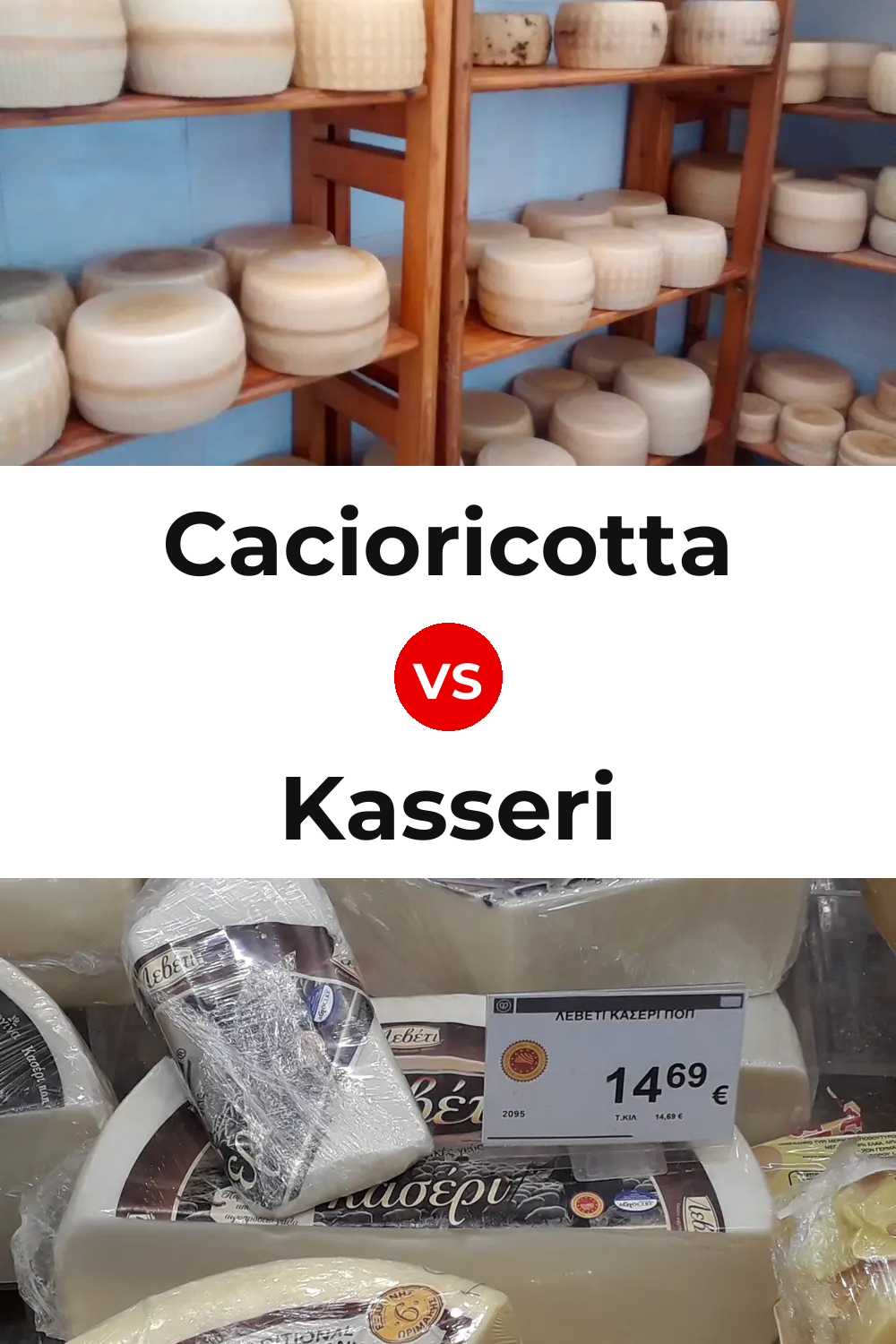
Cacioricotta Cheese is a cow, goat, and sheep-milk cheese from Italy, while Kasseri Cheese is firm to hard and made from goat and sheep milk, originating in Greece.
What Is Cacioricotta Cheese?
Cacioricotta is a traditional cheese from the southern regions of Italy, particularly popular in Puglia and Campania. It can be made from cow's, sheep's, or goat's milk and has characteristics of both ricotta and aged cheese, hence its name. It is lightly salted with a firm yet crumbly texture, ideal for grating over dishes.
What Is Kasseri Cheese?
Kasseri is a semi-hard cheese made predominantly from sheep's milk, with up to 20% goat's milk allowed. Originating in Greece, it is smooth and pale yellow, known for its elastic texture and mild, buttery flavor with a slight tang. Kasseri is often used in pies, pastries, and as a table cheese, especially in Greek and Turkish cuisines.
What's the Difference Between Cacioricotta Cheese and Kasseri Cheese?
- Origin: Cacioricotta Cheese (Italy), Kasseri Cheese (Greece)
- Milk type: Cacioricotta Cheese (Goat's, occasionally Sheep's and Cow's mix), Kasseri Cheese (goat's and sheep's milk)
- Milk treatment: Cacioricotta Cheese (Heated), Kasseri Cheese (Traditionally raw, increasingly pasteurized)
- Rind: Cacioricotta Cheese (None when fresh, straw-color when aged), Kasseri Cheese (Develops as ages)
- Aging: Cacioricotta Cheese (Fresh or 3 to 6 months), Kasseri Cheese (At least 2 months, peak at 10+ months)
- Taste: Cacioricotta Cheese (Sweet to salty, spicy), Kasseri Cheese (Rich)
Side-by-Side Comparison
| Cacioricotta Cheese | Kasseri Cheese | |
|---|---|---|
| Country of Origin | Italy | Greece |
| Specific Origin | Basilicata, Calabria, Puglia, Campania | Thrace, Macedonia, Thessaly, Lesbos |
| Milk Type | Goat's, occasionally Sheep's and Cow's mix | Goat's and sheep's milk |
| Milk Treatment | Heated | Traditionally raw, increasingly pasteurized |
| Texture | — | Firm to hard |
| Rind | None when fresh, straw-color when aged | Develops as ages |
| Aging | Fresh or 3 to 6 months | At least 2 months, peak at 10+ months |
| Taste | Sweet to salty, spicy | Rich |
Which would you pick?
One click, anonymous — see what others chose.
Where to buy Cacioricotta Cheese and Kasseri Cheese
Cacioricotta Cheese
Kasseri Cheese
Taste Comparison: Does Cacioricotta Cheese Taste Like Kasseri Cheese?
Cacioricotta Cheese reads as sweet to salty, spicy, while Kasseri Cheese brings rich character. On the nose, Cacioricotta Cheese offers cooked milk, contrasted with Kasseri Cheese's flowery. More specifically, Cacioricotta Cheese shows fresh: cooked milk aroma, sweet ricotta flavor; aged: salty, spicy with goat hints, while Kasseri Cheese leans toward rich, complex flavors, buttery texture, flowery aroma when aged. similar to asiago and parmigiano reggiano when aged 10+ months.. Aging plays into this as well. Cacioricotta Cheese at fresh or 3 to 6 months develops a different profile than Kasseri Cheese at at least 2 months, peak at 10+ months.
Can You Substitute Cacioricotta Cheese for Kasseri Cheese?
Cacioricotta Cheese can stand in for Kasseri Cheese in many dishes, but the switch will shift the overall character of the recipe. Flavor-wise, Cacioricotta Cheese reads as sweet to salty, spicy while Kasseri Cheese brings rich notes.
Which Is Better, Cacioricotta Cheese or Kasseri Cheese?
There's no single winner. It depends on your recipe and the profile you want. Flavor-wise, Cacioricotta Cheese suits recipes that want sweet to salty, spicy notes, while Kasseri Cheese fits dishes calling for rich.
Frequently Asked Questions
Is Cacioricotta Cheese the same as Kasseri Cheese?
No, they're distinct cheeses. Cacioricotta Cheese originates in Italy, while Kasseri Cheese comes from Greece. Cacioricotta Cheese is made from cow, goat, and sheep milk; Kasseri Cheese uses goat and sheep. Aging also differs: Cacioricotta Cheese is typically aged fresh or 3 to 6 months, Kasseri Cheese at least 2 months, peak at 10+ months.
Is Cacioricotta Cheese similar to Kasseri Cheese?
Not closely. They use different milk bases and have distinct profiles.
Can I substitute Cacioricotta Cheese for Kasseri Cheese?
You can, but expect a shift in richness and milk character.
Does Cacioricotta Cheese taste like Kasseri Cheese?
Cacioricotta Cheese reads as sweet to salty, spicy, while Kasseri Cheese is rich. Aromas also diverge. Cacioricotta Cheese leans cooked milk, and Kasseri Cheese is closer to flowery.
What is Cacioricotta Cheese made of?
Cacioricotta Cheese is made from cow, goat, and sheep milk (heated). It's typically aged fresh or 3 to 6 months. It originates in Italy.
What is Kasseri Cheese made of?
Kasseri Cheese is made from goat and sheep milk (traditionally raw, increasingly pasteurized), using natural rennet. It's typically aged at least 2 months, peak at 10+ months. It originates in Greece.
Which should I choose, Cacioricotta Cheese or Kasseri Cheese?
It depends on the dish. The table above is the fastest way to decide based on your recipe.
See full profiles: Cacioricotta Cheese and Kasseri Cheese.