Canestrato di Moliterno Cheese vs Robiola di Roccaverano Cheese
Canestrato di Moliterno Cheese
Robiola di Roccaverano Cheese
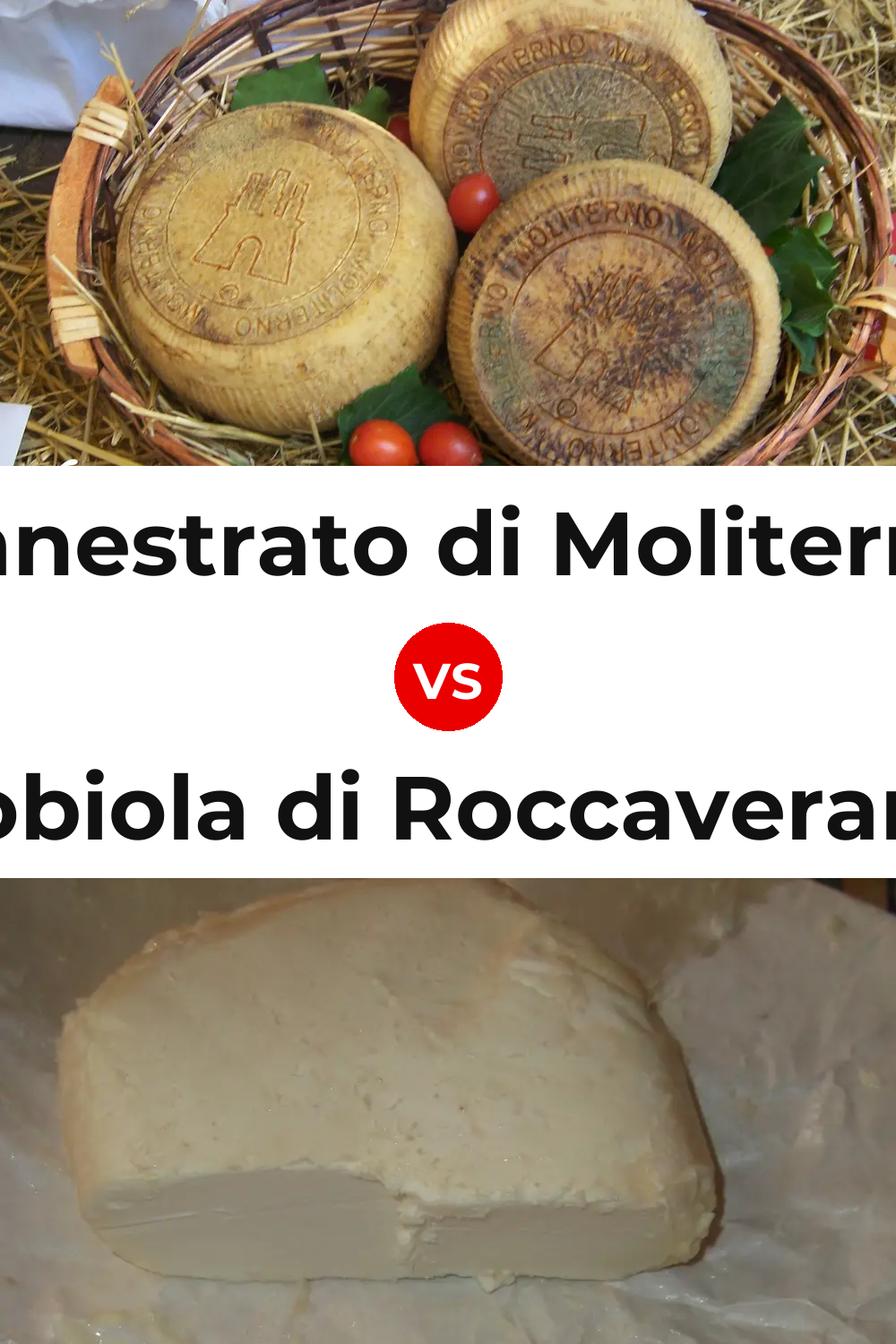
Canestrato di Moliterno Cheese is a hard goat or sheep-milk cheese from Italy, while Robiola di Roccaverano Cheese is soft, rubbery, soluble; crumbly (for affinato) and made from cow, goat, and sheep milk, originating in Italy.
What Is Canestrato di Moliterno Cheese?
Canestrato di Moliterno is an Italian cheese from Basilicata, particularly noted for its firm texture and sharp, piquant flavor. It is made from a mix of sheep's and goat's milk and is aged in wicker baskets, which imprint a distinctive pattern on its rind. This cheese is often grated over pasta and used in traditional Italian dishes.
What Is Robiola di Roccaverano Cheese?
Robiola di Roccaverano is a PDO cheese from Piedmont, specifically the Roccaverano area, made exclusively from goat's milk or a blend including cow's and sheep's milk. It has a creamy texture and a fresh, mildly acidic flavor, and can be enjoyed either fresh or aged, with the latter having a stronger flavor.
What's the Difference Between Canestrato di Moliterno Cheese and Robiola di Roccaverano Cheese?
- Milk type: Canestrato di Moliterno Cheese (70–90% goat's, 10–30% sheep's), Robiola di Roccaverano Cheese (Goat's milk, or goat's and ewe's/cow's milk)
- Texture: Canestrato di Moliterno Cheese (Hard), Robiola di Roccaverano Cheese (Soft, rubbery, soluble; Crumbly (for affinato))
- Rind: Canestrato di Moliterno Cheese (Marked by canestri), Robiola di Roccaverano Cheese (Thin with molds (for affinato))
- Aging: Canestrato di Moliterno Cheese (Fresh, Primitivo (≤6 months), Stagionato (6–12 months), Extra (>12 months)), Robiola di Roccaverano Cheese (Fresco: 4-10 days; Affinato: After 11 days)
Side-by-Side Comparison
| Canestrato di Moliterno Cheese | Robiola di Roccaverano Cheese | |
|---|---|---|
| Country of Origin | Italy | Italy |
| Specific Origin | Matera And Potenza, Basilicata | Province Of Asti And Alessandria, Piedmont |
| Milk Type | 70–90% goat's, 10–30% sheep's | Goat's milk, or goat's and ewe's/cow's milk |
| Texture | Hard | Soft, rubbery, soluble; Crumbly (for affinato) |
| Rind | Marked by canestri | Thin with molds (for affinato) |
| Aging | Fresh, Primitivo (≤6 months), Stagionato (6–12 months), Extra (>12 months) | Fresco: 4-10 days; Affinato: After 11 days |
| Taste | — | Acidic, savory |
Taste Comparison: Does Canestrato di Moliterno Cheese Taste Like Robiola di Roccaverano Cheese?
Their flavor profiles are distinct. More specifically, Canestrato di Moliterno Cheese shows sweet and delicate, evolving to complex aromas with age; can be treated with olive oil or soot-water mixture, while Robiola di Roccaverano Cheese leans toward acidic; fine and delicate. Aging plays into this as well. Canestrato di Moliterno Cheese at fresh, primitivo (≤6 months), stagionato (6–12 months), extra (>12 months) develops a different profile than Robiola di Roccaverano Cheese at fresco: 4-10 days; affinato: after 11 days.
Can You Substitute Canestrato di Moliterno Cheese for Robiola di Roccaverano Cheese?
Canestrato di Moliterno Cheese can stand in for Robiola di Roccaverano Cheese in many dishes, but the switch will shift the overall character of the recipe. Expect hard bite and body where the recipe calls for soft, rubbery, soluble; crumbly (for affinato).
Which Is Better, Canestrato di Moliterno Cheese or Robiola di Roccaverano Cheese?
There's no single winner. It depends on your recipe and the profile you want. If you want a hard cheese, go with Canestrato di Moliterno Cheese. For a soft, rubbery, soluble; crumbly (for affinato) profile, Robiola di Roccaverano Cheese is the better fit.
Which is your favorite?
One click, anonymous. See what others chose.
Frequently Asked Questions
Is Canestrato di Moliterno Cheese the same as Robiola di Roccaverano Cheese?
No, they're distinct cheeses. Canestrato di Moliterno Cheese is made from goat or sheep milk; Robiola di Roccaverano Cheese uses cow, goat, and sheep. Aging also differs: Canestrato di Moliterno Cheese is typically aged fresh, primitivo (≤6 months), stagionato (6–12 months), extra (>12 months), Robiola di Roccaverano Cheese fresco: 4-10 days; affinato: after 11 days.
Is Canestrato di Moliterno Cheese similar to Robiola di Roccaverano Cheese?
Not closely. They use different milk bases and have distinct profiles.
Can I substitute Canestrato di Moliterno Cheese for Robiola di Roccaverano Cheese?
You can, but expect a shift in richness and milk character.
Does Canestrato di Moliterno Cheese taste like Robiola di Roccaverano Cheese?
They have distinct flavor profiles. The taste row in the table above is the best direct comparison.
What is Canestrato di Moliterno Cheese made of?
Canestrato di Moliterno Cheese is made from goat or sheep milk. It's typically aged fresh, primitivo (≤6 months), stagionato (6–12 months), extra (>12 months). It originates in Italy.
What is Robiola di Roccaverano Cheese made of?
Robiola di Roccaverano Cheese is made from cow, goat, and sheep milk. It's typically aged fresco: 4-10 days; affinato: after 11 days. It originates in Italy.
Which should I choose, Canestrato di Moliterno Cheese or Robiola di Roccaverano Cheese?
It depends on the dish. The texture difference is the biggest practical tell. Canestrato di Moliterno Cheese is hard, while Robiola di Roccaverano Cheese is soft, rubbery, soluble; crumbly (for affinato).