
Castelo Branco Cheese vs Robiola Cheese
Castelo Branco Cheese
Robiola Cheese
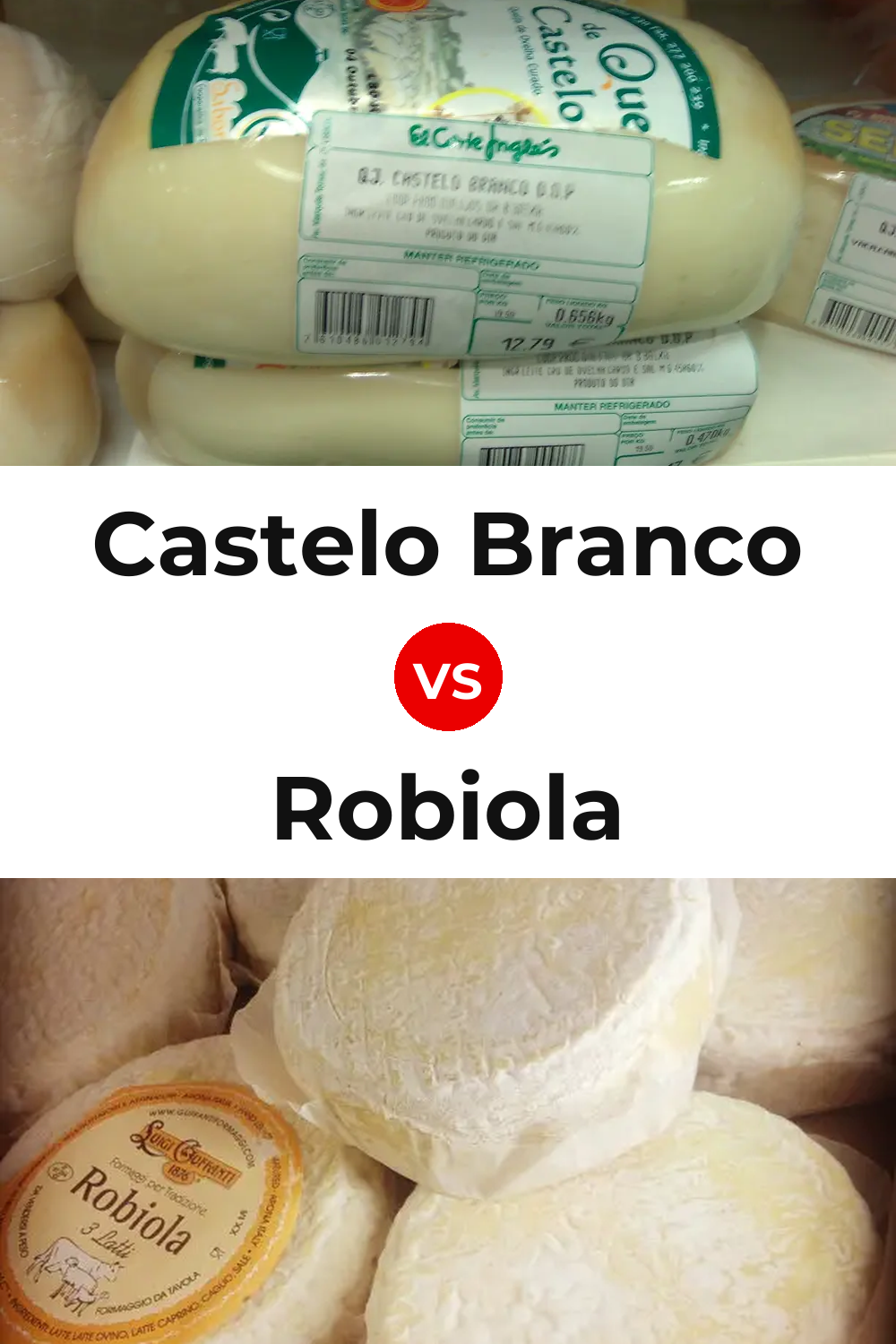
Castelo Branco Cheese is a semisoft to hard goat and sheep-milk cheese from Portugal, while Robiola Cheese is soft-ripened, creamy and made from cow, goat, or sheep milk, originating in Italy.
Buy Castelo Branco Cheese
Buy Robiola Cheese
What Is Castelo Branco Cheese?
Castelo Branco is a soft Portuguese cheese made from goat or sheep milk and named after the city of Castelo Branco. It has carried a Protected Designation of Origin since 1996 and runs about 45% fat.
What Is Robiola Cheese?
Robiola is an Italian soft-ripened cheese from the Langhe, made with varying proportions of cow's, goat's and sheep's milk. Its taste and look shift by producer, from the rindless Robiola di Roccaverano to the bloomy-rinded Robiola Lombardia.
What's the Difference Between Castelo Branco Cheese and Robiola Cheese?
- Origin: Castelo Branco Cheese (Portugal), Robiola Cheese (Italy)
- Milk type: Castelo Branco Cheese (goat's and sheep's milk), Robiola Cheese (cow, goat, sheep)
- Texture: Castelo Branco Cheese (Semisoft to hard), Robiola Cheese (soft-ripened, creamy)
- Rind: Castelo Branco Cheese (natural), Robiola Cheese (bloomy, or none depending on variety)
- Taste: Castelo Branco Cheese (sour, spicy, tangy), Robiola Cheese (tangy, mildly sour)
Side-by-Side Comparison
| Castelo Branco Cheese | Robiola Cheese | |
|---|---|---|
| Country of Origin | Portugal | Italy |
| Specific Origin | Beira Baixa Province (Central Part Of Portugal) | Langhe, Piedmont, Italy |
| Milk Type | Goat's and sheep's milk | Cow, goat, sheep |
| Milk Treatment | Raw | — |
| Texture | Semisoft to hard | Soft-ripened, creamy |
| Rind | Natural | Bloomy, or none depending on variety |
| Aging | At least 90 days (for hard) | — |
| Taste | Sour, spicy, tangy | Tangy, mildly sour |
Taste Comparison: Does Castelo Branco Cheese Taste Like Robiola Cheese?
Castelo Branco Cheese reads as sour, spicy, tangy, while Robiola Cheese brings tangy, mildly sour character. On the nose, Castelo Branco Cheese offers aromatic, contrasted with Robiola Cheese's mild, no ammonia. More specifically, Castelo Branco Cheese shows light yellow to orange, becomes spreadable at room temperature; small holes inside, while Robiola Cheese leans toward smooth and full, tangy-lactic, sweet and yielding in the roccaverano style.
Can You Substitute Castelo Branco Cheese for Robiola Cheese?
Castelo Branco Cheese can stand in for Robiola Cheese in many dishes, but the switch will shift the overall character of the recipe. Expect semisoft to hard bite and body where the recipe calls for soft-ripened, creamy. Flavor-wise, Castelo Branco Cheese reads as sour, spicy, tangy while Robiola Cheese brings tangy, mildly sour notes.
Which Is Better, Castelo Branco Cheese or Robiola Cheese?
There's no single winner. It depends on your recipe and the profile you want. If you want a semisoft to hard cheese, go with Castelo Branco Cheese. For a soft-ripened, creamy profile, Robiola Cheese is the better fit. Flavor-wise, Castelo Branco Cheese suits recipes that want sour, spicy, tangy notes, while Robiola Cheese fits dishes calling for tangy, mildly sour.
Which is your favorite?
One click, anonymous. See what others chose.
Frequently Asked Questions
Is Castelo Branco Cheese the same as Robiola Cheese?
No, they're distinct cheeses. Castelo Branco Cheese originates in Portugal, while Robiola Cheese comes from Italy. Castelo Branco Cheese is made from goat and sheep milk; Robiola Cheese uses cow, goat, or sheep.
Is Castelo Branco Cheese similar to Robiola Cheese?
Not closely. They use different milk bases and have distinct profiles.
Can I substitute Castelo Branco Cheese for Robiola Cheese?
You can, but expect a shift in richness and milk character.
Does Castelo Branco Cheese taste like Robiola Cheese?
Castelo Branco Cheese reads as sour, spicy, tangy, while Robiola Cheese is tangy, mildly sour. Aromas also diverge. Castelo Branco Cheese leans aromatic, and Robiola Cheese is closer to mild, no ammonia.
What is Castelo Branco Cheese made of?
Castelo Branco Cheese is made from goat and sheep milk (raw), using artichoke thistle enzyme rennet. It's typically aged at least 90 days (for hard). It originates in Portugal.
What is Robiola Cheese made of?
Robiola Cheese is made from cow, goat, or sheep milk. It originates in Italy.
Which should I choose, Castelo Branco Cheese or Robiola Cheese?
It depends on the dish. The texture difference is the biggest practical tell. Castelo Branco Cheese is semisoft to hard, while Robiola Cheese is soft-ripened, creamy.