Cheddar Cheese vs Cottage Cheese
Cheddar Cheese
Cottage Cheese
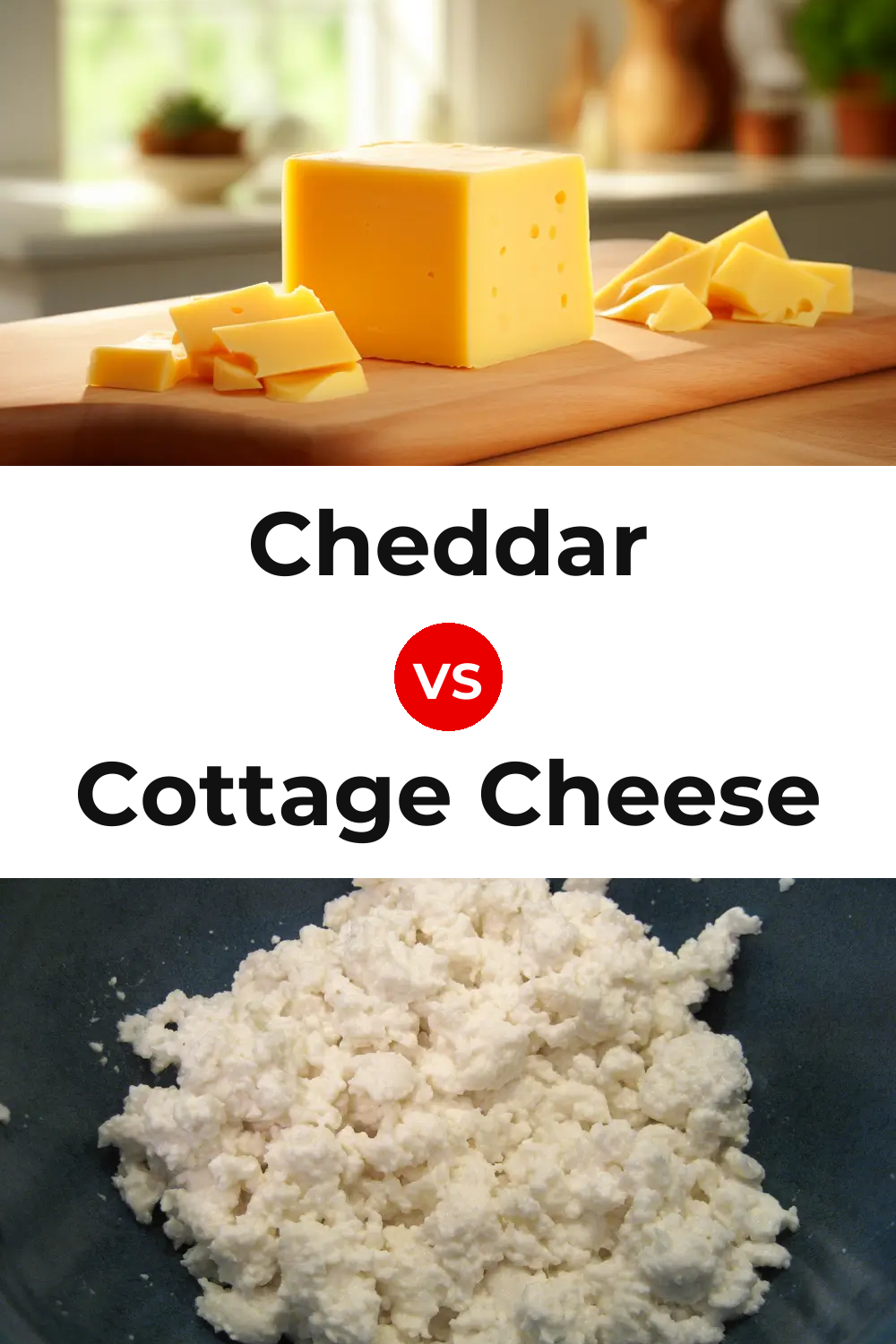
Cheddar Cheese is a varies (rubbery to friable and crystalline) cow-milk cheese from England, while Cottage Cheese is soft, curdy and made from cow milk, originating in United Kingdom and United States.
What Is Cheddar Cheese?
Cheddar cheese, perhaps the most famous cheese from England, originated in the village of Cheddar in Somerset. It ranges from mild to extra sharp, with aging times that can extend several years. Cheddar has a firm texture and a deep, nutty flavor that becomes increasingly complex as it matures.
What Is Cottage Cheese?
Cottage cheese is a fresh cheese curd product with a mild flavor. It is made by draining the cheese, as opposed to pressing it, which retains some of the whey and keeps the curds loose. Popular as a diet food due to its low fat content, cottage cheese is often eaten with fruit and vegetables or used as an ingredient in dishes like lasagna.
What's the Difference Between Cheddar Cheese and Cottage Cheese?
- Origin: Cheddar Cheese (England), Cottage Cheese (United Kingdom and United States)
- Milk treatment: Cheddar Cheese (Raw, Thermized, Pasteurized), Cottage Cheese (pasteurized or unpasteurized)
- Texture: Cheddar Cheese (Varies (rubbery to friable and crystalline)), Cottage Cheese (Soft, curdy)
- Rind: Cheddar Cheese (Varies (natural, cloth, wax, plastic)), Cottage Cheese (None)
- Aging: Cheddar Cheese (A few months to several years), Cottage Cheese (Fresh)
- Taste: Cheddar Cheese (Mild to sharp, buttery to brothy and savory), Cottage Cheese (Mild, possibly slightly lemony in traditional versions)
Side-by-Side Comparison
| Cheddar Cheese | Cottage Cheese | |
|---|---|---|
| Country of Origin | England | United Kingdom And United States |
| Specific Origin | Southwest (Somerset, Gloucester) | — |
| Milk Type | Cow's milk | Cow's milk |
| Milk Treatment | Raw, Thermized, Pasteurized | Pasteurized or unpasteurized |
| Texture | Varies (rubbery to friable and crystalline) | Soft, curdy |
| Rind | Varies (natural, cloth, wax, plastic) | None |
| Aging | A few months to several years | Fresh |
| Taste | Mild to sharp, buttery to brothy and savory | Mild, possibly slightly lemony in traditional versions |
Taste Comparison: Does Cheddar Cheese Taste Like Cottage Cheese?
Cheddar Cheese reads as mild to sharp, buttery to brothy and savory, while Cottage Cheese brings mild, possibly slightly lemony in traditional versions character. More specifically, Cheddar Cheese shows from mild and buttery to brothy and savory, with distinctive sharpness; variations in sweetness and flavor depending on the producer, while Cottage Cheese leans toward traditional: complex with slow lactic acid fermentation. commercial: simplified and standardized, often with added flavors like pineapple. Aging plays into this as well. Cheddar Cheese at a few months to several years develops a different profile than Cottage Cheese at fresh.
Can You Substitute Cheddar Cheese for Cottage Cheese?
In most recipes, Cheddar Cheese and Cottage Cheese can be swapped with reasonable results. Both are cow-milk cheeses, so the base character carries over. Expect varies (rubbery to friable and crystalline) bite and body where the recipe calls for soft, curdy. Flavor-wise, Cheddar Cheese reads as mild to sharp, buttery to brothy and savory while Cottage Cheese brings mild, possibly slightly lemony in traditional versions notes.
Which Is Better, Cheddar Cheese or Cottage Cheese?
There's no single winner. It depends on your recipe and the profile you want. If you want a varies (rubbery to friable and crystalline) cheese, go with Cheddar Cheese. For a soft, curdy profile, Cottage Cheese is the better fit. Flavor-wise, Cheddar Cheese suits recipes that want mild to sharp, buttery to brothy and savory notes, while Cottage Cheese fits dishes calling for mild, possibly slightly lemony in traditional versions.
Which is your favorite?
One click, anonymous. See what others chose.
Frequently Asked Questions
Is Cheddar Cheese the same as Cottage Cheese?
No, they're distinct cheeses. Cheddar Cheese originates in England, while Cottage Cheese comes from United Kingdom and United States. Aging also differs: Cheddar Cheese is typically aged a few months to several years, Cottage Cheese fresh.
Is Cheddar Cheese similar to Cottage Cheese?
Somewhat. They share a cow-milk base but diverge in texture and flavor.
Can I substitute Cheddar Cheese for Cottage Cheese?
You can, but expect a shift in bite and mouthfeel.
Does Cheddar Cheese taste like Cottage Cheese?
Cheddar Cheese reads as mild to sharp, buttery to brothy and savory, while Cottage Cheese is mild, possibly slightly lemony in traditional versions.
What is Cheddar Cheese made of?
Cheddar Cheese is made from cow milk (raw, thermized, pasteurized). It's typically aged a few months to several years. It originates in England.
What is Cottage Cheese made of?
Cottage Cheese is made from cow milk (pasteurized or unpasteurized), using increased dose for quick set, some us rennet. It's typically aged fresh. It originates in United Kingdom and United States.
Which should I choose, Cheddar Cheese or Cottage Cheese?
It depends on the dish. The texture difference is the biggest practical tell. Cheddar Cheese is varies (rubbery to friable and crystalline), while Cottage Cheese is soft, curdy.