
Chimay Cheese vs Queso de Flor de Guía
Chimay Cheese
Queso de Flor de Guía
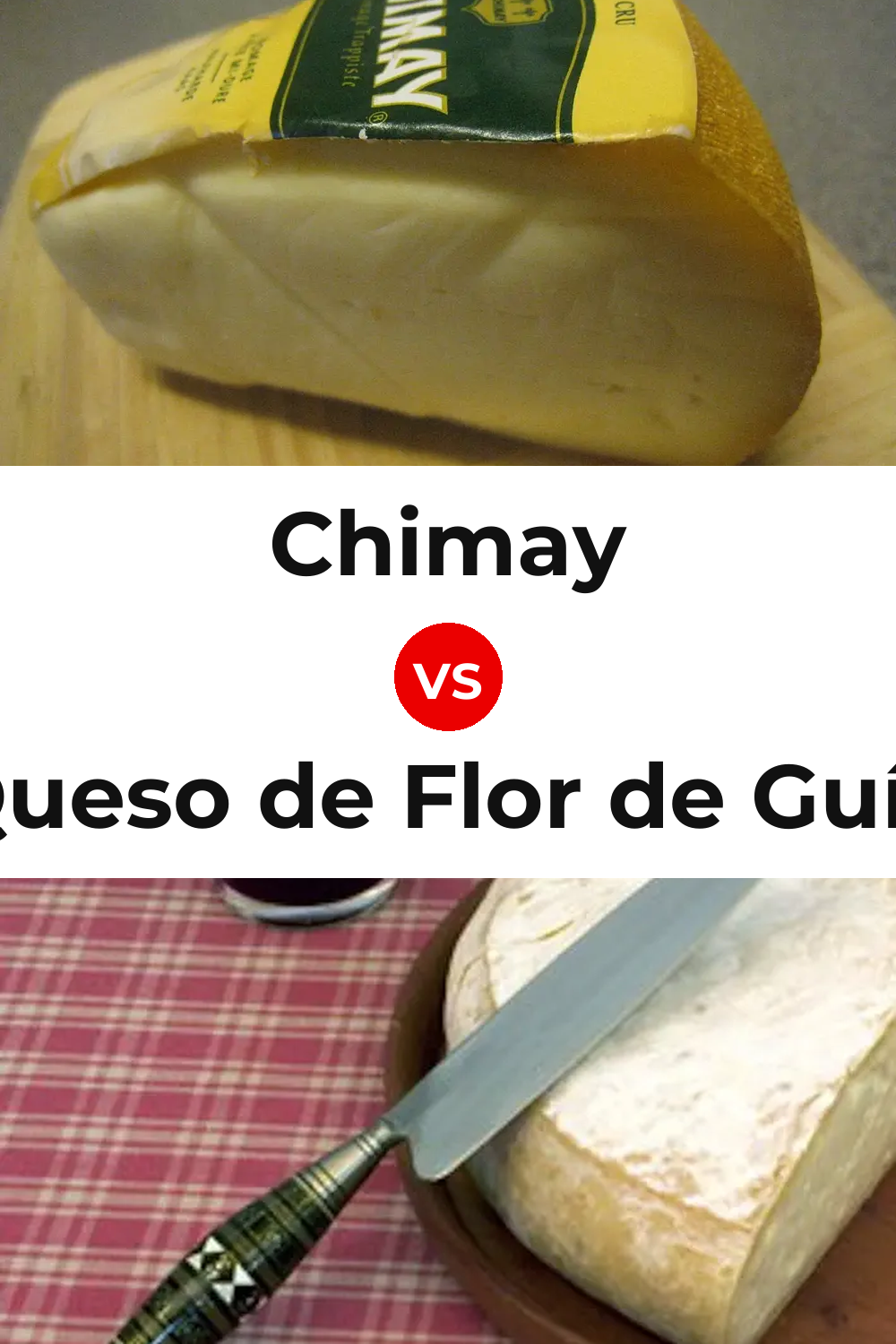
Chimay Cheese is a soft to hard depending on variety, creamy cheese from Belgium, while Queso de Flor de Guía is dense, compact, pasty and made from cow, goat, and sheep milk.
Buy Chimay Cheese
Buy Queso de Flor de Guía
What Is Chimay Cheese?
Chimay is a Belgian Trappist cheese made at Baileux, near the Abbey of Notre-Dame de Scourmont in Hainaut. It comes in several styles, including soft versions washed with Chimay Rouge or Bleue beer and a hard Vieux Chimay aged at least six months.
What Is Queso de Flor de Guía?
Queso de Flor de Guía is a full-fat or half-fat cheese from Spain, specifically produced in Gáldar, Moya, and Santa María de Guía in Gran Canaria. It is made primarily from Canary Island sheep’s milk, with up to 40% Canary Island cattle milk and up to 10% Canary Island goat milk. The milk is curdled exclusively using vegetable rennet derived from the dried flower heads of Cynara cardunculus var. ferocissima and Cynara scolymus. The cheese has a cylindrical shape and varies in size from 0.5 to 5 kg. Its texture is dense, compact, and pasty, with a very soft and creamy interior when semi-mature and a harder body when fully matured. The flavor is highly aromatic, acidic, and bitter, with mild burning and astringent sensations. It matures for at least 15 days for semi-mature cheese and over 60 days for mature cheese.
What's the Difference Between Chimay Cheese and Queso de Flor de Guía?
- Texture: Chimay Cheese (soft to hard depending on variety, creamy), Queso de Flor de Guía (Dense, compact, pasty)
- Rind: Chimay Cheese (washed, some varieties covered with a fine white bloom), Queso de Flor de Guía (Soft and elastic when young, dark brown and harder when mature)
- Aging: Chimay Cheese (2 weeks to 6 months), Queso de Flor de Guía (15+ days (semi-mature), 60+ days (mature))
- Taste: Chimay Cheese (slightly bitter from the beer hops, nutty in aged versions), Queso de Flor de Guía (Aromatic, acidic, and bitter)
Side-by-Side Comparison
| Chimay Cheese | Queso de Flor de Guía | |
|---|---|---|
| Country of Origin | Belgium | — |
| Specific Origin | Baileux, Hainaut, Belgium | Gáldar, Moya, And Santa María De Guía, Gran Canaria |
| Milk Type | — | Sheep (Canary Island breed), with up to 40% cow and 10% goat milk |
| Milk Treatment | Pasteurized | — |
| Texture | Soft to hard depending on variety, creamy | Dense, compact, pasty |
| Rind | Washed, some varieties covered with a fine white bloom | Soft and elastic when young, dark brown and harder when mature |
| Aging | 2 weeks to 6 months | 15+ days (semi-mature), 60+ days (mature) |
| Taste | Slightly bitter from the beer hops, nutty in aged versions | Aromatic, acidic, and bitter |
Taste Comparison: Does Chimay Cheese Taste Like Queso de Flor de Guía?
Chimay Cheese reads as slightly bitter from the beer hops, nutty in aged versions, while Queso de Flor de Guía brings aromatic, acidic, and bitter character. More specifically, Chimay Cheese shows dried fruit and nuts with a light bitter edge in vieux chimay, similar to aged gouda, while Queso de Flor de Guía leans toward lactic, vegetal (cardoon and nuts). Aging plays into this as well. Chimay Cheese at 2 weeks to 6 months develops a different profile than Queso de Flor de Guía at 15+ days (semi-mature), 60+ days (mature).
Can You Substitute Chimay Cheese for Queso de Flor de Guía?
Chimay Cheese can stand in for Queso de Flor de Guía in many dishes, but the switch will shift the overall character of the recipe. Expect soft to hard depending on variety, creamy bite and body where the recipe calls for dense, compact, pasty. Flavor-wise, Chimay Cheese reads as slightly bitter from the beer hops, nutty in aged versions while Queso de Flor de Guía brings aromatic, acidic, and bitter notes.
Which Is Better, Chimay Cheese or Queso de Flor de Guía?
There's no single winner. It depends on your recipe and the profile you want. If you want a soft to hard depending on variety, creamy cheese, go with Chimay Cheese. For a dense, compact, pasty profile, Queso de Flor de Guía is the better fit. Flavor-wise, Chimay Cheese suits recipes that want slightly bitter from the beer hops, nutty in aged versions notes, while Queso de Flor de Guía fits dishes calling for aromatic, acidic, and bitter.
Which is your favorite?
One click, anonymous. See what others chose.
Frequently Asked Questions
Is Chimay Cheese the same as Queso de Flor de Guía?
No, they're distinct cheeses. Aging also differs: Chimay Cheese is typically aged 2 weeks to 6 months, Queso de Flor de Guía 15+ days (semi-mature), 60+ days (mature).
Is Chimay Cheese similar to Queso de Flor de Guía?
Not closely. They use different milk bases and have distinct profiles.
Can I substitute Chimay Cheese for Queso de Flor de Guía?
You can, but expect a shift in bite and mouthfeel.
Does Chimay Cheese taste like Queso de Flor de Guía?
Chimay Cheese reads as slightly bitter from the beer hops, nutty in aged versions, while Queso de Flor de Guía is aromatic, acidic, and bitter.
What is Chimay Cheese made of?
Chimay Cheese is made from milk (pasteurized). It's typically aged 2 weeks to 6 months. It originates in Belgium.
What is Queso de Flor de Guía made of?
Queso de Flor de Guía is made from cow, goat, and sheep milk, using vegetable (cynara cardunculus var. ferocissima, cynara scolymus) rennet. It's typically aged 15+ days (semi-mature), 60+ days (mature).
Which should I choose, Chimay Cheese or Queso de Flor de Guía?
It depends on the dish. The texture difference is the biggest practical tell. Chimay Cheese is soft to hard depending on variety, creamy, while Queso de Flor de Guía is dense, compact, pasty.