
Cotija Cheese vs Munster Cheese
Cotija Cheese
Munster Cheese
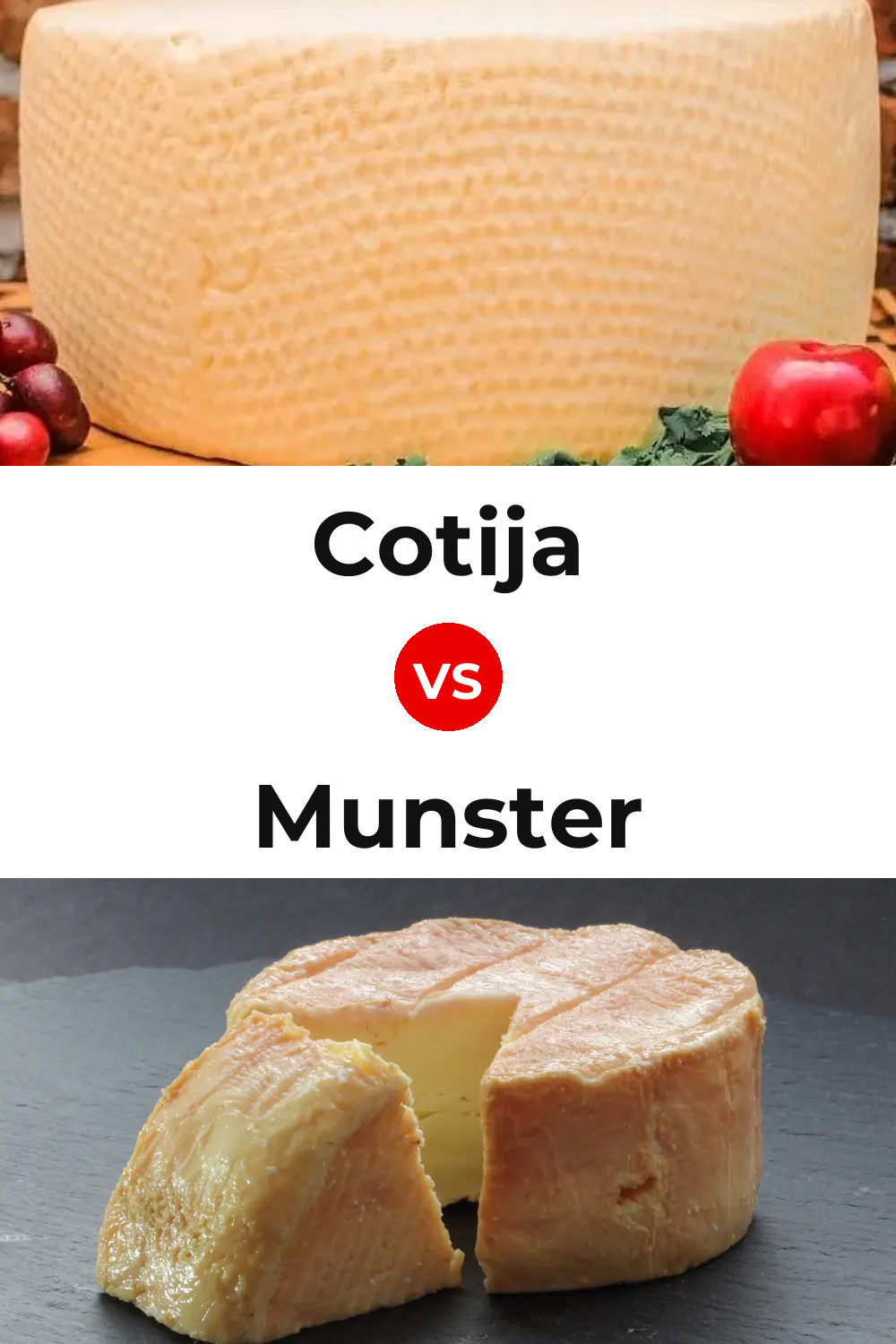
Cotija Cheese is a hard, artisan cow-milk cheese from Mexico, while Munster Cheese is semisoft and made from cow milk, originating in France.
Buy Cotija Cheese
Buy Munster Cheese
What Is Cotija Cheese?
Cotija is an aged Mexican cheese from the town of Cotija in Michoacán, made by hand from cow's milk. It is white, firm and salty, and it is used crumbled or grated over tacos, soups, salads and elote.
What Is Munster Cheese?
Munster, also called Munster-géromé, is a soft cheese made from raw cow's milk in the Vosges of eastern France. Brine washing during aging leaves it with a moist orange rind, a penetrating smell and a very strong taste.
What's the Difference Between Cotija Cheese and Munster Cheese?
- Origin: Cotija Cheese (Mexico), Munster Cheese (France)
- Texture: Cotija Cheese (hard, artisan), Munster Cheese (Semisoft)
- Rind: Cotija Cheese (natural, cream-colored crust), Munster Cheese (Washed, saltwater solution)
- Taste: Cotija Cheese (salty, strong), Munster Cheese (Strong, gamey)
Side-by-Side Comparison
| Cotija Cheese | Munster Cheese | |
|---|---|---|
| Country of Origin | Mexico | France |
| Specific Origin | Cotija, Michoacán, Mexico | Alsace, Lorraine, Franche-Comté |
| Milk Type | Cow's milk | Cow's milk |
| Milk Treatment | — | Unpasteurized |
| Texture | Hard, artisan | Semisoft |
| Rind | Natural, cream-colored crust | Washed, saltwater solution |
| Aging | — | 4-6 weeks to 2-3 months |
| Taste | Salty, strong | Strong, gamey |
Taste Comparison: Does Cotija Cheese Taste Like Munster Cheese?
Cotija Cheese reads as salty, strong, while Munster Cheese brings strong, gamey character. More specifically, Cotija Cheese shows salty and milky; young like mild feta, aged closer to parmesan, while Munster Cheese leans toward strong smell, sticky orange-red rind, mellow creamy finish, heightened bite. traditionally enjoyed with rye bread or biscuits with cumin seeds..
Can You Substitute Cotija Cheese for Munster Cheese?
In most recipes, Cotija Cheese and Munster Cheese can be swapped with reasonable results. Both are cow-milk cheeses, so the base character carries over. Expect hard, artisan bite and body where the recipe calls for semisoft. Flavor-wise, Cotija Cheese reads as salty, strong while Munster Cheese brings strong, gamey notes.
Which Is Better, Cotija Cheese or Munster Cheese?
There's no single winner. It depends on your recipe and the profile you want. If you want a hard, artisan cheese, go with Cotija Cheese. For a semisoft profile, Munster Cheese is the better fit. Flavor-wise, Cotija Cheese suits recipes that want salty, strong notes, while Munster Cheese fits dishes calling for strong, gamey.
Which is your favorite?
One click, anonymous. See what others chose.
Frequently Asked Questions
Is Cotija Cheese the same as Munster Cheese?
No, they're distinct cheeses. Cotija Cheese originates in Mexico, while Munster Cheese comes from France.
Is Cotija Cheese similar to Munster Cheese?
Somewhat. They share a cow-milk base but diverge in texture and flavor.
Can I substitute Cotija Cheese for Munster Cheese?
You can, but expect a shift in bite and mouthfeel.
Does Cotija Cheese taste like Munster Cheese?
Cotija Cheese reads as salty, strong, while Munster Cheese is strong, gamey.
What is Cotija Cheese made of?
Cotija Cheese is made from cow milk. It originates in Mexico.
What is Munster Cheese made of?
Munster Cheese is made from cow milk (unpasteurized), using traditional rennet. It's typically aged 4-6 weeks to 2-3 months. It originates in France.
Which should I choose, Cotija Cheese or Munster Cheese?
It depends on the dish. The texture difference is the biggest practical tell. Cotija Cheese is hard, artisan, while Munster Cheese is semisoft.