
Cottage Cheese vs Urdă Cheese
Cottage Cheese
Urdă Cheese
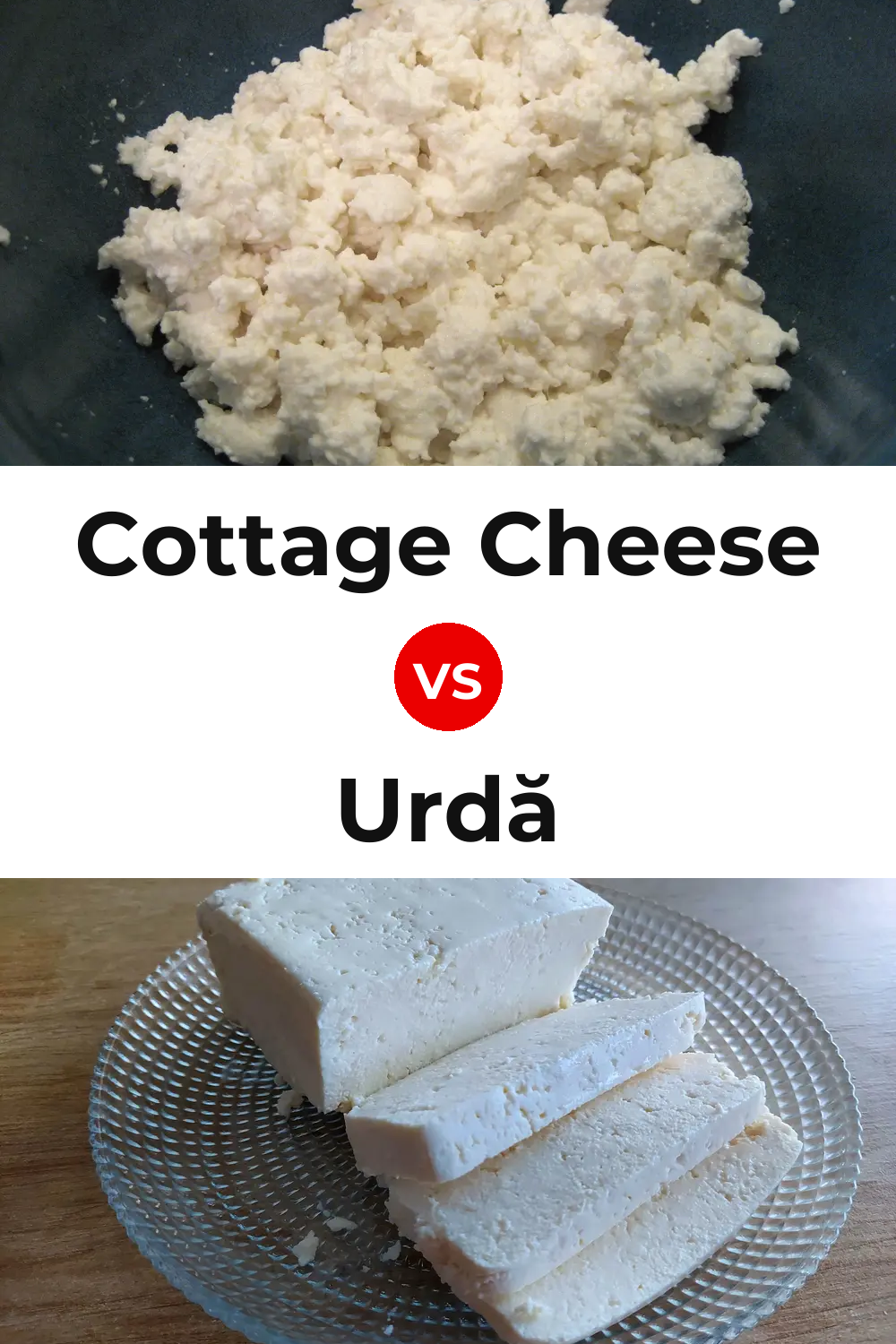
Cottage Cheese is a creamy, heterogeneous, curdy cow-milk cheese from United Kingdom and United States, while Urdă Cheese is creamy, delicate and made from cow, goat, or sheep milk, originating in Bulgaria, Hungary, Macedonia, Romania, Serbia and Ukraine.
Buy Cottage Cheese
Buy Urdă Cheese
What Is Cottage Cheese?
Cottage cheese is an unaged fresh cheese made from skimmed milk, with mild, slightly tangy curds mixed with cream and salt. It is known as a high-protein, low-fat food eaten with fruit, vegetables, bread, and desserts.
What Is Urdă Cheese?
Urdă is a whey cheese made across Southeast Europe and in Hungary by boiling the whey drained from other cheeses. The paste is finely grained and silky, and most of it ends up in desserts and filled pastries.
What's the Difference Between Cottage Cheese and Urdă Cheese?
- Origin: Cottage Cheese (United Kingdom and United States), Urdă Cheese (Bulgaria, Hungary, Macedonia, Romania, Serbia and Ukraine)
- Milk type: Cottage Cheese (cow's skimmed milk), Urdă Cheese (cow's, goat's or sheep's milk)
- Milk treatment: Cottage Cheese (pasteurized), Urdă Cheese (unpasteurized)
- Texture: Cottage Cheese (creamy, heterogeneous, curdy), Urdă Cheese (Creamy, delicate)
- Rind: Cottage Cheese (None), Urdă Cheese (Yellowish)
- Aging: Cottage Cheese (unaged), Urdă Cheese (Up to 360 days)
- Taste: Cottage Cheese (mild, slightly tangy), Urdă Cheese (High quality)
Side-by-Side Comparison
| Cottage Cheese | Urdă Cheese | |
|---|---|---|
| Country of Origin | United Kingdom And United States | Bulgaria, Hungary, Macedonia, Romania, Serbia And Ukraine |
| Specific Origin | Philadelphia, The U.S. | North Pindos, Konitsa |
| Milk Type | Cow's skimmed milk | Cow's, goat's or sheep's milk |
| Milk Treatment | Pasteurized | Unpasteurized |
| Texture | Creamy, heterogeneous, curdy | Creamy, delicate |
| Rind | None | Yellowish |
| Aging | Unaged | Up to 360 days |
| Taste | Mild, slightly tangy | High quality |
Taste Comparison: Does Cottage Cheese Taste Like Urdă Cheese?
Cottage Cheese reads as mild, slightly tangy, while Urdă Cheese brings high quality character. On the nose, Cottage Cheese offers lactic, buttery from diacetyl, contrasted with Urdă Cheese's fresh. More specifically, Cottage Cheese shows traditional: complex with slow lactic acid fermentation. commercial: simplified and standardized, often with added flavors like pineapple, while Urdă Cheese leans toward creamier and superior sensory qualities compared to mizithra. Aging plays into this as well. Cottage Cheese at unaged develops a different profile than Urdă Cheese at up to 360 days.
Can You Substitute Cottage Cheese for Urdă Cheese?
Cottage Cheese can stand in for Urdă Cheese in many dishes, but the switch will shift the overall character of the recipe. Expect creamy, heterogeneous, curdy bite and body where the recipe calls for creamy, delicate. Flavor-wise, Cottage Cheese reads as mild, slightly tangy while Urdă Cheese brings high quality notes.
Which Is Better, Cottage Cheese or Urdă Cheese?
There's no single winner. It depends on your recipe and the profile you want. If you want a creamy, heterogeneous, curdy cheese, go with Cottage Cheese. For a creamy, delicate profile, Urdă Cheese is the better fit. Flavor-wise, Cottage Cheese suits recipes that want mild, slightly tangy notes, while Urdă Cheese fits dishes calling for high quality.
Which is your favorite?
One click, anonymous. See what others chose.
Frequently Asked Questions
Is Cottage Cheese the same as Urdă Cheese?
No, they're distinct cheeses. Cottage Cheese originates in United Kingdom and United States, while Urdă Cheese comes from Bulgaria, Hungary, Macedonia, Romania, Serbia and Ukraine. Cottage Cheese is made from cow milk; Urdă Cheese uses cow, goat, or sheep. Aging also differs: Cottage Cheese is typically aged unaged, Urdă Cheese up to 360 days.
Is Cottage Cheese similar to Urdă Cheese?
Not closely. They use different milk bases and have distinct profiles.
Can I substitute Cottage Cheese for Urdă Cheese?
You can, but expect a shift in richness and milk character.
Does Cottage Cheese taste like Urdă Cheese?
Cottage Cheese reads as mild, slightly tangy, while Urdă Cheese is high quality. Aromas also diverge. Cottage Cheese leans lactic, buttery from diacetyl, and Urdă Cheese is closer to fresh.
What is Cottage Cheese made of?
Cottage Cheese is made from cow milk (pasteurized), using microbial or animal in the cultured method, none in the direct acid-set method rennet. It's typically aged unaged. It originates in United Kingdom and United States.
What is Urdă Cheese made of?
Urdă Cheese is made from cow, goat, or sheep milk (unpasteurized). It's typically aged up to 360 days. It originates in Bulgaria, Hungary, Macedonia, Romania, Serbia and Ukraine.
Which should I choose, Cottage Cheese or Urdă Cheese?
It depends on the dish. The texture difference is the biggest practical tell. Cottage Cheese is creamy, heterogeneous, curdy, while Urdă Cheese is creamy, delicate.