Danish Blue Cheese vs Traditional Welsh Caerphilly Cheese
Danish Blue Cheese
Traditional Welsh Caerphilly Cheese
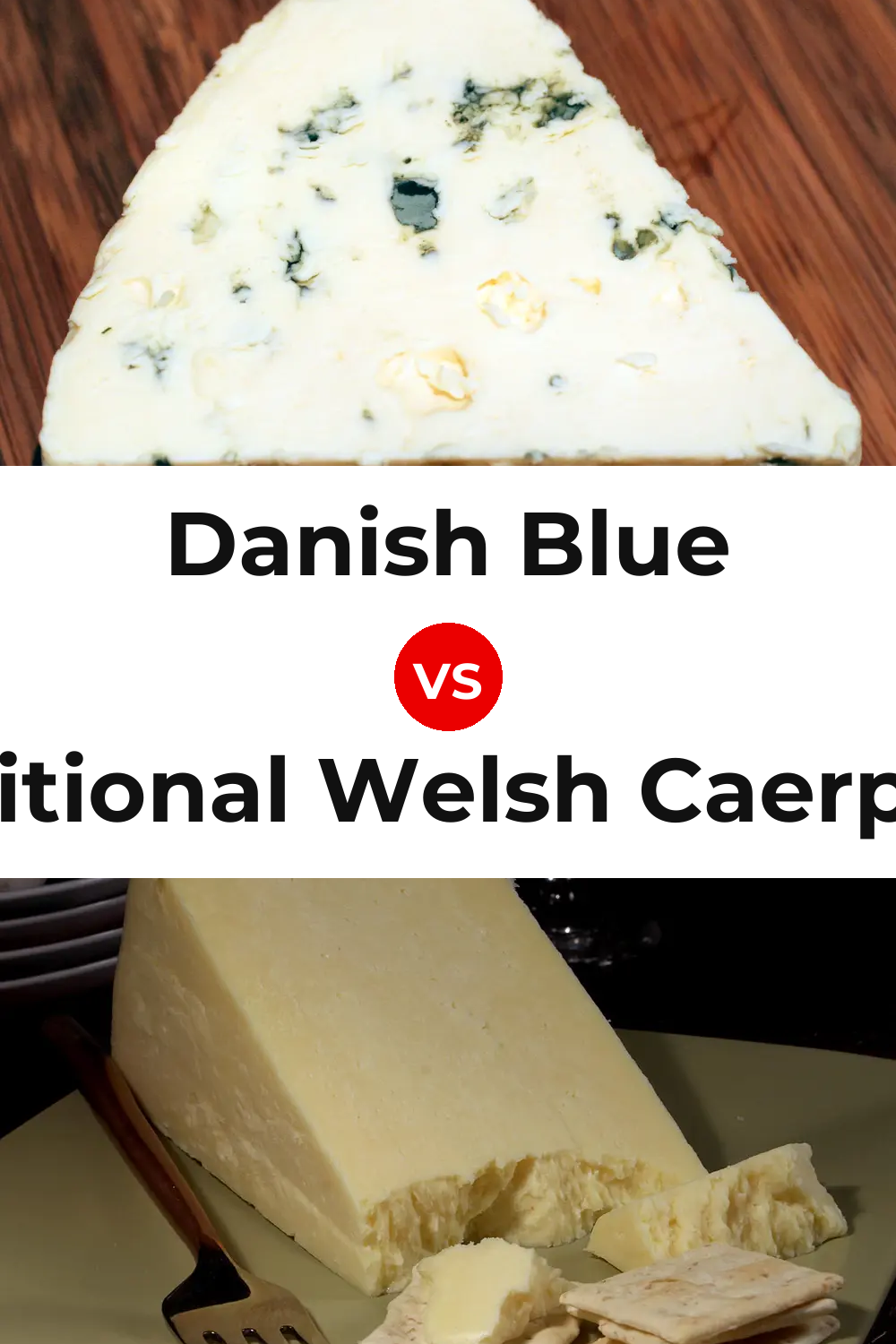
Danish Blue Cheese is a semi-soft, blue-veined cow-milk cheese from Denmark, while Traditional Welsh Caerphilly Cheese is hard and made from cow milk.
What Is Danish Blue Cheese?
Danish Blue, or Danablu, is a strong, blue-veined cheese made from cow's milk. It has a creamy, slightly moist texture and a sharp, salty flavor typical of blue cheeses. Danish Blue is often used in dressings, as well as on bread or crackers, or as a dessert cheese with fruits and wines.
What Is Traditional Welsh Caerphilly Cheese?
Traditional Welsh Caerphilly is a hard cheese made in Wales from locally sourced cow’s milk. It can be produced using raw or pasteurized milk and either organic or non-organic methods. The cheese has a mild, slightly lemony taste when young and develops a fuller but still mild flavor with age. It is shaped into flat rounds with a smooth, creamy white texture and may have a slightly molded coat. The texture is smooth, close, and flaky, with natural variations due to artisanal production. It is traditionally made by hand, including cutting the curds into large cubes and lightly pressing the cheese to maintain moisture. The cheese is eaten young from 10 days old but can mature for up to 6 months. Unlike modern block Caerphilly, Traditional Welsh Caerphilly is sold as a "naked" cheese, unbound by cloth.
What's the Difference Between Danish Blue Cheese and Traditional Welsh Caerphilly Cheese?
- Texture: Danish Blue Cheese (Semi-soft, Blue-veined), Traditional Welsh Caerphilly Cheese (Hard)
- Taste: Danish Blue Cheese (Salty, tangy), Traditional Welsh Caerphilly Cheese (Mild, slightly lemony when young, fuller but still mild when aged)
Side-by-Side Comparison
| Danish Blue Cheese | Traditional Welsh Caerphilly Cheese | |
|---|---|---|
| Country of Origin | Denmark | — |
| Milk Type | Cow | Cow |
| Milk Treatment | — | Raw or Pasteurized |
| Texture | Semi-soft, Blue-veined | Hard |
| Rind | — | Smooth and intact, may have a slightly molded coat, historically dusted with flour or oatmeal |
| Aging | — | 10 days to 6 months |
| Taste | Salty, tangy | Mild, slightly lemony when young, fuller but still mild when aged |
Taste Comparison: Does Danish Blue Cheese Taste Like Traditional Welsh Caerphilly Cheese?
Danish Blue Cheese reads as salty, tangy, while Traditional Welsh Caerphilly Cheese brings mild, slightly lemony when young, fuller but still mild when aged character.
Can You Substitute Danish Blue Cheese for Traditional Welsh Caerphilly Cheese?
In most recipes, Danish Blue Cheese and Traditional Welsh Caerphilly Cheese can be swapped with reasonable results. Both are cow-milk cheeses, so the base character carries over. Expect semi-soft, blue-veined bite and body where the recipe calls for hard. Flavor-wise, Danish Blue Cheese reads as salty, tangy while Traditional Welsh Caerphilly Cheese brings mild, slightly lemony when young, fuller but still mild when aged notes.
Which Is Better, Danish Blue Cheese or Traditional Welsh Caerphilly Cheese?
There's no single winner. It depends on your recipe and the profile you want. If you want a semi-soft, blue-veined cheese, go with Danish Blue Cheese. For a hard profile, Traditional Welsh Caerphilly Cheese is the better fit. Flavor-wise, Danish Blue Cheese suits recipes that want salty, tangy notes, while Traditional Welsh Caerphilly Cheese fits dishes calling for mild, slightly lemony when young, fuller but still mild when aged.
Which is your favorite?
One click, anonymous. See what others chose.
Frequently Asked Questions
Is Danish Blue Cheese the same as Traditional Welsh Caerphilly Cheese?
No, they're distinct cheeses.
Is Danish Blue Cheese similar to Traditional Welsh Caerphilly Cheese?
Somewhat. They share a cow-milk base but diverge in texture and flavor.
Can I substitute Danish Blue Cheese for Traditional Welsh Caerphilly Cheese?
You can, but expect a shift in bite and mouthfeel.
Does Danish Blue Cheese taste like Traditional Welsh Caerphilly Cheese?
Danish Blue Cheese reads as salty, tangy, while Traditional Welsh Caerphilly Cheese is mild, slightly lemony when young, fuller but still mild when aged.
What is Danish Blue Cheese made of?
Danish Blue Cheese is made from cow milk. It originates in Denmark.
What is Traditional Welsh Caerphilly Cheese made of?
Traditional Welsh Caerphilly Cheese is made from cow milk (raw or pasteurized), using traditional rennet. It's typically aged 10 days to 6 months.
Which should I choose, Danish Blue Cheese or Traditional Welsh Caerphilly Cheese?
It depends on the dish. The texture difference is the biggest practical tell. Danish Blue Cheese is semi-soft, blue-veined, while Traditional Welsh Caerphilly Cheese is hard.