
Ġbejna tan-nagħaġ Cheese vs Rocamadour Cheese
Ġbejna tan-nagħaġ Cheese
Rocamadour Cheese
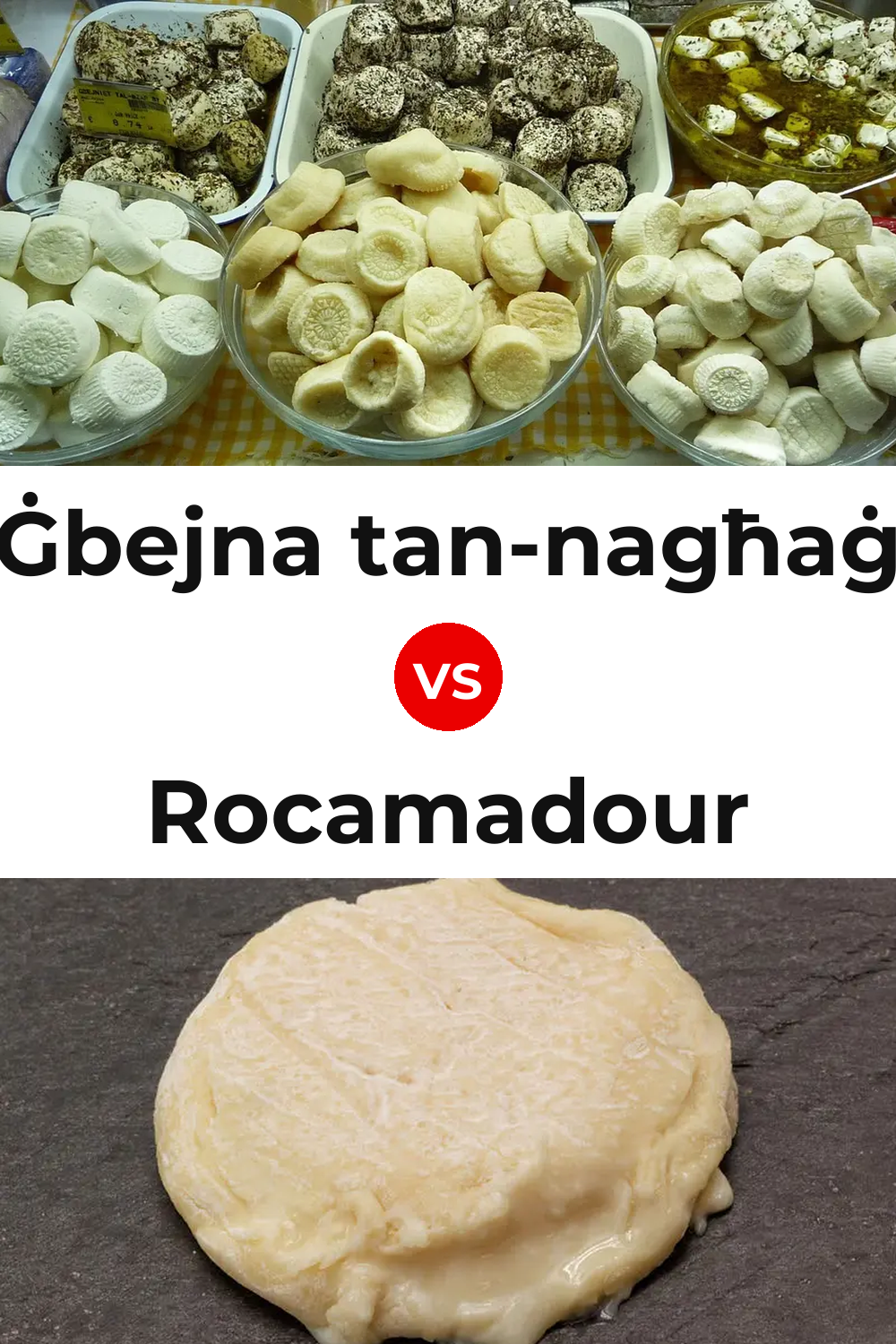
Ġbejna tan-nagħaġ Cheese is a semi-hard to hard (except for the fresh variety, which is creamy and soft) sheep-milk cheese, while Rocamadour Cheese is soft and creamy; becomes drier (matured) and made from goat milk, originating in France.
Buy Ġbejna tan-nagħaġ Cheese
Buy Rocamadour Cheese
What Is Ġbejna tan-nagħaġ Cheese?
Ġbejna tan-nagħaġ is a traditional cheese from Malta, made from whole raw milk of sheep. The sheep are of the Maltese breed and its crosses, registered in the Maltese islands, including Malta, Gozo, and Comino. This cheese is available in three varieties: fresh (friska), air-dried (niexfa), and pickled and peppered (tal-bżar). It is a rindless cheese with a truncated cone shape and can vary in height, weight, and diameter. The cheese has a semi-hard to hard texture, except for the fresh variety, which is creamy and soft. The flavor ranges from sweet and slightly salty to acidic and peppery, depending on the variety. Ġbejna tan-nagħaġ is an integral part of Maltese culinary heritage and is used in various traditional dishes.
What Is Rocamadour Cheese?
Rocamadour is a very small raw goat's milk cheese from southwest France, named after the village of Rocamadour in the Lot. It is soft, creamy and white, weighs about 35 grams, and has carried AOC status since 1996.
What's the Difference Between Ġbejna tan-nagħaġ Cheese and Rocamadour Cheese?
- Milk type: Ġbejna tan-nagħaġ Cheese (Sheep), Rocamadour Cheese (goat's milk)
- Milk treatment: Ġbejna tan-nagħaġ Cheese (Raw), Rocamadour Cheese (unpasteurized)
- Texture: Ġbejna tan-nagħaġ Cheese (Semi-hard to hard (except for the fresh variety, which is creamy and soft)), Rocamadour Cheese (Soft and creamy; becomes drier (matured))
- Rind: Ġbejna tan-nagħaġ Cheese (Rindless), Rocamadour Cheese (White, soft (early); (matured))
- Taste: Ġbejna tan-nagħaġ Cheese (Sweet and slightly salty (friska), sweet to slightly acidic (niexfa), moderate to high acidic and peppery (tal-bżar)), Rocamadour Cheese (Mild; becomes stronger)
Side-by-Side Comparison
| Ġbejna tan-nagħaġ Cheese | Rocamadour Cheese | |
|---|---|---|
| Country of Origin | — | France |
| Specific Origin | Malta, Gozo, And Comino | Communes Of The Causses Du Quercy |
| Milk Type | Sheep | Goat's milk |
| Milk Treatment | Raw | Unpasteurized |
| Texture | Semi-hard to hard (except for the fresh variety, which is creamy and soft) | Soft and creamy; becomes drier (matured) |
| Rind | Rindless | White, soft (early); (matured) |
| Aging | — | Between 6 and 10 days; longer for drier, stronger flavor |
| Taste | Sweet and slightly salty (friska), sweet to slightly acidic (niexfa), moderate to high acidic and peppery (tal-bżar) | Mild; becomes stronger |
Taste Comparison: Does Ġbejna tan-nagħaġ Cheese Taste Like Rocamadour Cheese?
Ġbejna tan-nagħaġ Cheese reads as sweet and slightly salty (friska), sweet to slightly acidic (niexfa), moderate to high acidic and peppery (tal-bżar), while Rocamadour Cheese brings mild; becomes stronger character. On the nose, Ġbejna tan-nagħaġ Cheese offers low intensity, fresh milk, slight smell of sheep (friska), slightly acidic (niexfa), spicy (tal-bżar), contrasted with Rocamadour Cheese's creamy, buttery, distinctive goat smell.
Can You Substitute Ġbejna tan-nagħaġ Cheese for Rocamadour Cheese?
Ġbejna tan-nagħaġ Cheese can stand in for Rocamadour Cheese in many dishes, but the switch will shift the overall character of the recipe. Expect semi-hard to hard (except for the fresh variety, which is creamy and soft) bite and body where the recipe calls for soft and creamy; becomes drier (matured). Flavor-wise, Ġbejna tan-nagħaġ Cheese reads as sweet and slightly salty (friska), sweet to slightly acidic (niexfa), moderate to high acidic and peppery (tal-bżar) while Rocamadour Cheese brings mild; becomes stronger notes.
Which Is Better, Ġbejna tan-nagħaġ Cheese or Rocamadour Cheese?
There's no single winner. It depends on your recipe and the profile you want. If you want a semi-hard to hard (except for the fresh variety, which is creamy and soft) cheese, go with Ġbejna tan-nagħaġ Cheese. For a soft and creamy; becomes drier (matured) profile, Rocamadour Cheese is the better fit. Flavor-wise, Ġbejna tan-nagħaġ Cheese suits recipes that want sweet and slightly salty (friska), sweet to slightly acidic (niexfa), moderate to high acidic and peppery (tal-bżar) notes, while Rocamadour Cheese fits dishes calling for mild; becomes stronger.
Which is your favorite?
One click, anonymous. See what others chose.
Frequently Asked Questions
Is Ġbejna tan-nagħaġ Cheese the same as Rocamadour Cheese?
No, they're distinct cheeses. Ġbejna tan-nagħaġ Cheese is made from sheep milk; Rocamadour Cheese uses goat.
Is Ġbejna tan-nagħaġ Cheese similar to Rocamadour Cheese?
Not closely. They use different milk bases and have distinct profiles.
Can I substitute Ġbejna tan-nagħaġ Cheese for Rocamadour Cheese?
You can, but expect a shift in richness and milk character.
Does Ġbejna tan-nagħaġ Cheese taste like Rocamadour Cheese?
Ġbejna tan-nagħaġ Cheese reads as sweet and slightly salty (friska), sweet to slightly acidic (niexfa), moderate to high acidic and peppery (tal-bżar), while Rocamadour Cheese is mild; becomes stronger. Aromas also diverge. Ġbejna tan-nagħaġ Cheese leans low intensity, fresh milk, slight smell of sheep (friska), slightly acidic (niexfa), spicy (tal-bżar), and Rocamadour Cheese is closer to creamy, buttery, distinctive goat smell.
What is Ġbejna tan-nagħaġ Cheese made of?
Ġbejna tan-nagħaġ Cheese is made from sheep milk (raw).
What is Rocamadour Cheese made of?
Rocamadour Cheese is made from goat milk (unpasteurized), using animal rennet. It's typically aged between 6 and 10 days; longer for drier, stronger flavor. It originates in France.
Which should I choose, Ġbejna tan-nagħaġ Cheese or Rocamadour Cheese?
It depends on the dish. The texture difference is the biggest practical tell. Ġbejna tan-nagħaġ Cheese is semi-hard to hard (except for the fresh variety, which is creamy and soft), while Rocamadour Cheese is soft and creamy; becomes drier (matured).