
Katiki Domokou Cheese vs Queijo mestiço de Tolosa
Katiki Domokou Cheese
Queijo mestiço de Tolosa
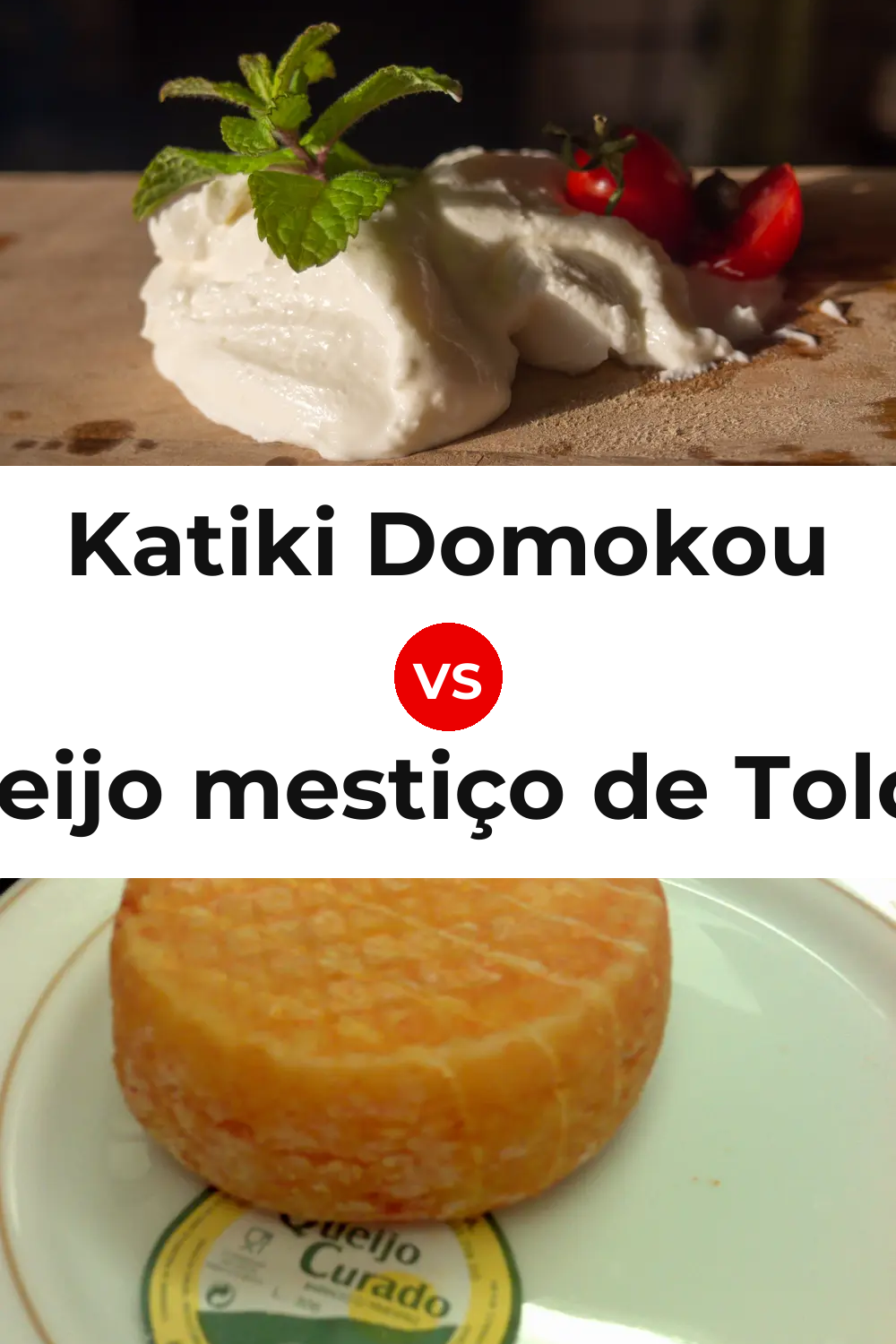
Katiki Domokou Cheese is a spreadable goat or sheep-milk cheese from Greece, while Queijo mestiço de Tolosa is malleable to hard, consistent, not very tight, with a few small holes and made from goat and sheep milk.
What Is Katiki Domokou Cheese?
Katiki Domokou is a soft white Greek cheese made from goat and sheep milk in Domokos, Phthiotis. It has protected designation of origin status, a low fat content, and it usually goes on toast or dakos.
What Is Queijo mestiço de Tolosa?
Queijo Mestiço de Tolosa is a ripened, semi-soft cheese from Portugal. It is made from a mixture of ewe's milk and goat's milk in varying proportions. The cheese has a yellowish color with a few small holes and a slightly rough, thin crust. It is known for its malleable to hard texture and a slightly vigorous, clean, and piquant taste. The cheese is produced in the Portalegre district, specifically in the municipalities of Castelo de Vide, Nisa, Marvão, Crato, Alter do Chão, Arronches, Monforte, and Portalegre. The cheese is ripened for three to four weeks, with a unique process involving a cloth dipped in pepper powder and water. The production of this cheese is deeply rooted in the local traditions and environment of the region.
What's the Difference Between Katiki Domokou Cheese and Queijo mestiço de Tolosa?
- Milk type: Katiki Domokou Cheese (Sheep’s milk, goat’s milk, or mixtures), Queijo mestiço de Tolosa (Ewe's milk and goat's milk)
- Texture: Katiki Domokou Cheese (Spreadable), Queijo mestiço de Tolosa (Malleable to hard, consistent, not very tight, with a few small holes)
- Rind: Katiki Domokou Cheese (None), Queijo mestiço de Tolosa (Slightly rough, thin, unbroken, occasionally oily, toasted yellow or orange in color)
- Taste: Katiki Domokou Cheese (Sour, refreshing), Queijo mestiço de Tolosa (Slightly vigorous, clean, and piquant)
Side-by-Side Comparison
| Katiki Domokou Cheese | Queijo mestiço de Tolosa | |
|---|---|---|
| Country of Origin | Greece | — |
| Specific Origin | Domokos, Fthiotida | Portalegre District, Including Castelo De Vide, Nisa, Marvão, Crato, Alter Do Chão, Arronches, Monforte, And Portalegre |
| Milk Type | Sheep’s milk, goat’s milk, or mixtures | Ewe's milk and goat's milk |
| Milk Treatment | Pasteurized | — |
| Texture | Spreadable | Malleable to hard, consistent, not very tight, with a few small holes |
| Rind | None | Slightly rough, thin, unbroken, occasionally oily, toasted yellow or orange in color |
| Aging | — | Three to four weeks |
| Taste | Sour, refreshing | Slightly vigorous, clean, and piquant |
Taste Comparison: Does Katiki Domokou Cheese Taste Like Queijo mestiço de Tolosa?
Katiki Domokou Cheese reads as sour, refreshing, while Queijo mestiço de Tolosa brings slightly vigorous, clean, and piquant character. On the nose, Katiki Domokou Cheese offers pleasant, contrasted with Queijo mestiço de Tolosa's pleasant and distinctive.
Can You Substitute Katiki Domokou Cheese for Queijo mestiço de Tolosa?
Katiki Domokou Cheese can stand in for Queijo mestiço de Tolosa in many dishes, but the switch will shift the overall character of the recipe. Expect spreadable bite and body where the recipe calls for malleable to hard, consistent, not very tight, with a few small holes. Flavor-wise, Katiki Domokou Cheese reads as sour, refreshing while Queijo mestiço de Tolosa brings slightly vigorous, clean, and piquant notes.
Which Is Better, Katiki Domokou Cheese or Queijo mestiço de Tolosa?
There's no single winner. It depends on your recipe and the profile you want. If you want a spreadable cheese, go with Katiki Domokou Cheese. For a malleable to hard, consistent, not very tight, with a few small holes profile, Queijo mestiço de Tolosa is the better fit. Flavor-wise, Katiki Domokou Cheese suits recipes that want sour, refreshing notes, while Queijo mestiço de Tolosa fits dishes calling for slightly vigorous, clean, and piquant.
Which is your favorite?
One click, anonymous. See what others chose.
Frequently Asked Questions
Is Katiki Domokou Cheese the same as Queijo mestiço de Tolosa?
No, they're distinct cheeses. Katiki Domokou Cheese is made from goat or sheep milk; Queijo mestiço de Tolosa uses goat and sheep.
Is Katiki Domokou Cheese similar to Queijo mestiço de Tolosa?
Not closely. They use different milk bases and have distinct profiles.
Can I substitute Katiki Domokou Cheese for Queijo mestiço de Tolosa?
You can, but expect a shift in richness and milk character.
Does Katiki Domokou Cheese taste like Queijo mestiço de Tolosa?
Katiki Domokou Cheese reads as sour, refreshing, while Queijo mestiço de Tolosa is slightly vigorous, clean, and piquant. Aromas also diverge. Katiki Domokou Cheese leans pleasant, and Queijo mestiço de Tolosa is closer to pleasant and distinctive.
What is Katiki Domokou Cheese made of?
Katiki Domokou Cheese is made from goat or sheep milk (pasteurized), using none rennet. It originates in Greece.
What is Queijo mestiço de Tolosa made of?
Queijo mestiço de Tolosa is made from goat and sheep milk, using animal rennet or cynara cardunculus rennet. It's typically aged three to four weeks.
Which should I choose, Katiki Domokou Cheese or Queijo mestiço de Tolosa?
It depends on the dish. The texture difference is the biggest practical tell. Katiki Domokou Cheese is spreadable, while Queijo mestiço de Tolosa is malleable to hard, consistent, not very tight, with a few small holes.