Katiki Domokou Cheese vs Swaledale Ewes' Cheese
Katiki Domokou Cheese
Swaledale Ewes' Cheese
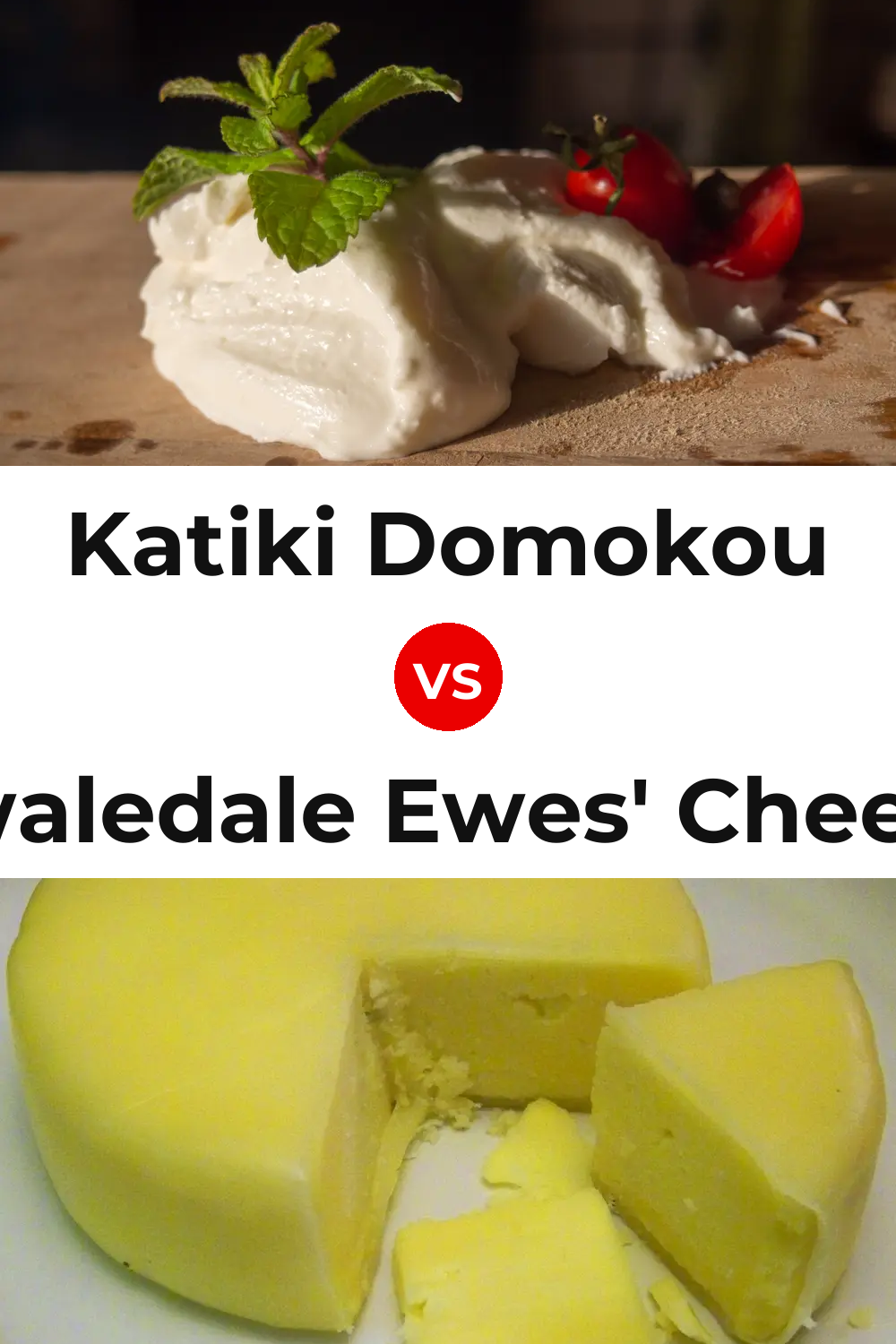
Katiki Domokou Cheese is a spreadable goat or sheep-milk cheese from Greece, while Swaledale Ewes' Cheese is hard, firm, crumbly and made from sheep milk.
What Is Katiki Domokou Cheese?
Katiki Domokou is a soft white Greek cheese made from goat and sheep milk in Domokos, Phthiotis. It has protected designation of origin status, a low fat content, and it usually goes on toast or dakos.
What Is Swaledale Ewes' Cheese?
Swaledale Ewes Cheese is a full-fat hard cheese made from ewe’s milk in Swaledale, North Yorkshire. It has a cylindrical shape, a firm and crumbly texture, and a natural white color. The cheese is either coated in a greenish-blue-grey mold or sealed with black wax. Made entirely by hand, the traditional production process includes pressing, brining for 24 hours, and a maturation period of 3 to 4 weeks. The cheese has been produced in the region for centuries using a closely guarded recipe passed down through generations. The distinct flavor is influenced by the local pastures, which provide a unique mix of herbs and grasses for the sheep.
What's the Difference Between Katiki Domokou Cheese and Swaledale Ewes' Cheese?
- Milk type: Katiki Domokou Cheese (Sheep’s milk, goat’s milk, or mixtures), Swaledale Ewes' Cheese (Sheep)
- Texture: Katiki Domokou Cheese (Spreadable), Swaledale Ewes' Cheese (Hard, firm, crumbly)
- Rind: Katiki Domokou Cheese (None), Swaledale Ewes' Cheese (Greenish-blue-grey mold or black wax coating)
Side-by-Side Comparison
| Katiki Domokou Cheese | Swaledale Ewes' Cheese | |
|---|---|---|
| Country of Origin | Greece | — |
| Specific Origin | Domokos, Fthiotida | Swaledale, North Yorkshire |
| Milk Type | Sheep’s milk, goat’s milk, or mixtures | Sheep |
| Milk Treatment | Pasteurized | — |
| Texture | Spreadable | Hard, firm, crumbly |
| Rind | None | Greenish-blue-grey mold or black wax coating |
| Aging | — | 3 to 4 weeks |
| Taste | Sour, refreshing | — |
Taste Comparison: Does Katiki Domokou Cheese Taste Like Swaledale Ewes' Cheese?
Their flavor profiles are distinct.
Can You Substitute Katiki Domokou Cheese for Swaledale Ewes' Cheese?
Katiki Domokou Cheese can stand in for Swaledale Ewes' Cheese in many dishes, but the switch will shift the overall character of the recipe. Expect spreadable bite and body where the recipe calls for hard, firm, crumbly.
Which Is Better, Katiki Domokou Cheese or Swaledale Ewes' Cheese?
There's no single winner. It depends on your recipe and the profile you want. If you want a spreadable cheese, go with Katiki Domokou Cheese. For a hard, firm, crumbly profile, Swaledale Ewes' Cheese is the better fit.
Which is your favorite?
One click, anonymous. See what others chose.
Frequently Asked Questions
Is Katiki Domokou Cheese the same as Swaledale Ewes' Cheese?
No, they're distinct cheeses. Katiki Domokou Cheese is made from goat or sheep milk; Swaledale Ewes' Cheese uses sheep.
Is Katiki Domokou Cheese similar to Swaledale Ewes' Cheese?
Not closely. They use different milk bases and have distinct profiles.
Can I substitute Katiki Domokou Cheese for Swaledale Ewes' Cheese?
You can, but expect a shift in richness and milk character.
Does Katiki Domokou Cheese taste like Swaledale Ewes' Cheese?
They have distinct flavor profiles. The taste row in the table above is the best direct comparison.
What is Katiki Domokou Cheese made of?
Katiki Domokou Cheese is made from goat or sheep milk (pasteurized), using none rennet. It originates in Greece.
What is Swaledale Ewes' Cheese made of?
Swaledale Ewes' Cheese is made from sheep milk. It's typically aged 3 to 4 weeks.
Which should I choose, Katiki Domokou Cheese or Swaledale Ewes' Cheese?
It depends on the dish. The texture difference is the biggest practical tell. Katiki Domokou Cheese is spreadable, while Swaledale Ewes' Cheese is hard, firm, crumbly.