Ladotyri Mytilinis Cheese vs Slovenský oštiepok Cheese
Ladotyri Mytilinis Cheese
Slovenský oštiepok Cheese
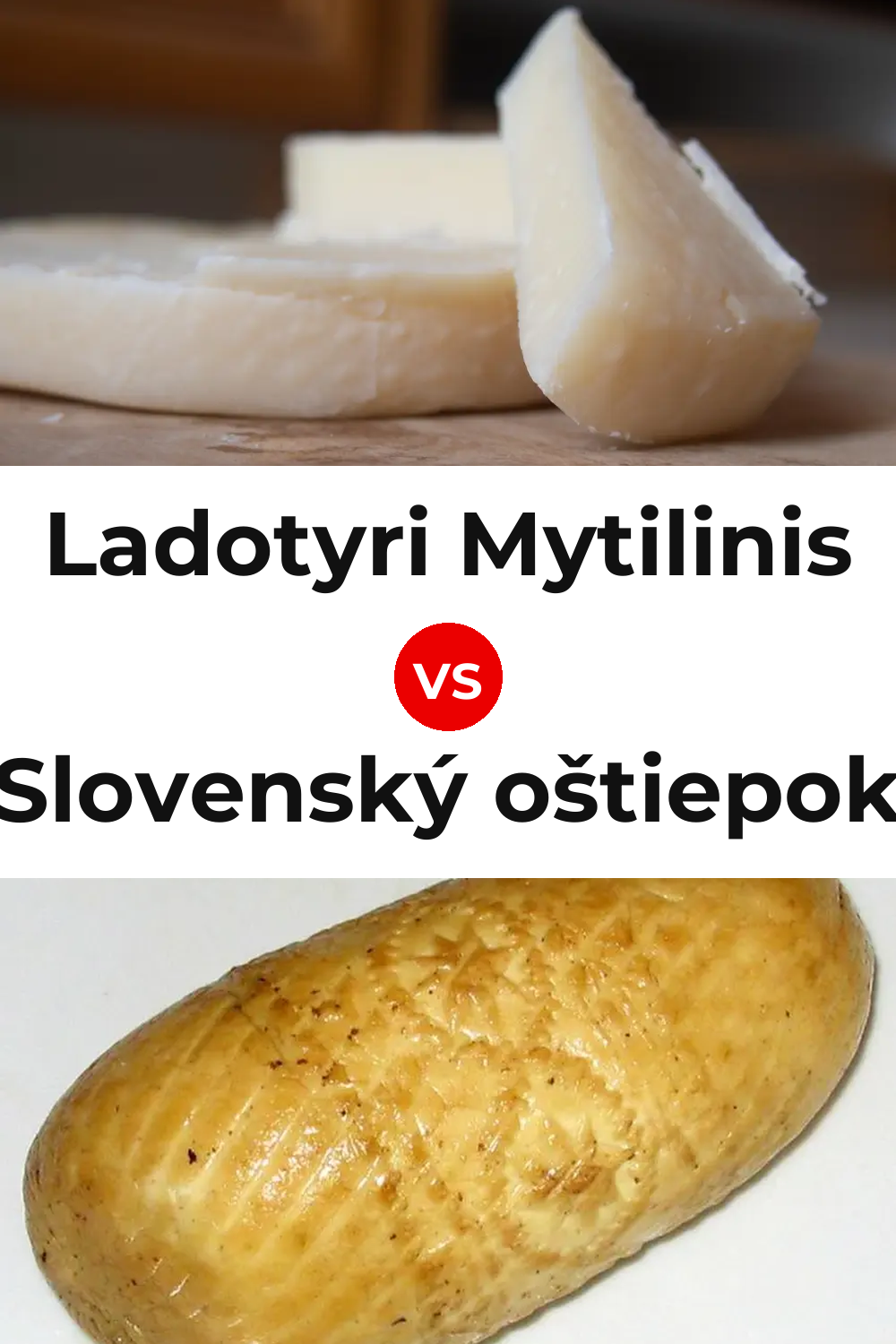
Ladotyri Mytilinis Cheese is a hard goat or sheep-milk cheese from Greece, while Slovenský oštiepok Cheese is solid, firm, slightly fragile, with minor cracks and cavities and made from cow and sheep milk.
What Is Ladotyri Mytilinis Cheese?
Ladotyri Mytilinis is a hard PDO cheese from the Greek island of Lesbos, made from sheep milk or a sheep and goat blend. Its name means oil cheese, after the extra virgin olive oil it is stored in.
What Is Slovenský oštiepok Cheese?
Slovenský oštiepok is a traditional cheese from Slovakia. It is a half-fat, semi-hard cheese that can be either steamed or unsteamed, and smoked or unsmoked. The cheese is made from sheep's milk, a mixture of sheep's and cow's milk, or cow's milk. It is produced in the mountainous regions of Slovakia, either on small-scale farms or in dairies. The cheese is known for its unique shape, resembling a large egg, pine cone, or ellipsoid, often with decorative patterns. Slovenský oštiepok has a savory, mildly piquant to sour flavor, with a smoky aroma if smoked. It has been produced since at least the 18th century and is protected as a geographical indication in the European Union.
What's the Difference Between Ladotyri Mytilinis Cheese and Slovenský oštiepok Cheese?
- Milk type: Ladotyri Mytilinis Cheese (Ewe’s milk or mixtures with up to 30% goat’s milk), Slovenský oštiepok Cheese (Sheep's milk, mixture of sheep's and cow's milk, or cow's milk)
- Texture: Ladotyri Mytilinis Cheese (Hard), Slovenský oštiepok Cheese (Solid, firm, slightly fragile, with minor cracks and cavities)
- Taste: Ladotyri Mytilinis Cheese (Strong, salty), Slovenský oštiepok Cheese (Savory, mildly piquant to sour, moderately salty)
Side-by-Side Comparison
| Ladotyri Mytilinis Cheese | Slovenský oštiepok Cheese | |
|---|---|---|
| Country of Origin | Greece | — |
| Specific Origin | Island Of Lesvos | Mountainous Regions Of The Slovak Republic |
| Milk Type | Ewe’s milk or mixtures with up to 30% goat’s milk | Sheep's milk, mixture of sheep's and cow's milk, or cow's milk |
| Milk Treatment | Sheep and goat milk from animals fed on local flora | Pasteurisation (for industrial production) |
| Texture | Hard | Solid, firm, slightly fragile, with minor cracks and cavities |
| Rind | Dry | — |
| Aging | 3 months | — |
| Taste | Strong, salty | Savory, mildly piquant to sour, moderately salty |
Taste Comparison: Does Ladotyri Mytilinis Cheese Taste Like Slovenský oštiepok Cheese?
Ladotyri Mytilinis Cheese reads as strong, salty, while Slovenský oštiepok Cheese brings savory, mildly piquant to sour, moderately salty character. On the nose, Ladotyri Mytilinis Cheese offers pleasant, contrasted with Slovenský oštiepok Cheese's typical smoky aroma if smoked. More specifically, Ladotyri Mytilinis Cheese shows light yellow, hard cheese preserved in olive oil, with a strong, salty taste and pleasant aroma. known as "kefalaki" or "little head". matured in high humidity and temperature conditions for at least three months. salt content approximately 3%. can be consumed alone or in traditional recipes., while Slovenský oštiepok Cheese leans toward smoky aroma if smoked; must not be overly acidic, yeasty, tallowy, soapy, rancid, putrid, sharp, spicy, or bitter.
Can You Substitute Ladotyri Mytilinis Cheese for Slovenský oštiepok Cheese?
Ladotyri Mytilinis Cheese can stand in for Slovenský oštiepok Cheese in many dishes, but the switch will shift the overall character of the recipe. Expect hard bite and body where the recipe calls for solid, firm, slightly fragile, with minor cracks and cavities. Flavor-wise, Ladotyri Mytilinis Cheese reads as strong, salty while Slovenský oštiepok Cheese brings savory, mildly piquant to sour, moderately salty notes.
Which Is Better, Ladotyri Mytilinis Cheese or Slovenský oštiepok Cheese?
There's no single winner. It depends on your recipe and the profile you want. If you want a hard cheese, go with Ladotyri Mytilinis Cheese. For a solid, firm, slightly fragile, with minor cracks and cavities profile, Slovenský oštiepok Cheese is the better fit. Flavor-wise, Ladotyri Mytilinis Cheese suits recipes that want strong, salty notes, while Slovenský oštiepok Cheese fits dishes calling for savory, mildly piquant to sour, moderately salty.
Which is your favorite?
One click, anonymous. See what others chose.
Frequently Asked Questions
Is Ladotyri Mytilinis Cheese the same as Slovenský oštiepok Cheese?
No, they're distinct cheeses. Ladotyri Mytilinis Cheese is made from goat or sheep milk; Slovenský oštiepok Cheese uses cow and sheep.
Is Ladotyri Mytilinis Cheese similar to Slovenský oštiepok Cheese?
Not closely. They use different milk bases and have distinct profiles.
Can I substitute Ladotyri Mytilinis Cheese for Slovenský oštiepok Cheese?
You can, but expect a shift in richness and milk character.
Does Ladotyri Mytilinis Cheese taste like Slovenský oštiepok Cheese?
Ladotyri Mytilinis Cheese reads as strong, salty, while Slovenský oštiepok Cheese is savory, mildly piquant to sour, moderately salty. Aromas also diverge. Ladotyri Mytilinis Cheese leans pleasant, and Slovenský oštiepok Cheese is closer to typical smoky aroma if smoked.
What is Ladotyri Mytilinis Cheese made of?
Ladotyri Mytilinis Cheese is made from goat or sheep milk (sheep and goat milk from animals fed on local flora), using added rennet. It's typically aged 3 months. It originates in Greece.
What is Slovenský oštiepok Cheese made of?
Slovenský oštiepok Cheese is made from cow and sheep milk (pasteurisation (for industrial production)).
Which should I choose, Ladotyri Mytilinis Cheese or Slovenský oštiepok Cheese?
It depends on the dish. The texture difference is the biggest practical tell. Ladotyri Mytilinis Cheese is hard, while Slovenský oštiepok Cheese is solid, firm, slightly fragile, with minor cracks and cavities.