Montasio Cheese vs Queijo de Cabra Transmontano
Montasio Cheese
Queijo de Cabra Transmontano
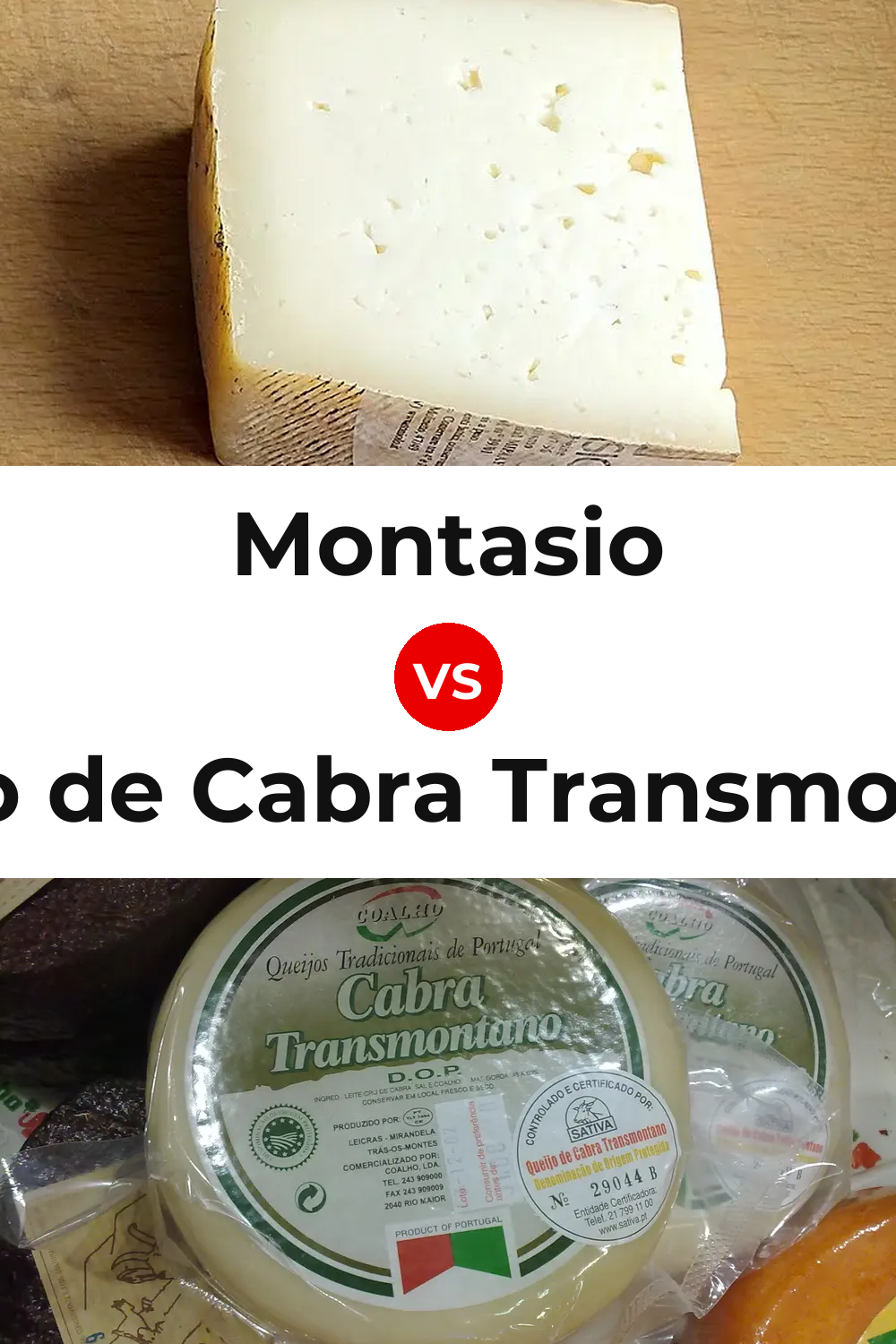
Montasio Cheese is a elastic to crumbly and hard cow-milk cheese from Italy, while Queijo de Cabra Transmontano is closed, semi-hard to extra-hard, not buttery and made from goat milk.
What Is Montasio Cheese?
Montasio is a mountain cheese from northeastern Italy, with a PDO designation. It has a firm texture and can vary in flavor from mild and milky in younger cheeses to richer and more robust in aged varieties. Montasio is often enjoyed grated over pasta and risotto or sliced in sandwiches.
What Is Queijo de Cabra Transmontano?
Queijo de Cabra Transmontano is a traditional Portuguese cheese made from raw goat's milk. It is produced in the Trás-os-Montes region, specifically in parts of the Bragança and Vila Real districts. The cheese is known for its semi-hard to extra-hard texture and is available in two varieties: Queijo de Cabra Transmontano and Queijo de Cabra Transmontano Velho. The cheese has a closed texture with little creaminess and a few holes, and it is white in color. It has an intense, pleasant aroma and a clean taste with a slight tang. The cheese is ripened for a minimum of 60 to 90 days, depending on the variety. It is protected under the European Union's Protected Designation of Origin (PDO) status.
What's the Difference Between Montasio Cheese and Queijo de Cabra Transmontano?
- Milk type: Montasio Cheese (cow's milk), Queijo de Cabra Transmontano (Goat's milk)
- Milk treatment: Montasio Cheese (unpasteurized), Queijo de Cabra Transmontano (Raw)
- Texture: Montasio Cheese (Elastic to crumbly and hard), Queijo de Cabra Transmontano (Closed, semi-hard to extra-hard, not buttery)
- Aging: Montasio Cheese (Fresco: 60-120 days; Mezzano: 120 days-10 months; Stagionato: 10-18 months; Stravecchio: over 18 months), Queijo de Cabra Transmontano (Minimum ripening time of 60 to 90 days)
- Taste: Montasio Cheese (Mild, creamy, and fruity to savory, piquant, with hints of spice), Queijo de Cabra Transmontano (Clean taste, usually with a slight tang)
Side-by-Side Comparison
| Montasio Cheese | Queijo de Cabra Transmontano | |
|---|---|---|
| Country of Origin | Italy | — |
| Specific Origin | Fruili-Venezia Giulia And Parts Of Belluno, Treviso, Padua, And Venice In Veneto | Trás-Os-Montes Region, Including Municipalities In The Districts Of Bragança And Vila Real |
| Milk Type | Cow's milk | Goat's milk |
| Milk Treatment | Unpasteurized | Raw |
| Texture | Elastic to crumbly and hard | Closed, semi-hard to extra-hard, not buttery |
| Rind | — | Semi-hard to extra-hard, unbroken, well-formed, smooth, white or paprika-red in color |
| Aging | Fresco: 60-120 days; Mezzano: 120 days-10 months; Stagionato: 10-18 months; Stravecchio: over 18 months | Minimum ripening time of 60 to 90 days |
| Taste | Mild, creamy, and fruity to savory, piquant, with hints of spice | Clean taste, usually with a slight tang |
Taste Comparison: Does Montasio Cheese Taste Like Queijo de Cabra Transmontano?
Montasio Cheese reads as mild, creamy, and fruity to savory, piquant, with hints of spice, while Queijo de Cabra Transmontano brings clean taste, usually with a slight tang character. On the nose, Montasio Cheese offers aromatic, pleasant, contrasted with Queijo de Cabra Transmontano's intense, pleasant. Aging plays into this as well. Montasio Cheese at fresco: 60-120 days; mezzano: 120 days-10 months; stagionato: 10-18 months; stravecchio: over 18 months develops a different profile than Queijo de Cabra Transmontano at minimum ripening time of 60 to 90 days.
Can You Substitute Montasio Cheese for Queijo de Cabra Transmontano?
Montasio Cheese can stand in for Queijo de Cabra Transmontano in many dishes, but the switch will shift the overall character of the recipe. Expect elastic to crumbly and hard bite and body where the recipe calls for closed, semi-hard to extra-hard, not buttery. Flavor-wise, Montasio Cheese reads as mild, creamy, and fruity to savory, piquant, with hints of spice while Queijo de Cabra Transmontano brings clean taste, usually with a slight tang notes.
Which Is Better, Montasio Cheese or Queijo de Cabra Transmontano?
There's no single winner. It depends on your recipe and the profile you want. If you want a elastic to crumbly and hard cheese, go with Montasio Cheese. For a closed, semi-hard to extra-hard, not buttery profile, Queijo de Cabra Transmontano is the better fit. Flavor-wise, Montasio Cheese suits recipes that want mild, creamy, and fruity to savory, piquant, with hints of spice notes, while Queijo de Cabra Transmontano fits dishes calling for clean taste, usually with a slight tang.
Which is your favorite?
One click, anonymous. See what others chose.
Frequently Asked Questions
Is Montasio Cheese the same as Queijo de Cabra Transmontano?
No, they're distinct cheeses. Montasio Cheese is made from cow milk; Queijo de Cabra Transmontano uses goat. Aging also differs: Montasio Cheese is typically aged fresco: 60-120 days; mezzano: 120 days-10 months; stagionato: 10-18 months; stravecchio: over 18 months, Queijo de Cabra Transmontano minimum ripening time of 60 to 90 days.
Is Montasio Cheese similar to Queijo de Cabra Transmontano?
Not closely. They use different milk bases and have distinct profiles.
Can I substitute Montasio Cheese for Queijo de Cabra Transmontano?
You can, but expect a shift in richness and milk character.
Does Montasio Cheese taste like Queijo de Cabra Transmontano?
Montasio Cheese reads as mild, creamy, and fruity to savory, piquant, with hints of spice, while Queijo de Cabra Transmontano is clean taste, usually with a slight tang. Aromas also diverge. Montasio Cheese leans aromatic, pleasant, and Queijo de Cabra Transmontano is closer to intense, pleasant.
What is Montasio Cheese made of?
Montasio Cheese is made from cow milk (unpasteurized), using animal rennet. It's typically aged fresco: 60-120 days; mezzano: 120 days-10 months; stagionato: 10-18 months; stravecchio: over 18 months. It originates in Italy.
What is Queijo de Cabra Transmontano made of?
Queijo de Cabra Transmontano is made from goat milk (raw), using animal rennet. It's typically aged minimum ripening time of 60 to 90 days.
Which should I choose, Montasio Cheese or Queijo de Cabra Transmontano?
It depends on the dish. The texture difference is the biggest practical tell. Montasio Cheese is elastic to crumbly and hard, while Queijo de Cabra Transmontano is closed, semi-hard to extra-hard, not buttery.