Ossau-Iraty Cheese vs Queijo de Évora
Ossau-Iraty Cheese
Queijo de Évora
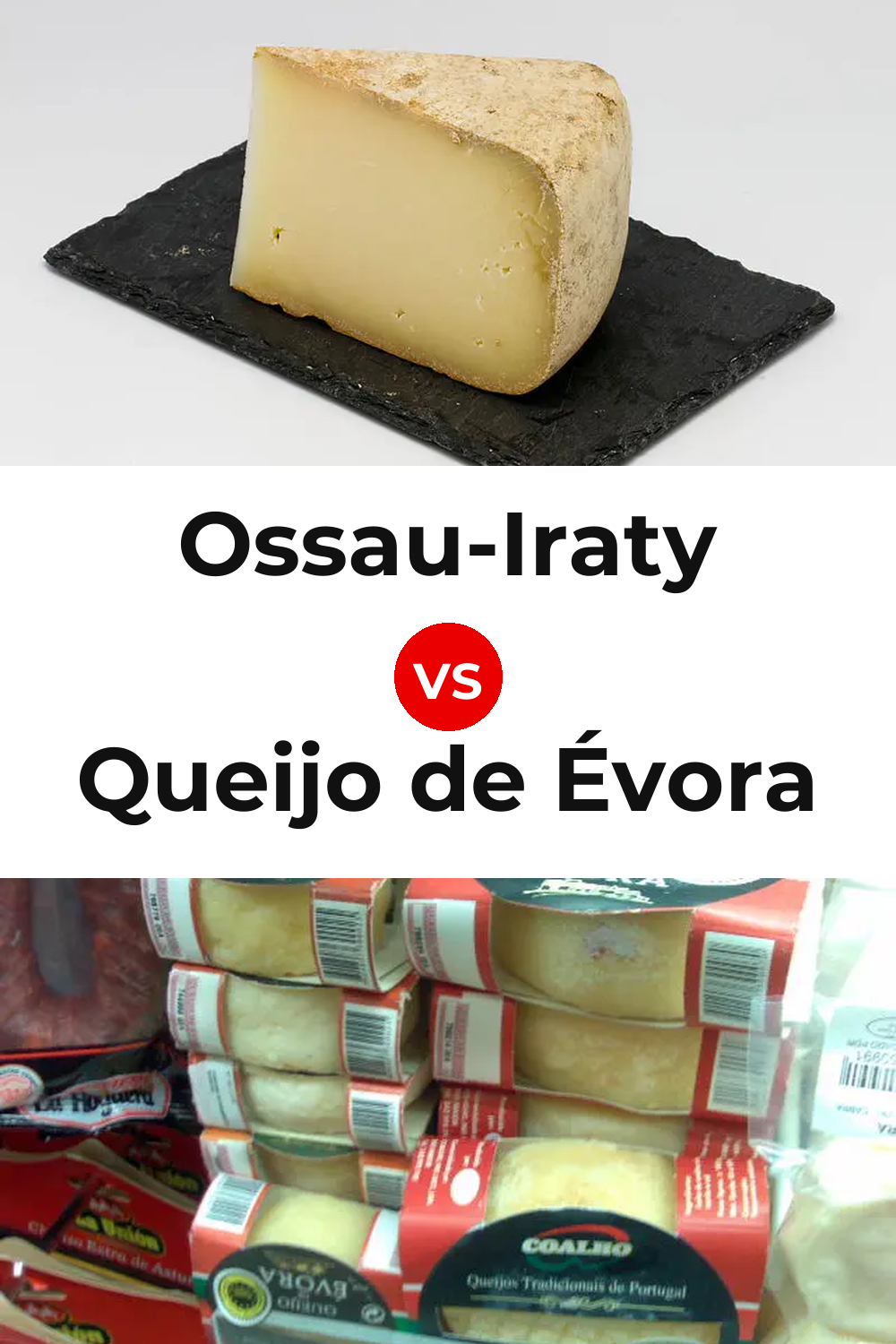
Ossau-Iraty Cheese is a homogeneous, uncooked, pressed sheep-milk cheese from France, while Queijo de Évora is semi-hard and made from sheep milk.
What Is Ossau-Iraty Cheese?
Ossau-Iraty is a sheep's milk cheese from the Northern Basque Country and Béarn in south-western France. Uncooked and pressed, it is smooth, creamy and firm, and has held appellation d'origine contrôlée status since 1980.
What Is Queijo de Évora?
Queijo de Évora is a PDO ewe's milk cheese from Évora, in Portugal's Alentejo. It is cured, hard or semi-hard, yellowish in color, and known for a slightly acidic flavor with a light peppery bite.
What's the Difference Between Ossau-Iraty Cheese and Queijo de Évora?
- Texture: Ossau-Iraty Cheese (Homogeneous, uncooked, pressed), Queijo de Évora (Semi-hard)
- Rind: Ossau-Iraty Cheese (Natural, smooth, orange to gray), Queijo de Évora (Sealed)
Side-by-Side Comparison
| Ossau-Iraty Cheese | Queijo de Évora | |
|---|---|---|
| Country of Origin | France | — |
| Specific Origin | Béarn And Basque Country (Pyrénées-Atlantiques), And Three Communes In Hautes Pyrénées | Évora, Alentejo, Portugal |
| Milk Type | Sheep's milk | Ewe's milk |
| Milk Treatment | Raw | Raw |
| Texture | Homogeneous, uncooked, pressed | Semi-hard |
| Rind | Natural, smooth, orange to gray | Sealed |
| Aging | Minimum 80-120 days | — |
| Taste | Fruity, herbaceous, nutty | — |
Taste Comparison: Does Ossau-Iraty Cheese Taste Like Queijo de Évora?
Their flavor profiles are distinct.
Can You Substitute Ossau-Iraty Cheese for Queijo de Évora?
In most recipes, Ossau-Iraty Cheese and Queijo de Évora can be swapped with reasonable results. Both are sheep-milk cheeses, so the base character carries over. Expect homogeneous, uncooked, pressed bite and body where the recipe calls for semi-hard.
Which Is Better, Ossau-Iraty Cheese or Queijo de Évora?
There's no single winner. It depends on your recipe and the profile you want. If you want a homogeneous, uncooked, pressed cheese, go with Ossau-Iraty Cheese. For a semi-hard profile, Queijo de Évora is the better fit.
Which is your favorite?
One click, anonymous. See what others chose.
Frequently Asked Questions
Is Ossau-Iraty Cheese the same as Queijo de Évora?
No, they're distinct cheeses.
Is Ossau-Iraty Cheese similar to Queijo de Évora?
Somewhat. They share a sheep-milk base but diverge in texture and flavor.
Can I substitute Ossau-Iraty Cheese for Queijo de Évora?
You can, but expect a shift in bite and mouthfeel.
Does Ossau-Iraty Cheese taste like Queijo de Évora?
They have distinct flavor profiles. The taste row in the table above is the best direct comparison.
What is Ossau-Iraty Cheese made of?
Ossau-Iraty Cheese is made from sheep milk (raw). It's typically aged minimum 80-120 days. It originates in France.
What is Queijo de Évora made of?
Queijo de Évora is made from sheep milk (raw), using cardoon (cynara cardunculus) rennet.
Which should I choose, Ossau-Iraty Cheese or Queijo de Évora?
It depends on the dish. The texture difference is the biggest practical tell. Ossau-Iraty Cheese is homogeneous, uncooked, pressed, while Queijo de Évora is semi-hard.