Mahón-Menorca Cheese vs Queso de Valdeón
Mahón-Menorca Cheese
Queso de Valdeón
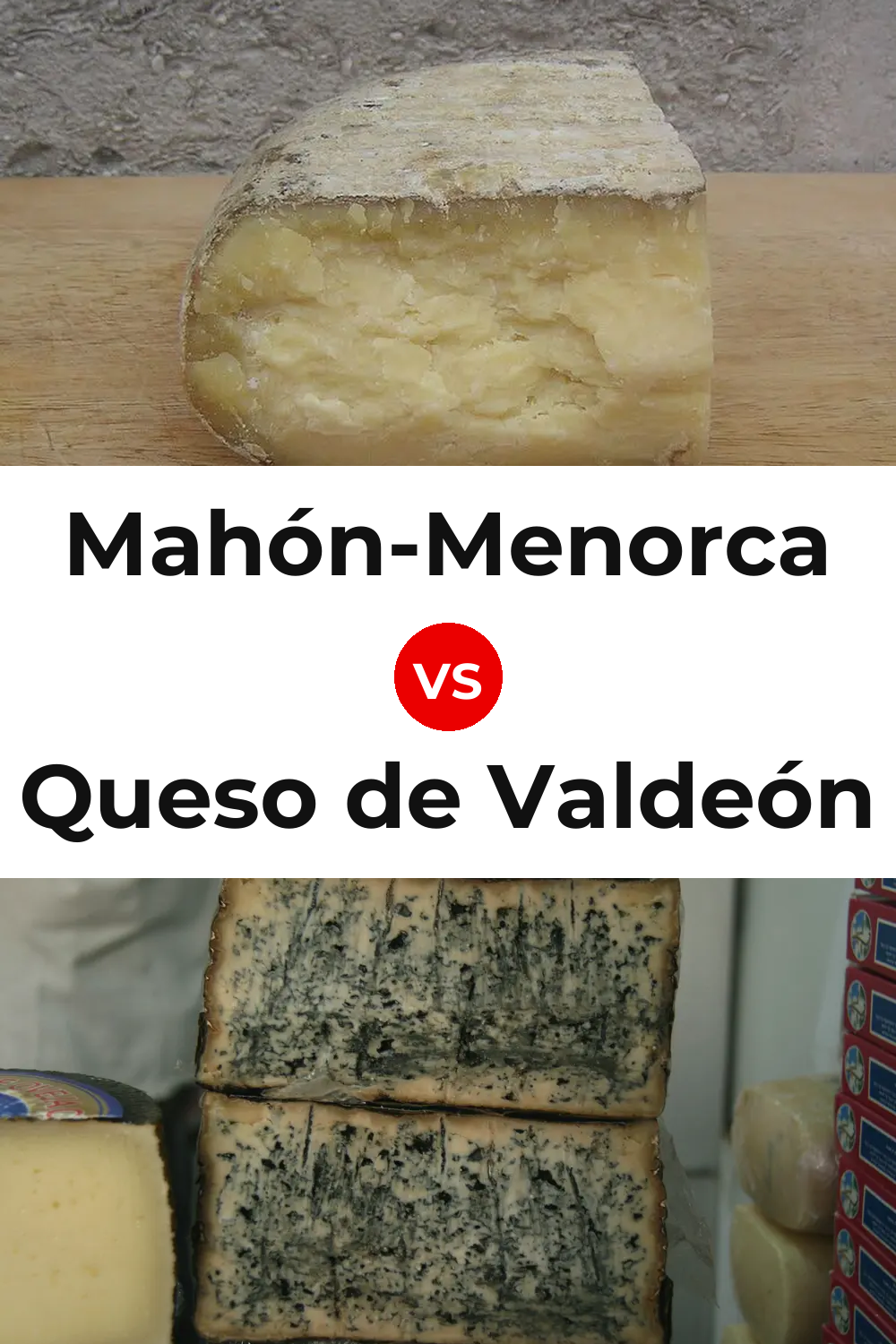
Mahón-Menorca Cheese is a firm cow or sheep-milk cheese from Spain, while Queso de Valdeón is low elasticity, crumbly, melts in the mouth and made from cow, goat, and sheep milk, originating in Spain.
What Is Mahón-Menorca Cheese?
Mahón-Menorca is a white cow's milk cheese from the island of Menorca, named after the town and port of Mahón. It runs soft to hard depending on age, with an orange rind rubbed with butter or oil and paprika and a buttery, sharp, slightly salty taste.
What Is Queso de Valdeón?
Queso de Valdeón is a Spanish blue cheese made in Posada de Valdeón, in the northeast of León province. It holds PGI status and is known for a very intense blue flavor that stays less biting than that of its cousin Cabrales.
What's the Difference Between Mahón-Menorca Cheese and Queso de Valdeón?
- Milk type: Mahón-Menorca Cheese (Friesian, Menorcan, Brown Alpine cow’s milk, some ewe’s milk (max 5%)), Queso de Valdeón (Cow’s, or a mix of cow’s, sheep’s, and goat’s milk)
- Milk treatment: Mahón-Menorca Cheese (Raw or any authorized preservation technology), Queso de Valdeón (Raw or pasteurized)
- Texture: Mahón-Menorca Cheese (Firm), Queso de Valdeón (Low elasticity, crumbly, melts in the mouth)
- Rind: Mahón-Menorca Cheese (Characteristic orangish), Queso de Valdeón (Natural, thin, yellowish-gray)
- Aging: Mahón-Menorca Cheese (Tender: 21-60 days, Semi-cured: 2-5 months, Vintage: >5 months), Queso de Valdeón (Minimum 2 months (raw milk), 1 month (pasteurized milk))
- Taste: Mahón-Menorca Cheese (Salty and spicy), Queso de Valdeón (Intense, salty, piquant, lightly ardent)
Side-by-Side Comparison
| Mahón-Menorca Cheese | Queso de Valdeón | |
|---|---|---|
| Country of Origin | Spain | Spain |
| Specific Origin | Menorca, Balearic Islands | Posada De Valdeón, León |
| Milk Type | Friesian, Menorcan, Brown Alpine cow’s milk, some ewe’s milk (max 5%) | Cow’s, or a mix of cow’s, sheep’s, and goat’s milk |
| Milk Treatment | Raw or any authorized preservation technology | Raw or pasteurized |
| Texture | Firm | Low elasticity, crumbly, melts in the mouth |
| Rind | Characteristic orangish | Natural, thin, yellowish-gray |
| Aging | Tender: 21-60 days, Semi-cured: 2-5 months, Vintage: >5 months | Minimum 2 months (raw milk), 1 month (pasteurized milk) |
| Taste | Salty and spicy | Intense, salty, piquant, lightly ardent |
Taste Comparison: Does Mahón-Menorca Cheese Taste Like Queso de Valdeón?
Mahón-Menorca Cheese reads as salty and spicy, while Queso de Valdeón brings intense, salty, piquant, lightly ardent character. On the nose, Mahón-Menorca Cheese offers lactic, buttery, contrasted with Queso de Valdeón's lightly acidic or lactic in semi-ripe cheese; persistent moldy scent when aged. More specifically, Mahón-Menorca Cheese shows distinctive molding, treatment of the rind with cow’s butter or olive oil, variations based on ripening time, while Queso de Valdeón leans toward fruity, spicy, persistent mold aroma. Aging plays into this as well. Mahón-Menorca Cheese at tender: 21-60 days, semi-cured: 2-5 months, vintage: >5 months develops a different profile than Queso de Valdeón at minimum 2 months (raw milk), 1 month (pasteurized milk).
Can You Substitute Mahón-Menorca Cheese for Queso de Valdeón?
Mahón-Menorca Cheese can stand in for Queso de Valdeón in many dishes, but the switch will shift the overall character of the recipe. Expect firm bite and body where the recipe calls for low elasticity, crumbly, melts in the mouth. Flavor-wise, Mahón-Menorca Cheese reads as salty and spicy while Queso de Valdeón brings intense, salty, piquant, lightly ardent notes.
Which Is Better, Mahón-Menorca Cheese or Queso de Valdeón?
There's no single winner. It depends on your recipe and the profile you want. If you want a firm cheese, go with Mahón-Menorca Cheese. For a low elasticity, crumbly, melts in the mouth profile, Queso de Valdeón is the better fit. Flavor-wise, Mahón-Menorca Cheese suits recipes that want salty and spicy notes, while Queso de Valdeón fits dishes calling for intense, salty, piquant, lightly ardent.
Which is your favorite?
One click, anonymous. See what others chose.
Frequently Asked Questions
Is Mahón-Menorca Cheese the same as Queso de Valdeón?
No, they're distinct cheeses. Mahón-Menorca Cheese is made from cow or sheep milk; Queso de Valdeón uses cow, goat, and sheep. Aging also differs: Mahón-Menorca Cheese is typically aged tender: 21-60 days, semi-cured: 2-5 months, vintage: >5 months, Queso de Valdeón minimum 2 months (raw milk), 1 month (pasteurized milk).
Is Mahón-Menorca Cheese similar to Queso de Valdeón?
Not closely. They use different milk bases and have distinct profiles.
Can I substitute Mahón-Menorca Cheese for Queso de Valdeón?
You can, but expect a shift in richness and milk character.
Does Mahón-Menorca Cheese taste like Queso de Valdeón?
Mahón-Menorca Cheese reads as salty and spicy, while Queso de Valdeón is intense, salty, piquant, lightly ardent. Aromas also diverge. Mahón-Menorca Cheese leans lactic, buttery, and Queso de Valdeón is closer to lightly acidic or lactic in semi-ripe cheese; persistent moldy scent when aged.
What is Mahón-Menorca Cheese made of?
Mahón-Menorca Cheese is made from cow or sheep milk (raw or any authorized preservation technology), using vegetable (cynara cardunculus) rennet. It's typically aged tender: 21-60 days, semi-cured: 2-5 months, vintage: >5 months. It originates in Spain.
What is Queso de Valdeón made of?
Queso de Valdeón is made from cow, goat, and sheep milk (raw or pasteurized). It's typically aged minimum 2 months (raw milk), 1 month (pasteurized milk). It originates in Spain.
Which should I choose, Mahón-Menorca Cheese or Queso de Valdeón?
It depends on the dish. The texture difference is the biggest practical tell. Mahón-Menorca Cheese is firm, while Queso de Valdeón is low elasticity, crumbly, melts in the mouth.