Bleu des Causses Cheese vs Paški Sir Cheese
Bleu des Causses Cheese
Paški Sir Cheese
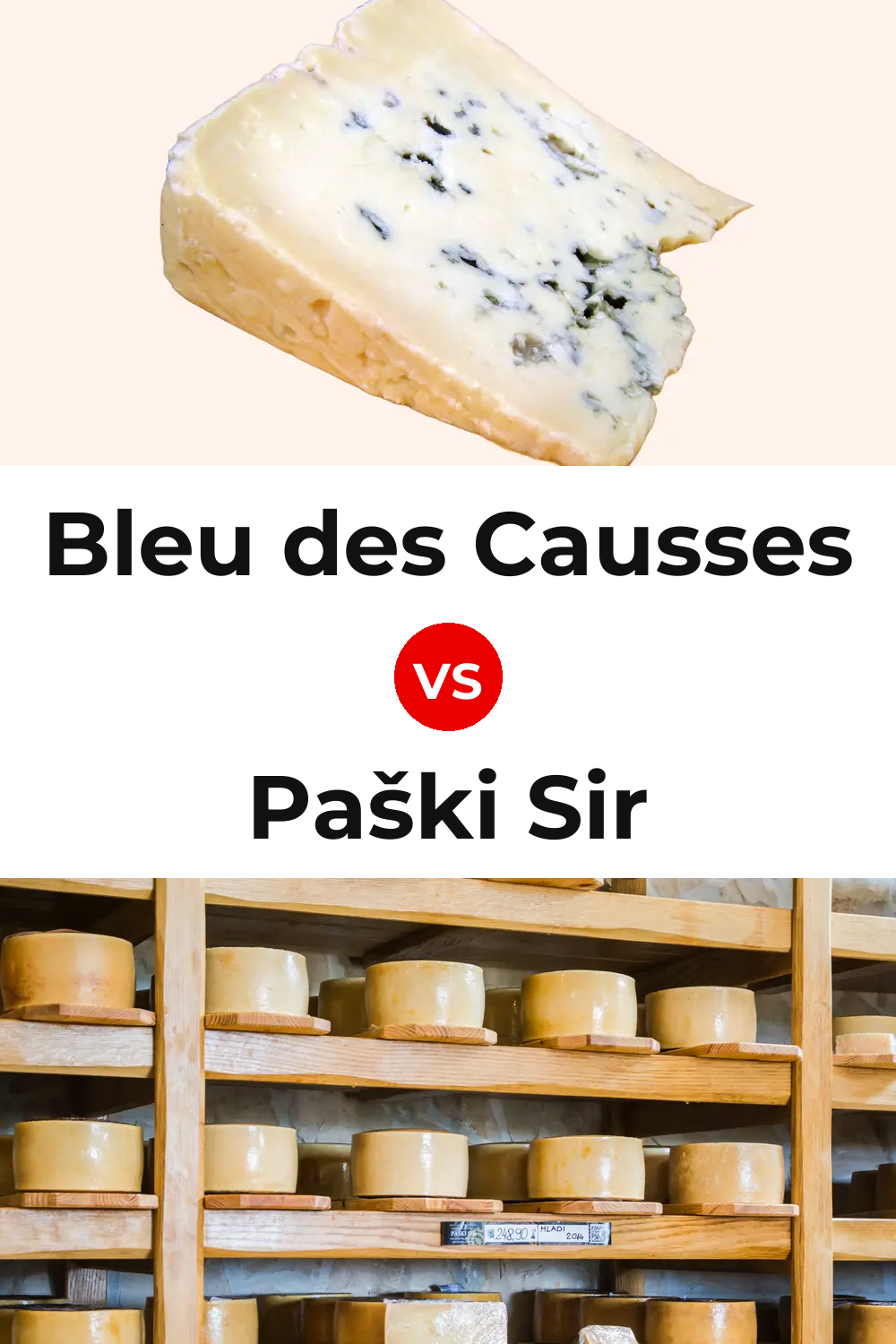
Bleu des Causses Cheese is a semisoft; blue-veined cow-milk cheese from France, while Paški Sir Cheese is slightly elastic, granular and made from sheep milk, originating in Croatia.
What Is Bleu des Causses Cheese?
Bleu des Causses is a French blue cheese made from whole cow's milk and ripened three to six months in the limestone caves of the Gorges du Tarn. Many people treat it as a gentler cow's milk counterpart to Roquefort.
What Is Paški Sir Cheese?
Paški sir is a hard sheep milk cheese from the Croatian island of Pag, where salt-laden wind shapes the plants the sheep eat. It carries Protected Designation of Origin status and has won gold and Super Gold at the World Cheese Awards.
What's the Difference Between Bleu des Causses Cheese and Paški Sir Cheese?
- Origin: Bleu des Causses Cheese (France), Paški Sir Cheese (Croatia)
- Milk type: Bleu des Causses Cheese (Cow’s milk), Paški Sir Cheese (Sheep’s milk)
- Milk treatment: Bleu des Causses Cheese (Raw), Paški Sir Cheese (pasteurized)
- Texture: Bleu des Causses Cheese (Semisoft; Blue-veined), Paški Sir Cheese (Slightly elastic, granular)
- Aging: Bleu des Causses Cheese (At least 70 days and not more than 190 days), Paški Sir Cheese (Minimum of two months, up to five months)
- Taste: Bleu des Causses Cheese (Sweet yet spicy, not too salty or bitter), Paški Sir Cheese (salty, savory, tangy)
Side-by-Side Comparison
| Bleu des Causses Cheese | Paški Sir Cheese | |
|---|---|---|
| Country of Origin | France | Croatia |
| Specific Origin | Gorges Du Tarn, Languedoc Region; Five Cantons Of Aveyron (Campagnac, Cornus, Millau, Peyreleau, Saint Affrique), Trier (Gard), Pégairolles Of Escalette (Hérault) | Island Of Pag |
| Milk Type | Cow’s milk | Sheep’s milk |
| Milk Treatment | Raw | Pasteurized |
| Texture | Semisoft; Blue-veined | Slightly elastic, granular |
| Rind | — | Hard |
| Aging | At least 70 days and not more than 190 days | Minimum of two months, up to five months |
| Taste | Sweet yet spicy, not too salty or bitter | Salty, savory, tangy |
Taste Comparison: Does Bleu des Causses Cheese Taste Like Paški Sir Cheese?
Bleu des Causses Cheese reads as sweet yet spicy, not too salty or bitter, while Paški Sir Cheese brings salty, savory, tangy character. On the nose, Bleu des Causses Cheese offers sophisticated bouquet, contrasted with Paški Sir Cheese's pleasant. Aging plays into this as well. Bleu des Causses Cheese at at least 70 days and not more than 190 days develops a different profile than Paški Sir Cheese at minimum of two months, up to five months.
Can You Substitute Bleu des Causses Cheese for Paški Sir Cheese?
Bleu des Causses Cheese can stand in for Paški Sir Cheese in many dishes, but the switch will shift the overall character of the recipe. Expect semisoft; blue-veined bite and body where the recipe calls for slightly elastic, granular. Flavor-wise, Bleu des Causses Cheese reads as sweet yet spicy, not too salty or bitter while Paški Sir Cheese brings salty, savory, tangy notes.
Which Is Better, Bleu des Causses Cheese or Paški Sir Cheese?
There's no single winner. It depends on your recipe and the profile you want. If you want a semisoft; blue-veined cheese, go with Bleu des Causses Cheese. For a slightly elastic, granular profile, Paški Sir Cheese is the better fit. Flavor-wise, Bleu des Causses Cheese suits recipes that want sweet yet spicy, not too salty or bitter notes, while Paški Sir Cheese fits dishes calling for salty, savory, tangy.
Which is your favorite?
One click, anonymous. See what others chose.
Frequently Asked Questions
Is Bleu des Causses Cheese the same as Paški Sir Cheese?
No, they're distinct cheeses. Bleu des Causses Cheese originates in France, while Paški Sir Cheese comes from Croatia. Bleu des Causses Cheese is made from cow milk; Paški Sir Cheese uses sheep. Aging also differs: Bleu des Causses Cheese is typically aged at least 70 days and not more than 190 days, Paški Sir Cheese minimum of two months, up to five months.
Is Bleu des Causses Cheese similar to Paški Sir Cheese?
Not closely. They use different milk bases and have distinct profiles.
Can I substitute Bleu des Causses Cheese for Paški Sir Cheese?
You can, but expect a shift in richness and milk character.
Does Bleu des Causses Cheese taste like Paški Sir Cheese?
Bleu des Causses Cheese reads as sweet yet spicy, not too salty or bitter, while Paški Sir Cheese is salty, savory, tangy. Aromas also diverge. Bleu des Causses Cheese leans sophisticated bouquet, and Paški Sir Cheese is closer to pleasant.
What is Bleu des Causses Cheese made of?
Bleu des Causses Cheese is made from cow milk (raw). It's typically aged at least 70 days and not more than 190 days. It originates in France.
What is Paški Sir Cheese made of?
Paški Sir Cheese is made from sheep milk (pasteurized), using natural rennet. It's typically aged minimum of two months, up to five months. It originates in Croatia.
Which should I choose, Bleu des Causses Cheese or Paški Sir Cheese?
It depends on the dish. The texture difference is the biggest practical tell. Bleu des Causses Cheese is semisoft; blue-veined, while Paški Sir Cheese is slightly elastic, granular.